
11 Warm Decor Ideas to Try
11 Warm Decor Ideas to Try
A warm room does not have to feel dark, heavy, or old-fashioned. The right design choices can make any space feel softer, calmer, and more welcoming without losing style. Warmth comes from more than color alone. It comes from lighting, texture, wood tones, layered fabrics, natural materials, cozy seating, and small details that make a home feel lived in rather than staged.
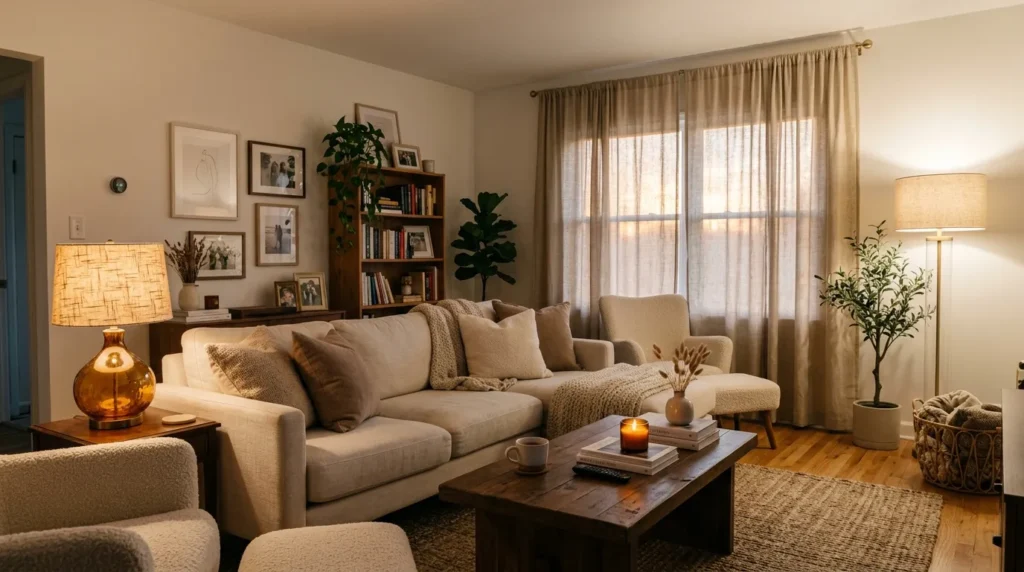
For USA homes, apartments, rentals, and small spaces, Warm Decor is especially useful because it can make plain rooms feel personal without major renovation. A beige sofa, wood table, amber lamp, soft rug, textured curtains, and a few earthy accents can completely change the feeling of a living room or bedroom. These ideas are practical, Pinterest-friendly, and easy to adapt whether your style is modern, farmhouse, rustic, boho, transitional, or minimal.
1. Amber Lighting
- Use warm white bulbs instead of harsh cool-toned lighting.
- Add table lamps, floor lamps, sconces, candles, or lanterns.
- Place lighting at different heights to create softness and depth.
- Choose linen shades, brass bases, ceramic lamps, or wood accents.
- Use dimmers or smart bulbs for better evening mood control.
Amber lighting can make a room feel softer within minutes. Many homes rely on bright overhead fixtures that flatten the space and make furniture look colder than it really is. A warmer approach uses several gentle light sources placed around the room. A lamp beside the sofa, a small light on a console, and a soft glow near a reading chair can completely change the atmosphere. In my experience, lighting is often the fastest way to make a room feel more welcoming after sunset.
The transformation feels strongest in living rooms, bedrooms, and entryways where comfort matters. Use warm white bulbs, fabric lampshades, brass details, or ceramic lamp bases to create a glow that feels calm rather than sharp. If your room feels plain, turn off the ceiling light and use only lamps for one evening. You will notice how textures, wood tones, and fabrics suddenly look richer. This idea is renter-friendly, affordable, and easy to adjust for every season.
2. Earthy Palette
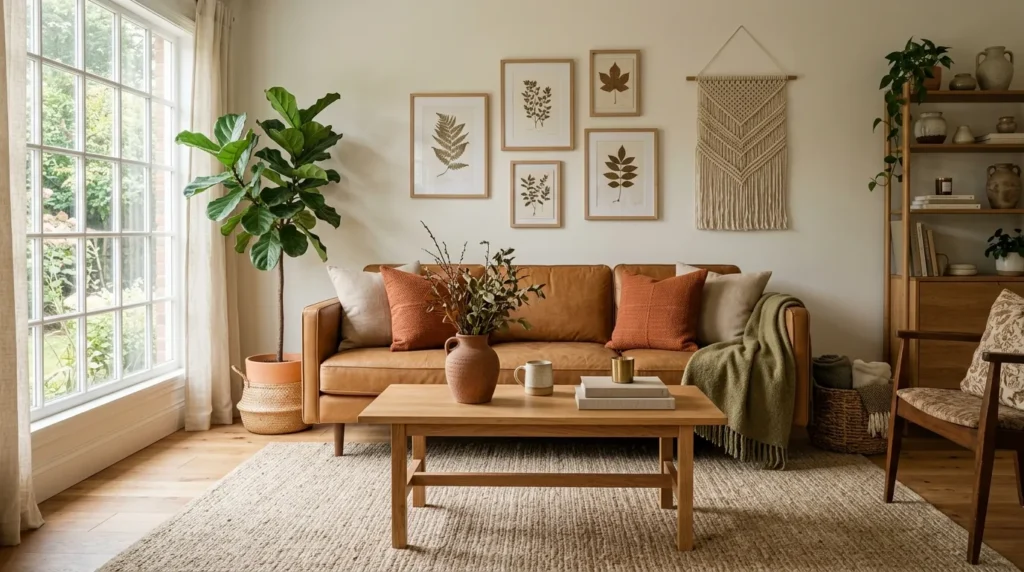
- Build the room around beige, camel, rust, clay, taupe, cream, and brown.
- Add small accents in olive, mustard, bronze, or muted burgundy.
- Keep large furniture neutral so the space feels flexible and balanced.
- Use natural textures to keep earthy colors from feeling flat.
- Repeat colors across pillows, rugs, curtains, and decorative pieces.
An earthy palette gives a room a grounded and comforting feeling. These colors are easy to live with because they are inspired by natural materials like clay, sand, wood, stone, leather, and dried grasses. Instead of using bright colors everywhere, choose soft shades that feel calm and connected. Warm beige, muted rust, creamy white, and soft brown can make a room feel cozy without overwhelming it. That’s why many designers recommend earth tones for spaces where people want comfort and relaxation.
The finished look becomes richer when you layer related tones instead of matching everything exactly. A camel pillow, clay vase, beige rug, olive throw, and walnut table can work together beautifully. Add black or bronze accents if the room needs contrast. This approach works well in apartments because it softens basic white walls and standard flooring. It also photographs beautifully for Pinterest because the colors feel natural, warm, and easy to imagine in real homes.
3. Wood Accents
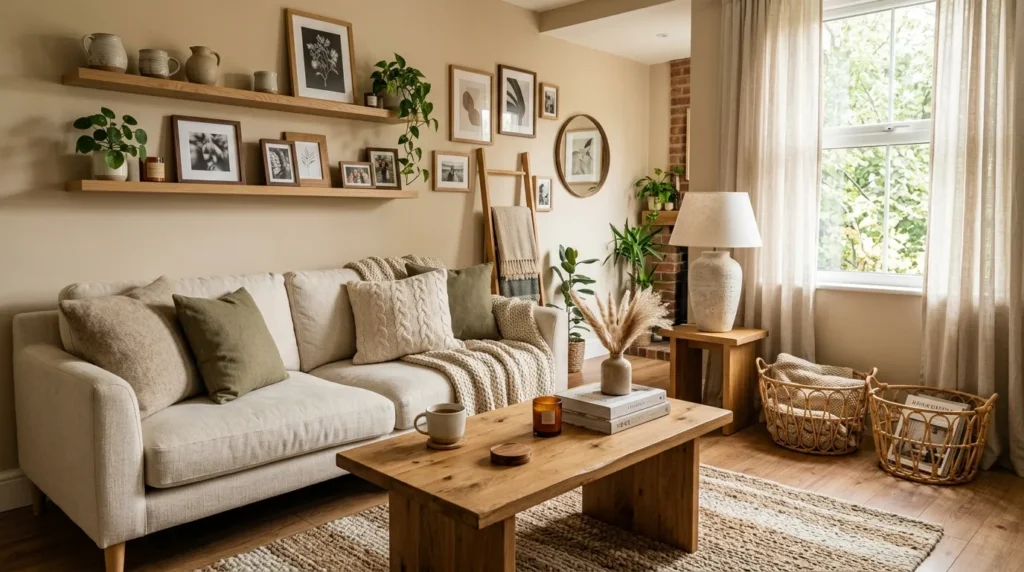
- Add warmth through coffee tables, shelves, frames, benches, trays, or stools.
- Choose oak, walnut, pine, maple, cedar, or reclaimed wood finishes.
- Mix wood carefully so the room feels collected, not mismatched.
- Use lighter wood for airy spaces and darker wood for richer contrast.
- Pair wood with linen, wool, ceramics, plants, and woven baskets.
Wood accents bring natural warmth that paint and fabric cannot fully replace. Even one wooden coffee table, shelf, stool, or picture frame can make a room feel more grounded. This idea works because wood adds texture, grain, and visual depth without needing bold color. A light oak table feels fresh and modern, while walnut feels deeper and more elegant. In my experience, rooms with wood accents often feel more comfortable because the material adds a human, handmade quality.
The transformation depends on repetition. If you use a wood coffee table, repeat a similar tone in a shelf, frame, tray, or lamp base so the room feels connected. Avoid mixing too many unrelated wood colors unless the rest of the palette is very simple. Pair wood with soft textiles, warm lighting, and ceramic decor for balance. This idea works in living rooms, bedrooms, kitchens, and entryways because it adds warmth while staying timeless and practical.
4. Textured Curtains
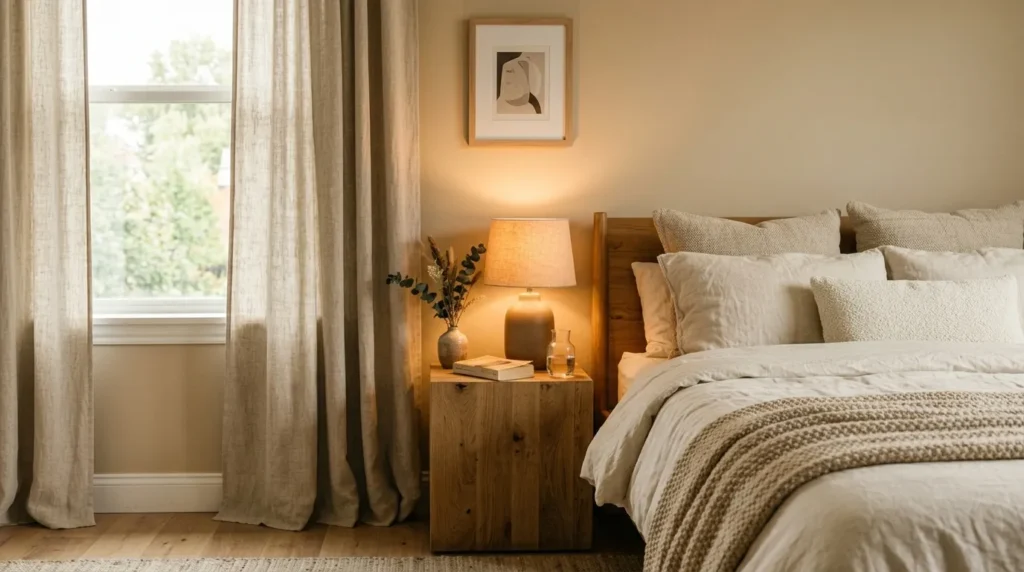
- Choose linen, cotton, velvet, gauze, or woven curtain panels.
- Hang curtains higher and wider to make windows feel larger.
- Use cream, oatmeal, beige, taupe, rust, or warm gray tones.
- Let panels reach the floor for a softer and more finished look.
- Layer sheers with heavier panels if you want privacy and warmth.
Textured curtains can make a room feel finished even when the furniture is simple. Bare windows often make a space feel hard and unfinished, while fabric softens the walls and filters light beautifully. Linen curtains create an airy warmth, velvet feels rich and dramatic, and cotton panels feel clean and casual. Hang the curtain rod close to the ceiling and extend it wider than the window to make the room feel taller and more polished.
The final effect is both practical and beautiful. Curtains help control light, add privacy, soften echo, and bring movement into the room. Warm neutral panels work especially well because they blend with many styles and do not overwhelm smaller spaces. If you want a cozy layered look, use sheer curtains underneath and heavier panels on top. This idea is useful in bedrooms, living rooms, dining rooms, and rental apartments where changing the window treatment can make the entire room feel more intentional.
5. Layered Rugs
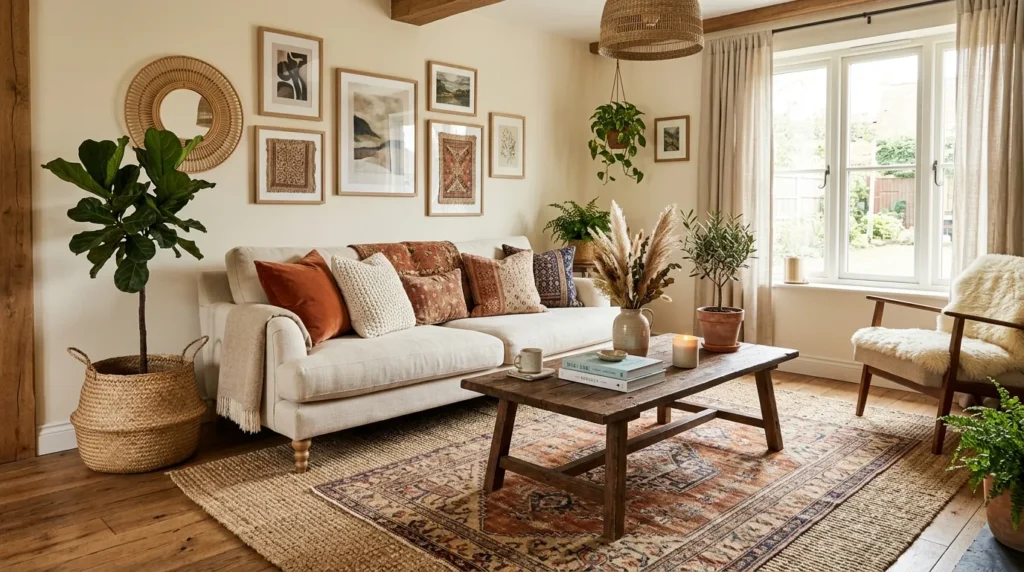
- Use rugs to soften floors and define seating, dining, or bedroom zones.
- Layer jute, wool, washable, vintage-style, or low-pile rugs for texture.
- Choose warm tones like beige, rust, brown, cream, olive, or faded red.
- Make sure the rug is large enough to connect furniture pieces.
- Add a rug pad for comfort, safety, and better floor protection.
Layered rugs create warmth from the ground up. Hard floors can look beautiful, but they often make rooms feel colder if there is nothing soft underfoot. A rug adds comfort, sound absorption, color, and structure all at once. In open-plan homes or apartments, rugs also help define separate areas without needing walls. A jute rug under a vintage-style rug can create a rich, cozy foundation that looks collected instead of flat.
The transformation works best when scale is right. A rug that is too small can make furniture feel disconnected, while a larger rug pulls the whole area together. Use warm patterns if your furniture is neutral, or choose a simple textured rug if the room already has color. In bedrooms, let the rug extend beyond the bed so your feet land on something soft in the morning. This idea adds comfort and style without requiring permanent changes.
6. Cozy Seating
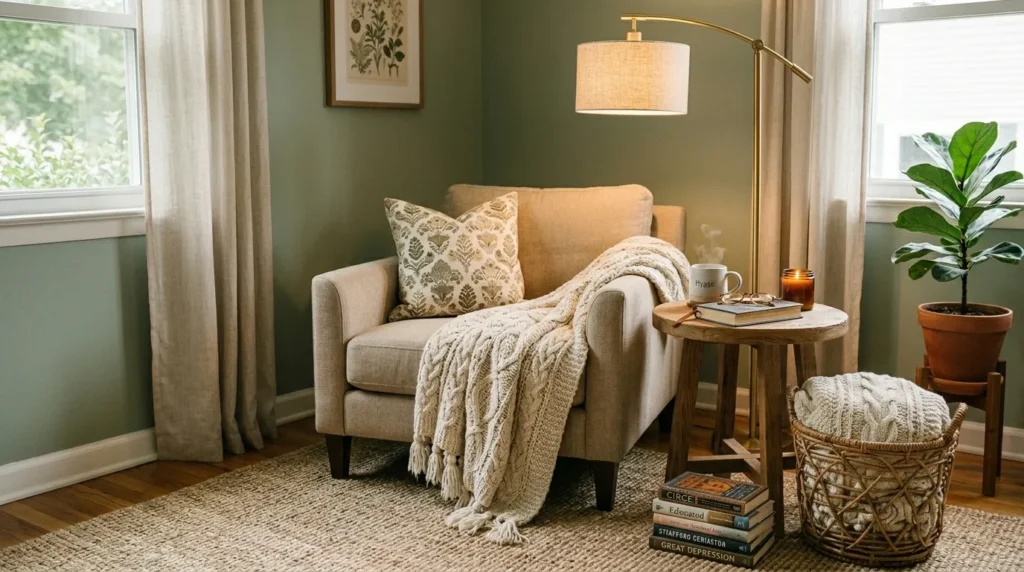
- Choose seating with soft upholstery, rounded shapes, or comfortable cushions.
- Add pillows and throws in warm colors and touchable fabrics.
- Place chairs near lamps, windows, fireplaces, or quiet corners.
- Use a small table nearby for books, coffee, candles, or decor.
- Keep seating arrangements close enough for conversation and comfort.
Cozy seating makes a room feel usable, not just decorated. A beautiful space can still feel unwelcoming if there is nowhere comfortable to sit. Sofas, accent chairs, benches, and reading corners should invite people to relax. Rounded arms, soft fabric, deep cushions, and warm throws help create that feeling. I’ve noticed that homes feel more personal when seating is arranged for real life, not only for how the room looks in photos.
The finished setup should support daily routines. Place a chair beside a lamp for reading, add a side table for tea, or layer pillows on a sofa for relaxed evenings. Keep seating close enough that conversations feel natural, especially in living rooms. A small apartment can still feel warm with one great chair and a soft throw. This idea works because comfort is visible. When a room looks easy to settle into, it automatically feels more inviting.
7. Ceramic Details
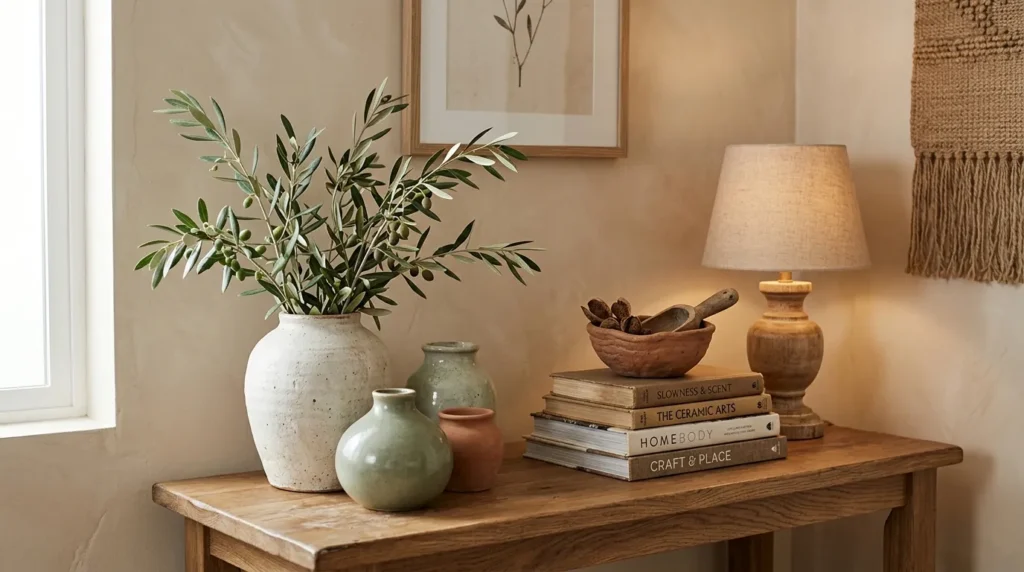
- Add ceramics through vases, bowls, lamps, trays, candleholders, or planters.
- Choose clay, cream, terracotta, olive, brown, beige, or hand-glazed finishes.
- Group ceramic pieces in small moments instead of spreading them everywhere.
- Use handmade-style shapes for a more collected and personal feeling.
- Pair ceramics with wood, linen, stone, books, and greenery.
Ceramic details add handmade charm to warm interiors. Their texture, shape, and earthy finishes make a room feel collected rather than overly perfect. A clay vase on a console, a ceramic lamp beside the bed, or a small bowl on a coffee table can add warmth without taking up much space. This idea works especially well when the room needs personality but not clutter. Choose pieces that feel slightly imperfect, matte, or hand-glazed for a more natural look.
The final effect feels best when ceramics are styled with purpose. Place a large vase with branches on a dining table, a textured lamp on a nightstand, or a small tray on an entry console. Avoid using too many tiny pieces, because that can make surfaces feel busy. A few strong ceramic accents can make the room feel calmer and more expensive. This is a simple way to add depth, especially in neutral rooms that need texture and softness.
8. Woven Storage
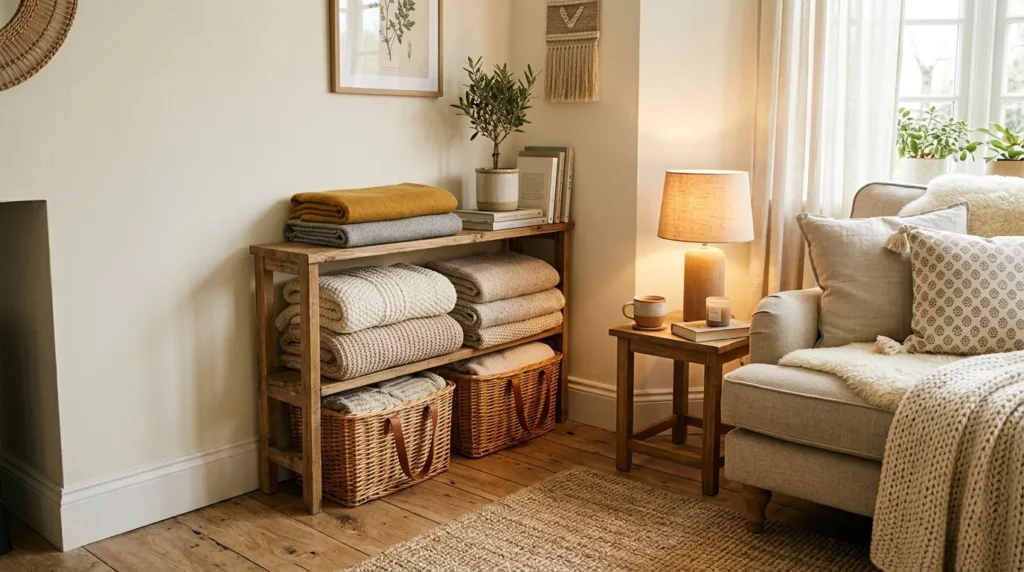
- Use baskets for blankets, toys, books, shoes, laundry, or extra pillows.
- Choose rattan, wicker, seagrass, jute, cane, or water hyacinth textures.
- Place baskets near sofas, beds, entryways, shelves, or fireplaces.
- Use lidded baskets when you want hidden storage.
- Repeat similar basket tones for a cleaner and more organized look.
Woven storage brings warmth and function together in one simple detail. Clutter can make a room feel stressful, but plastic bins or temporary organizers often make the space look unfinished. Natural baskets solve both problems. They hide everyday items while adding texture and softness. A basket beside the sofa can hold blankets, a lidded basket near the entry can hide shoes, and smaller baskets on shelves can store remotes, chargers, or papers.
The transformation is practical because baskets make cleanup easier. When daily items have a nearby home, the room stays tidier without much effort. Choose larger baskets for blankets and pillows, medium baskets for toys or shoes, and smaller baskets for shelves or bathroom storage. Natural woven texture works with modern, rustic, farmhouse, coastal, and boho spaces. This idea is especially useful for families, renters, and small homes where storage needs to look beautiful as well as functional.
9. Soft Bedding
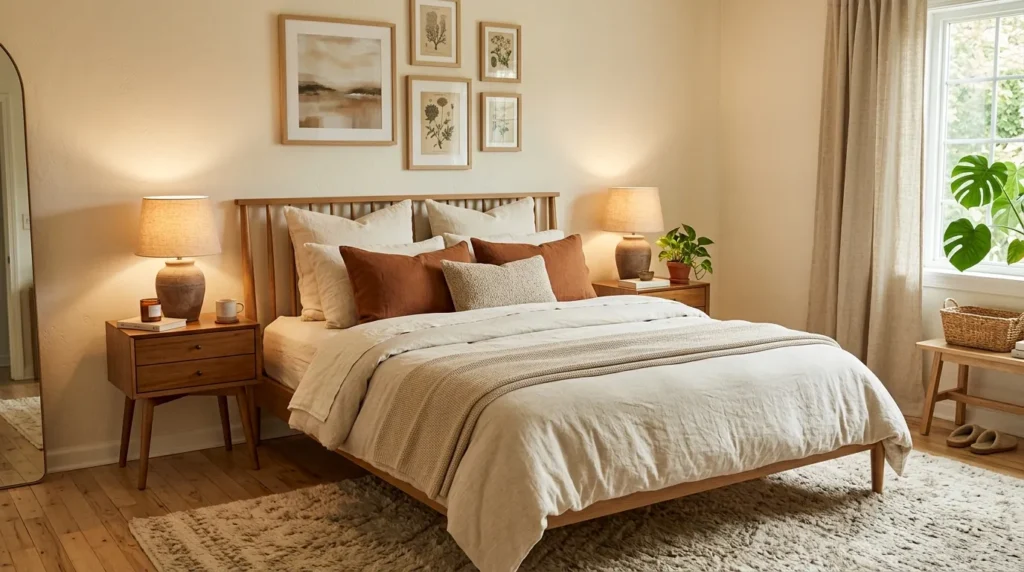
- Layer sheets, duvets, quilts, throws, and pillows for a warmer bedroom look.
- Use cream, oatmeal, beige, rust, taupe, olive, or warm white bedding.
- Choose breathable fabrics like cotton, linen, flannel, or soft washed cotton.
- Add a folded blanket at the foot of the bed for texture.
- Keep nightstands simple so the bedroom feels restful and clean.
Soft bedding can make the entire home feel more relaxing because the bedroom sets the tone for rest. A bed that looks flat or unfinished can make the room feel cold, even if the furniture is nice. Layered bedding creates comfort through texture and depth. Start with comfortable sheets, add a duvet or quilt, then finish with a folded throw and a few pillows. The bed should look inviting, not overly complicated or difficult to maintain every morning.
The finished bedroom feels warmer when bedding colors connect with the rest of the room. Cream sheets, an oatmeal duvet, rust pillows, and a soft beige blanket can create a calm layered look. Add warm lamps, a textured rug, and natural wood nightstands for a complete effect. Use breathable fabrics so the bed feels comfortable across seasons. This idea brings Warm Decor into the most personal room of the home, making daily routines feel softer and slower.
10. Natural Greenery
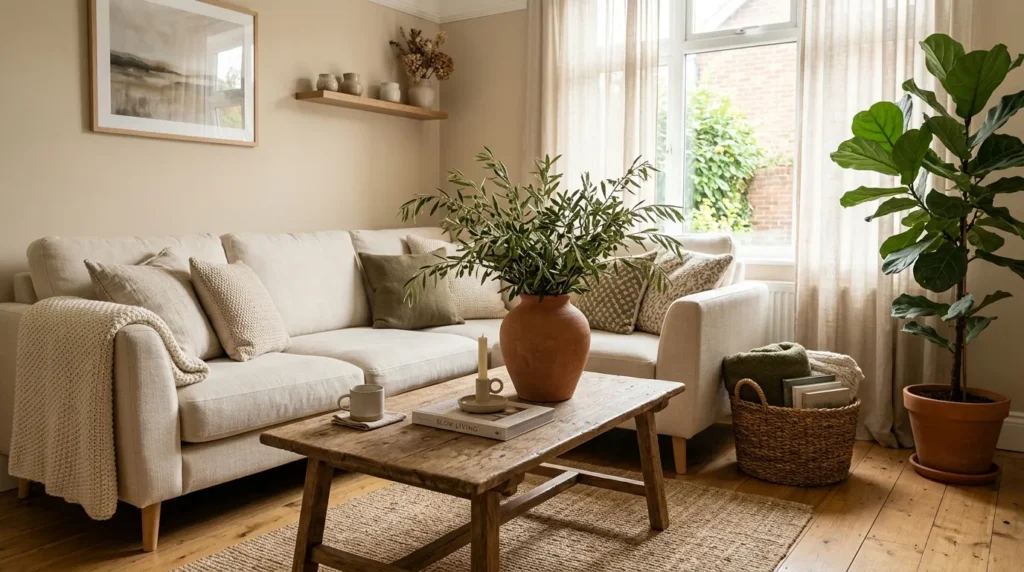
- Use plants, branches, dried stems, or seasonal greenery to soften rooms.
- Choose olive branches, eucalyptus, pothos, snake plants, ferns, or dried grasses.
- Place greenery on tables, shelves, nightstands, kitchen counters, or entry consoles.
- Use clay, ceramic, glass, or woven planters for added warmth.
- Keep arrangements simple so the room stays calm and uncluttered.
Natural greenery adds life to warm interiors without making them feel busy. Plants and branches soften hard lines, bring freshness, and help connect indoor spaces to nature. You do not need a full indoor jungle to get the effect. A vase of olive branches, a pothos on a shelf, a fern near a window, or dried grasses in a ceramic vase can make a room feel more complete. The key is choosing greenery that fits your light and maintenance routine.
The transformation is strongest when greenery is placed where the room needs softness. Add a tall plant beside a sofa, a small plant on a bathroom shelf, or branches on a dining table. Use warm containers like terracotta, clay, woven baskets, or cream ceramic to support the overall palette. If you are not great with plants, high-quality faux stems or dried arrangements can still add texture. This idea makes the home feel fresh, balanced, and naturally welcoming.
11. Styled Corners
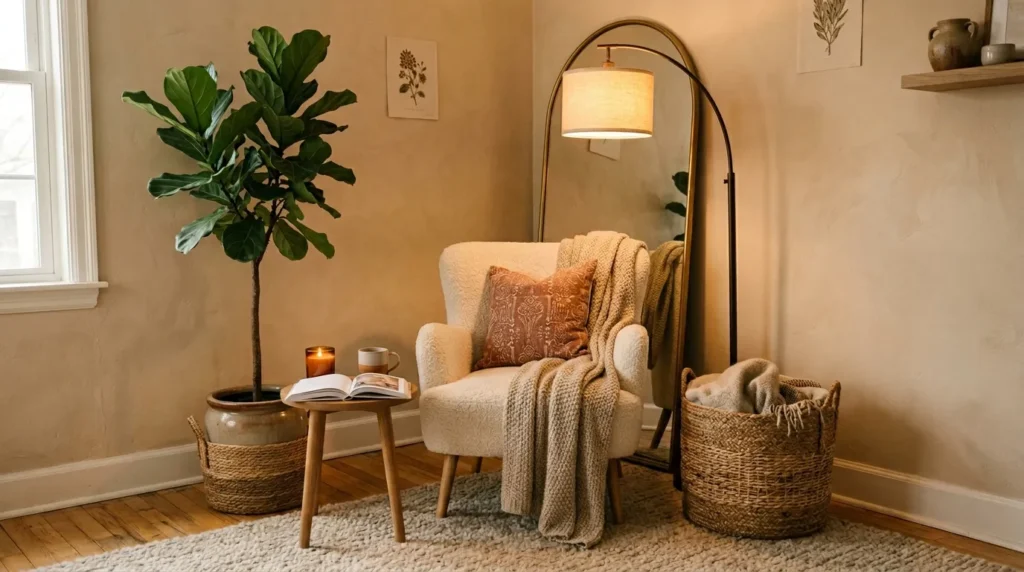
- Turn empty corners into reading spots, plant moments, shelves, or small seating areas.
- Use a lamp, chair, basket, side table, plant, or framed art.
- Keep the setup simple so the corner does not feel crowded.
- Match colors and materials with the rest of the room.
- Add height through plants, mirrors, floor lamps, or tall artwork.
Styled corners make a home feel thoughtful because they turn unused space into something beautiful. Many rooms have awkward corners that collect random items or stay empty for years. With a few intentional pieces, those corners can become cozy and useful. A floor lamp with a chair, a tall plant with a woven basket, or a small shelf with books can change the feeling of the entire room. This idea works because it finishes spaces that often feel forgotten.
The final look should feel connected to the room, not like a separate display. Repeat the same wood tone, metal finish, or fabric color used elsewhere so the corner belongs. Use height to draw the eye upward, especially in small rooms. A tall plant, arched mirror, or floor lamp can make the space feel more complete. This final Warm Decor idea is perfect for living rooms, bedrooms, entryways, and apartments because it adds charm without requiring much space.