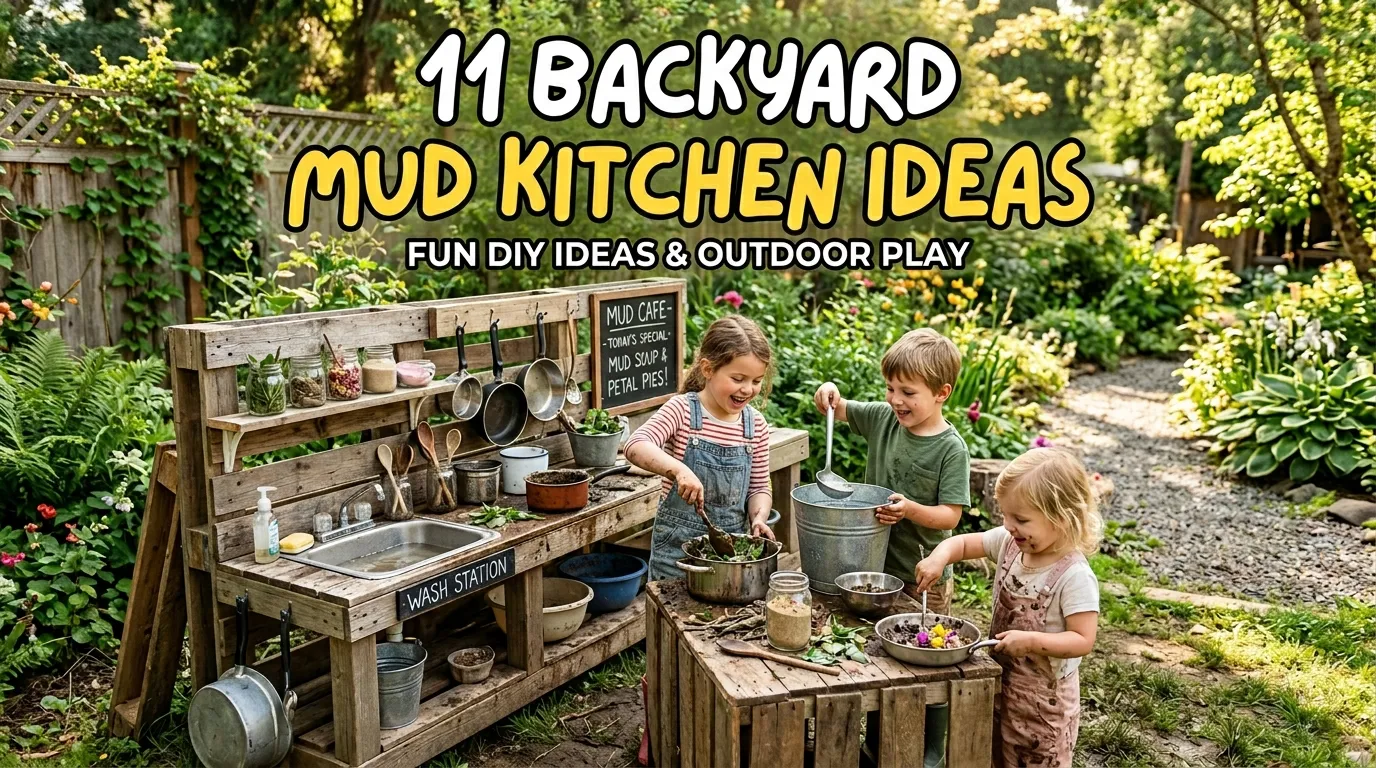
11 Backyard Mud Kitchen Ideas
Outdoor play has become an essential part of childhood development in modern USA homes, especially as parents look for ways to balance screen time with hands-on creative experiences. One of the most engaging outdoor setups for kids is a mud kitchen, where imagination meets nature through water, soil, and simple household materials. A well-designed backyard play space encourages sensory learning, creativity, and problem-solving while keeping children active and connected to the outdoors.
In my experience, kids don’t need expensive toys to stay engaged for hours. Simple structures made from wood, recycled materials, and natural elements often provide the most meaningful play experiences. That’s why many designers recommend creating flexible outdoor environments that grow with the child’s imagination rather than limiting it. A mud kitchen is a perfect example of this idea, as it allows endless pretend play scenarios like cooking, mixing, baking, and storytelling.
This guide explores practical, creative, and budget-friendly backyard ideas that can turn any outdoor space into a fun, educational play zone. Each idea is designed to be simple enough for DIY beginners while still being visually appealing and durable for long-term use.
1. Pallet Kitchen
Bullet Points
- Budget-friendly outdoor structure
- Easy DIY construction method
- Strong and durable base design
- Eco-friendly recycled materials
- Customizable layout options
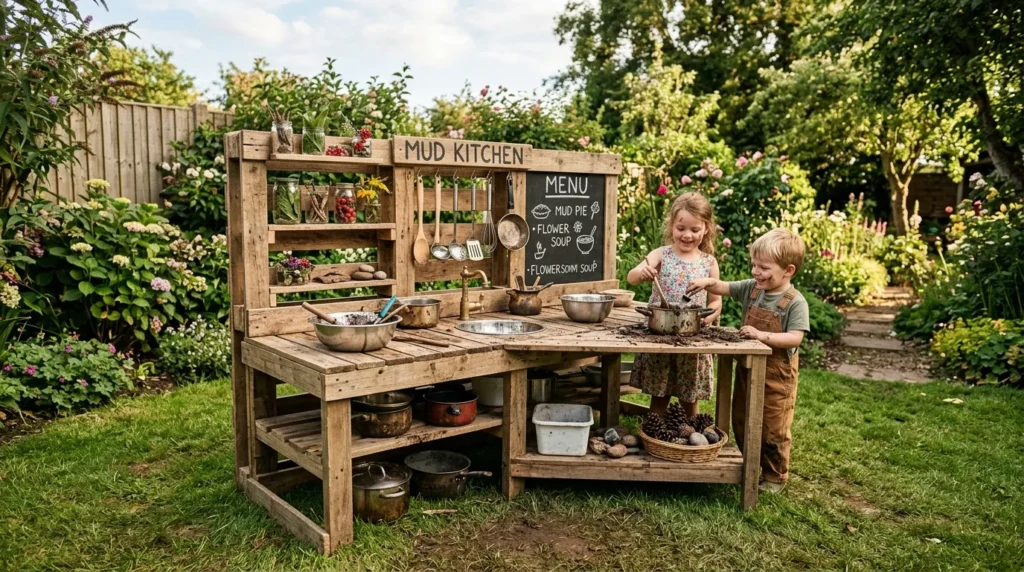
A pallet-based kitchen is one of the most practical ways to start building an outdoor play space without spending much money. Wooden pallets are widely available and can be easily transformed into a sturdy kitchen frame for kids. I’ve noticed this approach is especially popular among USA families who prefer sustainable and affordable DIY projects. The natural wood texture blends beautifully into backyard environments, giving the setup a rustic and organic feel that enhances imaginative outdoor play sessions.
Construction is simple and highly flexible depending on available space. In my experience, stacking and securing pallets allows parents to design different levels for counters, storage, and play surfaces. Many homeowners also sand and seal the wood for safety and weather resistance. Some even paint the structure in bright colors to make it more engaging for kids. I’ve seen this work well in many homes where a simple pallet frame became a long-lasting and highly interactive outdoor play station for children.
2. Sink Station
Bullet Points
- Adds realistic water play
- Encourages sensory development
- Reuses old household items
- Simple DIY installation
- Great for group activities
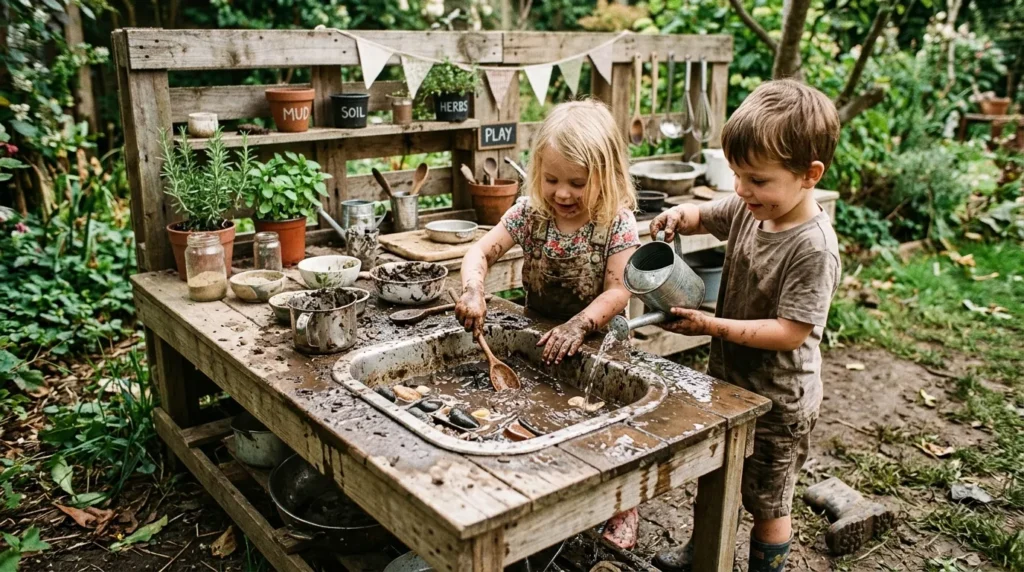
A sink station is one of the most exciting features you can add to a backyard play kitchen because it introduces water-based interaction. Kids naturally love water play, and combining it with mud, leaves, and sand creates endless opportunities for exploration. Old bowls, metal basins, or unused sinks can be easily repurposed into a functional washing or mixing area. I’ve noticed children become deeply engaged when they can “wash dishes” or mix ingredients like in a real kitchen setting.
The setup is simple and adaptable for different backyard sizes. In my experience, placing a basin into a wooden frame creates a realistic sink experience while keeping it safe for children. Adding a nearby water source like buckets or a hose enhances usability. Many parents also include drainage holes or removable containers for easier cleanup. I’ve seen this work well in many homes where a simple sink addition transformed an ordinary play area into a highly interactive and imaginative learning environment.
3. Mud Counter
Bullet Points
- Dedicated creative workspace
- Encourages imaginative cooking
- Supports group play activities
- Simple wooden structure
- Enhances storytelling skills
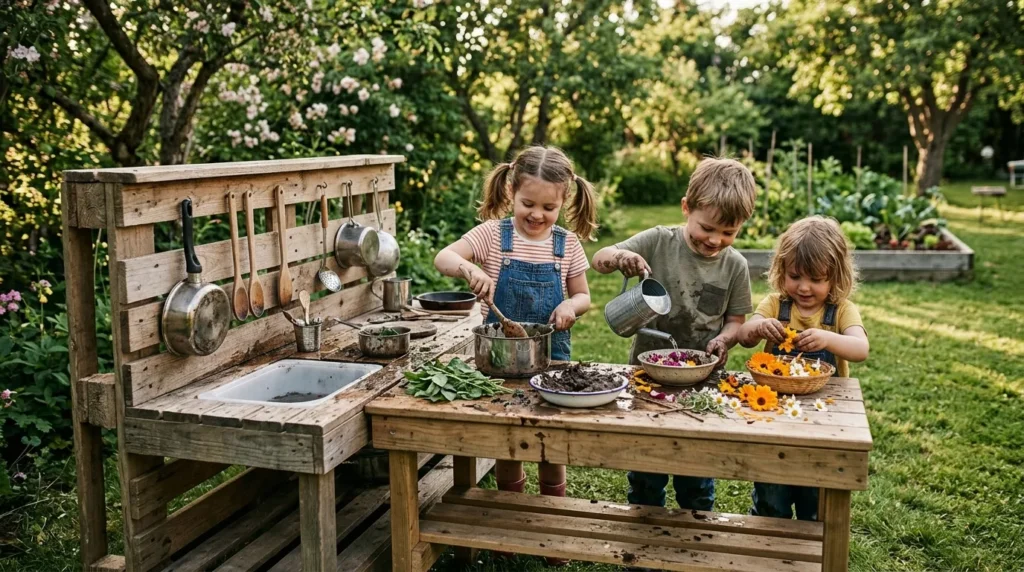
A mud counter gives children a structured space to fully engage in creative outdoor cooking activities. This simple surface allows them to mix mud, leaves, flowers, and water into imaginative recipes, helping develop creativity and storytelling abilities. I’ve noticed that when kids have a designated “work area,” they naturally take their play more seriously and stay engaged for longer periods. Even a basic wooden plank or repurposed table can instantly become a functional outdoor kitchen counter.
Design flexibility makes this idea easy to adapt for any backyard. In my experience, adding small sections or containers for ingredients improves organization and play flow. Some parents also include stools or stepping platforms so multiple children can play together comfortably. I’ve seen this work well in many homes where a simple counter became the central focus of outdoor play, encouraging collaboration, imagination, and hands-on learning in a natural and enjoyable way.
4. Stove Setup
Bullet Points
- Creates realistic cooking experience
- Encourages imaginative roleplay
- Easy recycled DIY design
- Enhances interactive play
- Affordable construction option
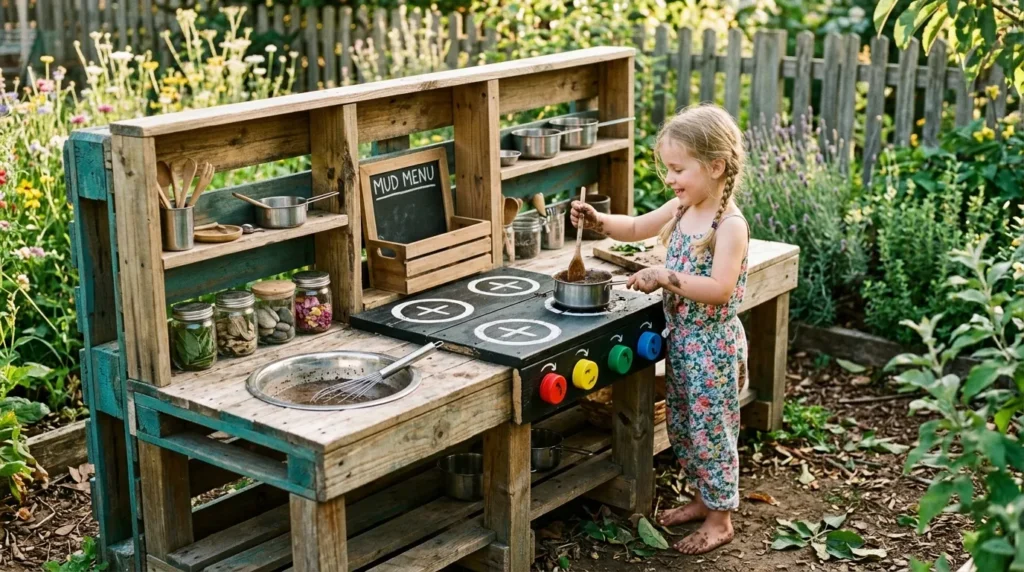
A stove setup adds a realistic touch to any outdoor mud kitchen and significantly enhances imaginative play. Children love mimicking adult cooking behaviors, and a simple stove-like structure allows them to fully immerse themselves in roleplay. Old lids, painted circles, or wooden discs can be used to represent burners, while small knobs can simulate stove controls. I’ve noticed that even simple visual details can dramatically increase engagement and creativity during outdoor play sessions.
Building this feature does not require advanced tools or expensive materials. In my experience, recycled household items work perfectly for creating a stove illusion. Many parents also paint burner outlines directly onto wooden surfaces for simplicity. Some even add turning knobs to increase realism. I’ve seen this work well in many homes where a basic DIY stove became the highlight of the entire backyard setup, encouraging storytelling, teamwork, and extended imaginative cooking activities among children.
5. Water Play Zone
Bullet Points
- Boosts sensory learning experience
- Encourages active exploration
- Keeps kids engaged longer
- Simple DIY water system
- Ideal for hot weather play
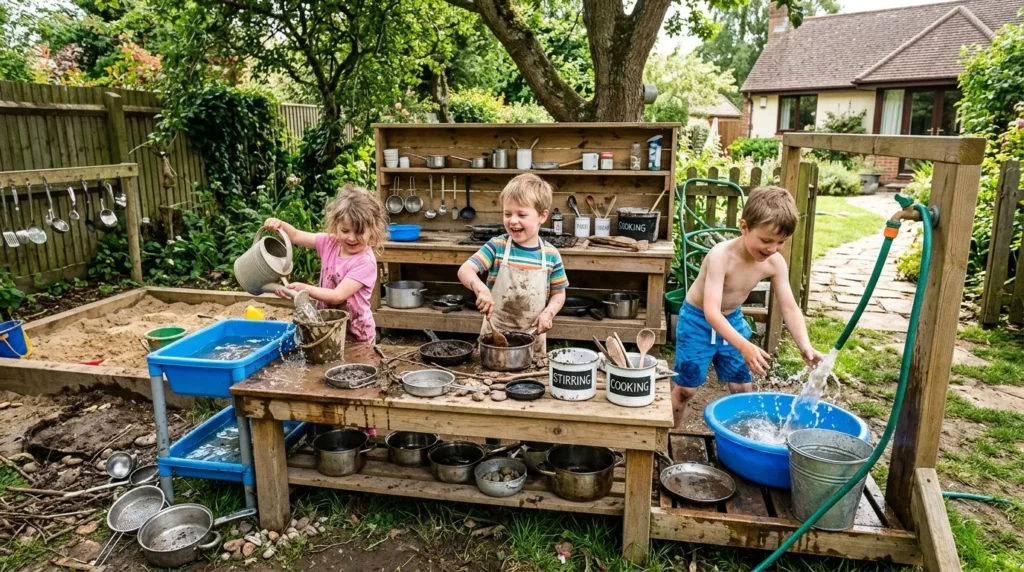
A water play zone is one of the most exciting additions to a backyard mud kitchen because it introduces dynamic sensory interaction. Children love experimenting with water, and when combined with mud and natural materials, it creates endless learning possibilities. Simple setups using buckets, tubs, or hoses allow kids to pour, mix, and explore freely. I’ve noticed this type of play keeps children engaged for long periods because it feels both refreshing and highly interactive.
Safety and simplicity are key when designing this area. In my experience, shallow containers or controlled water flow systems work best for younger children. Many parents also position water zones near mud counters to create a complete play ecosystem. I’ve seen this work well in many homes where a small water station became the most frequently used part of the backyard, promoting sensory development, coordination skills, and creative exploration in a natural outdoor environment.
6. Nature Design
Bullet Points
- Blends with outdoor environment
- Uses natural materials creatively
- Encourages eco-friendly play
- Simple low-cost styling
- Enhances visual aesthetics
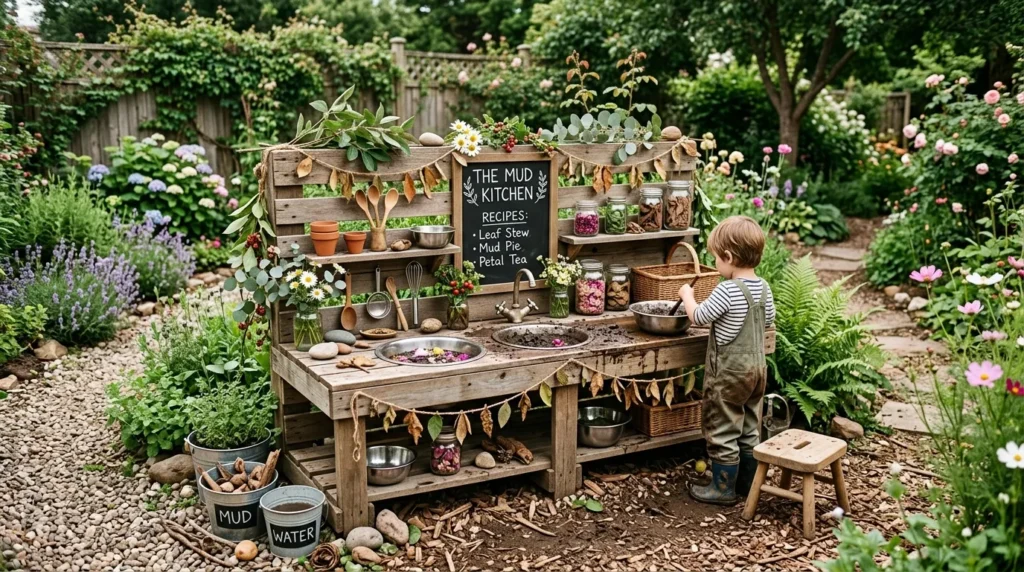
A nature-inspired design brings harmony and authenticity to any backyard mud kitchen by integrating natural elements into the play space. Using leaves, stones, branches, and flowers helps children connect more deeply with their environment while engaging in imaginative play. I’ve noticed that kids become more creative when they use real natural materials instead of artificial toys. This approach also keeps the setup simple, affordable, and highly adaptable to seasonal changes.
Designing with nature does not require complex construction or expensive decor. In my experience, even small touches like wooden textures or hanging plants can significantly enhance the atmosphere. Many parents rotate natural items depending on the season to keep the space fresh and engaging. I’ve seen this work well in many homes where a simple nature-themed setup transformed an ordinary backyard corner into a magical and educational outdoor learning environment.
7. Storage Bins
Bullet Points
- Keeps play area organized
- Easy cleanup after use
- Stores natural materials neatly
- Improves long-term usability
- Teaches responsibility to kids
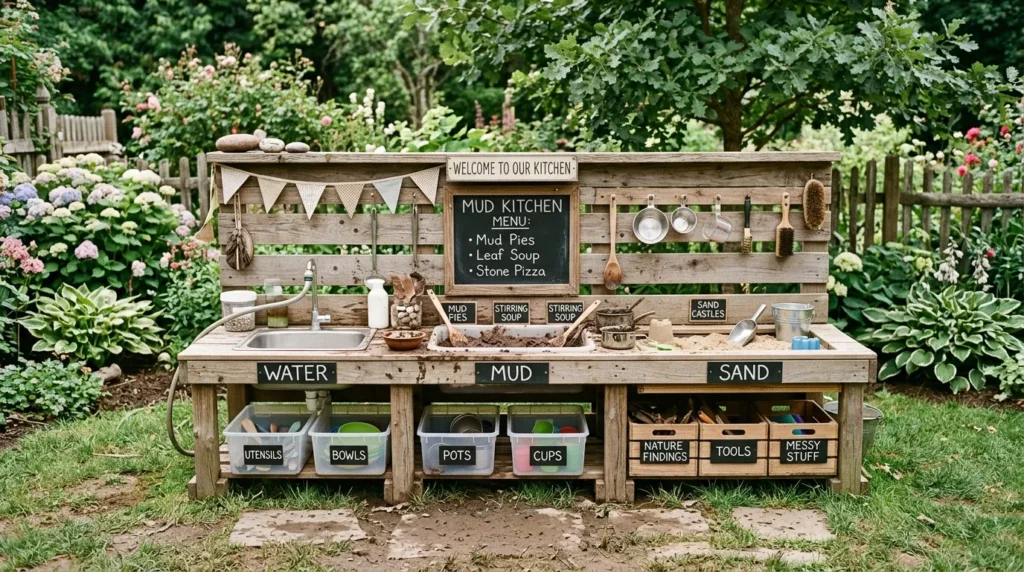
Storage bins are one of the most practical additions to any backyard mud kitchen because they help maintain order in a naturally messy play environment. Kids use mud, leaves, water, and sand during play, and having dedicated bins ensures everything stays organized and easy to manage. I’ve noticed that when children know where items belong, they naturally develop better organization habits. Even simple plastic containers or wooden crates can work effectively for separating materials and keeping the play area structured.
Durability and accessibility are important factors when designing storage systems outdoors. In my experience, weather-resistant bins are the best choice because they stay outside year-round. Many parents also label containers or use color-coded systems to help kids identify materials easily. I’ve seen this work well in many homes where a simple storage setup completely transformed a messy backyard into a structured and engaging learning space that promotes independence and responsibility.
8. Mini Stove
Bullet Points
- Adds realistic cooking element
- Encourages imaginative roleplay
- Easy recycled materials design
- Boosts creative storytelling
- Budget-friendly DIY feature
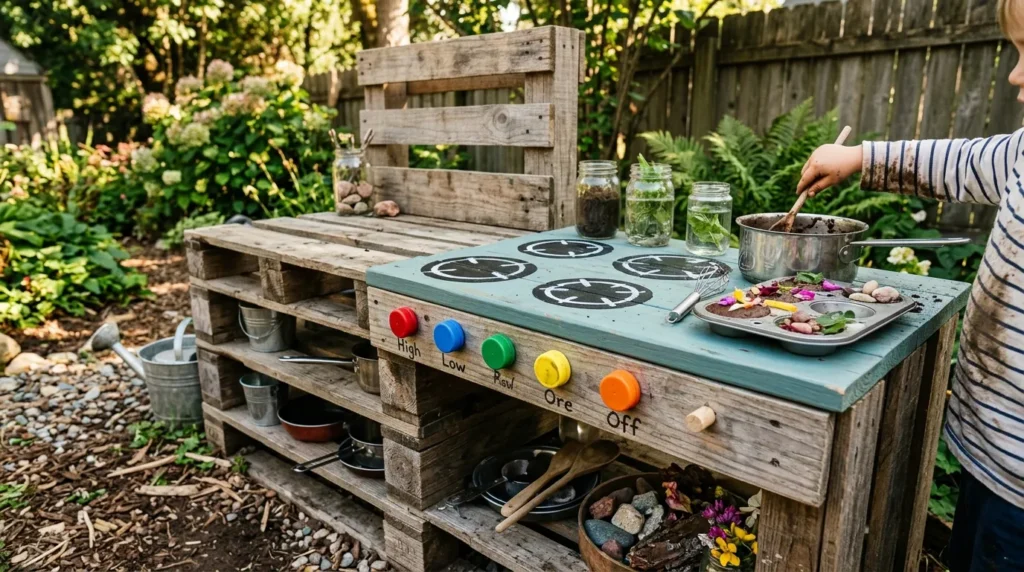
A mini stove is a creative feature that makes any backyard mud kitchen feel more realistic and engaging for children. By using recycled items like bottle caps, wooden discs, or painted circles, you can easily simulate stove burners. I’ve noticed that kids naturally enjoy copying real-life cooking behaviors, and a mini stove gives them a structured way to act out those experiences. Even a simple painted surface can transform their play into an immersive storytelling adventure.
Construction is simple and flexible depending on available materials. In my experience, adding small knobs or rotating pieces enhances realism and keeps children engaged longer. Many parents also involve kids in the design process, which makes the final setup more meaningful. I’ve seen this work well in many homes where a basic DIY stove became the centerpiece of outdoor play, encouraging teamwork, imagination, and hours of creative cooking activities.
9. Herb Garden
Bullet Points
- Introduces natural learning experience
- Encourages sensory exploration
- Adds real cooking ingredients
- Teaches responsibility and care
- Enhances outdoor aesthetics
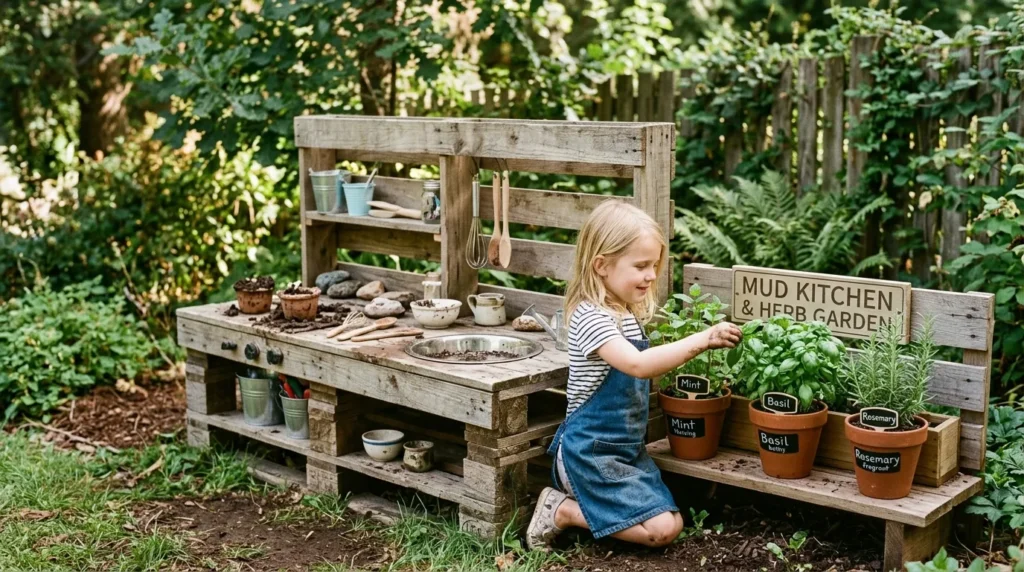
An herb garden is a wonderful addition to a backyard mud kitchen because it introduces real plants into imaginative play. Herbs like mint, basil, and rosemary allow children to interact with natural scents and textures while pretending to cook. I’ve noticed that kids become more curious about nature when they can touch, smell, and use real plants in their activities. This setup transforms a simple play area into an educational outdoor learning environment.
Maintenance is simple and highly flexible. In my experience, small pots or raised garden beds work best for easy access. Many parents label each herb to help children identify them during play. I’ve seen this work well in many homes where a small garden section became both a learning tool and a creative play extension, helping children develop responsibility while connecting them to nature in a meaningful way.
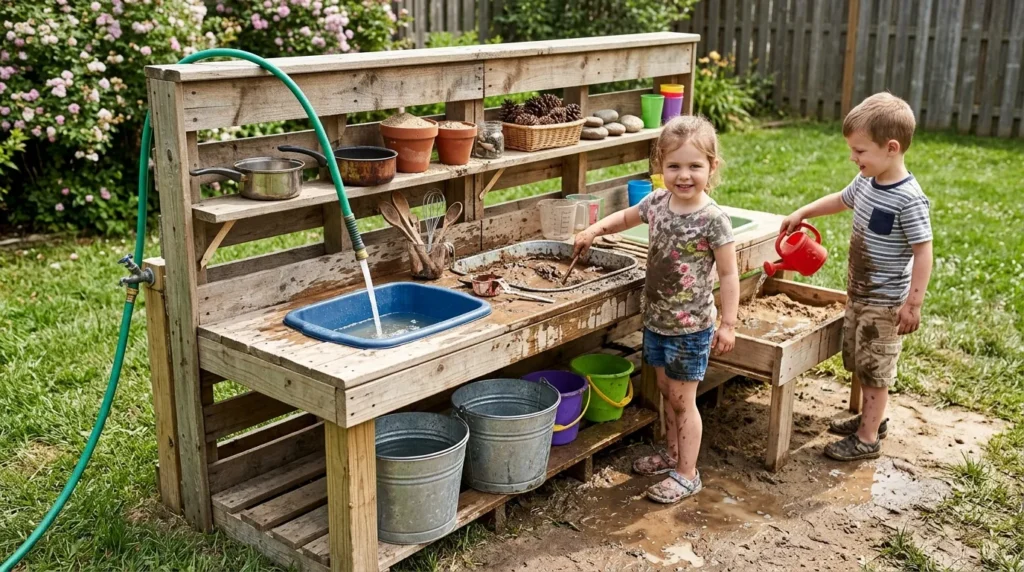
10. Water Station
Bullet Points
- Enhances sensory play experience
- Encourages hands-on exploration
- Keeps kids engaged longer
- Simple bucket or hose setup
- Ideal for warm climates
A water station is one of the most exciting features you can add to a backyard mud kitchen because it introduces endless sensory play opportunities. Children love pouring, mixing, and transferring water, especially when combined with mud and natural materials. I’ve noticed this type of setup keeps kids engaged for long periods because it allows open-ended exploration. Even simple buckets, basins, or a hose connection can create a highly interactive play environment.
Safety and simplicity should always guide the design. In my experience, shallow containers or controlled water flow systems are best for younger children. Many parents place water stations close to mud counters to create a complete play loop. I’ve seen this work well in many homes where a basic water area became the most popular feature in the backyard, supporting sensory development, coordination skills, and imaginative outdoor learning.
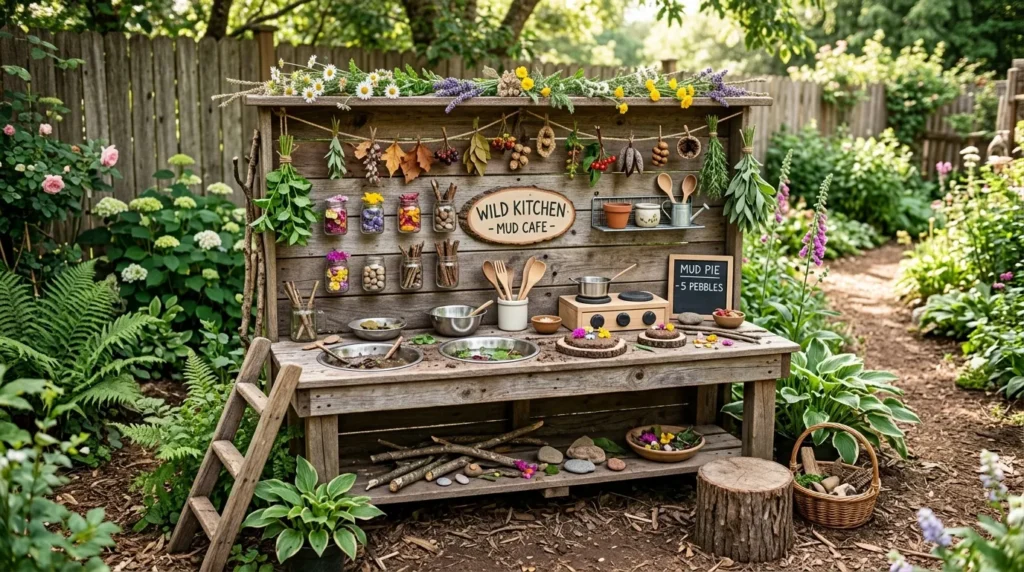
11. Nature Decor
Bullet Points
- Blends with outdoor environment
- Uses natural materials creatively
- Enhances visual appeal
- Encourages eco-friendly play
- Budget-friendly styling option
Nature decor is the finishing touch that brings a backyard mud kitchen to life by blending it seamlessly into the outdoor environment. Using elements like stones, branches, leaves, and flowers helps create a natural and immersive play setting. I’ve noticed children become more creative when surrounded by real natural textures instead of artificial decorations. This approach keeps the design simple, affordable, and highly adaptable to seasonal changes in the backyard.
Styling with nature does not require expensive materials or complex planning. In my experience, even small decorative touches like wooden accents or hanging plants can significantly improve the atmosphere. Many parents refresh natural elements seasonally to keep the play space interesting. I’ve seen this work well in many homes where a simple nature-themed setup transformed a basic backyard corner into a magical and highly engaging outdoor learning space.