
10 Cozy Home Decor Ideas
10 Cozy Home Decor Ideas
Introduction
A home feels truly cozy when it welcomes you before you even sit down. It is not only about soft blankets or pretty candles. It is about warmth, texture, lighting, comfort, and little details that make everyday rooms feel lived-in and loved. A cozy space should help you slow down after a long day, enjoy quiet mornings, host friends more comfortably, and feel relaxed in the middle of real life.
For USA homes, apartments, rentals, and small spaces, cozy decorating is one of the easiest ways to make rooms feel more personal without a major renovation. You can create a Cozy Home feeling with layered rugs, warm lighting, soft pillows, natural wood, woven baskets, candles, curtains, books, and thoughtful seating. These ideas are practical, Pinterest-friendly, and easy to adjust for your own style.
1. Soft Lighting
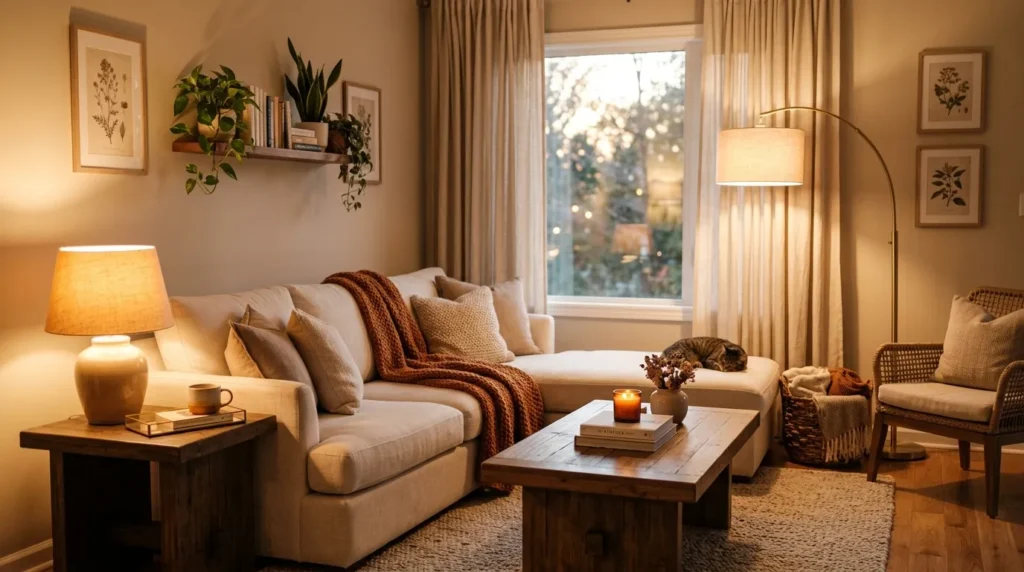
- Use table lamps, floor lamps, sconces, and candles instead of relying only on ceiling lights.
- Choose warm white bulbs to make rooms feel softer and more welcoming.
- Place lamps at different heights to create depth and evening atmosphere.
- Add dimmers or smart bulbs for better mood control throughout the day.
- Use fabric lampshades, ceramic bases, or wood details for extra warmth.
Soft lighting can change the whole mood of a room faster than almost any decor piece. Harsh overhead lights often make a space feel flat, cold, and unfinished, especially at night. A better approach is to create small pools of warm light around the room. Place a lamp beside the sofa, another near a reading chair, and one on a console or nightstand. In my experience, layered lighting makes even simple furniture feel more thoughtful, relaxed, and welcoming after sunset.
The transformation is especially noticeable in living rooms and bedrooms where comfort matters most. Warm bulbs, linen shades, brass lamps, ceramic bases, and soft wall sconces create a glow that feels gentle instead of sharp. If your room feels plain, try turning off the ceiling light and using only lamps for one evening. You will immediately notice how the space feels calmer and more intimate. This idea is renter-friendly, affordable, and easy to update whenever your decor style changes.
2. Layered Textiles
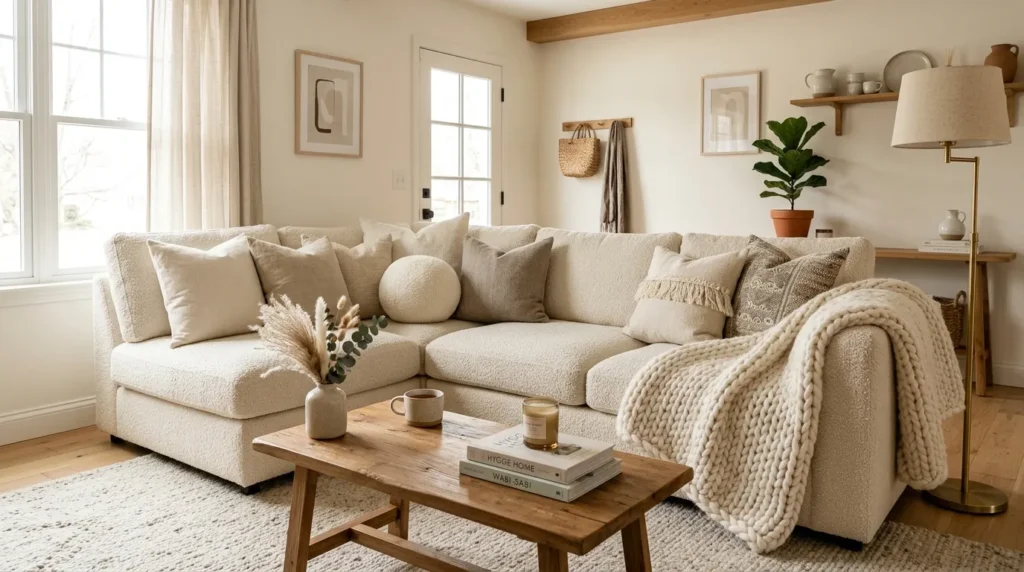
- Mix pillows, throws, curtains, blankets, and soft upholstery for visual comfort.
- Use different textures like knit, linen, velvet, cotton, boucle, and faux fur.
- Keep colors connected so the room feels cozy instead of cluttered.
- Layer throws over sofas, beds, benches, or accent chairs.
- Choose washable fabrics for family rooms, pets, and everyday use.
Layered textiles make a room feel instantly warmer because they invite touch. A sofa with only two flat pillows can feel unfinished, while a mix of cushions, throws, and soft fabrics makes the same space feel relaxed and styled. The key is texture, not just quantity. Pair smooth cotton with chunky knit, linen with velvet, or boucle with a soft woven throw. That’s why many designers recommend layering fabric when a room needs comfort without adding more furniture.
The finished look should feel collected but not messy. Choose two or three main colors, then vary the textures within that palette. For example, cream pillows, a tan knit throw, and a soft brown cushion can create depth without overwhelming the sofa. On a bed, layer sheets, a duvet, a quilt, and one folded blanket at the foot. This idea works beautifully in every season because you can swap heavier fabrics in winter and lighter ones in spring.
3. Warm Neutrals
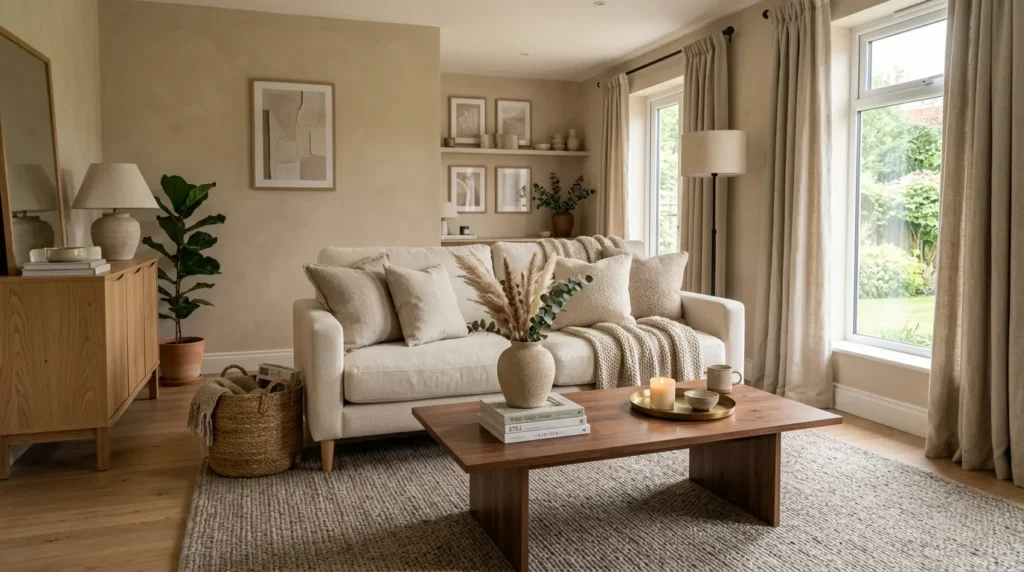
- Build the room around cream, beige, taupe, warm gray, oatmeal, and soft brown.
- Add contrast with black, bronze, walnut, olive, rust, or deep charcoal accents.
- Use texture to keep neutral rooms from feeling plain or empty.
- Repeat similar tones across rugs, pillows, curtains, and furniture.
- Keep large furniture pieces neutral for a calm and flexible foundation.
Warm neutrals create a calm background that makes a room feel peaceful and easy to live in. Cool whites and flat grays can sometimes feel stark, but cream, beige, taupe, and oatmeal bring softness without making the room dark. This palette works especially well in apartments and smaller homes because it reduces visual noise. In my experience, warm neutrals also make budget-friendly furniture look more expensive because everything feels connected and intentional.
The transformation comes from layering shades rather than choosing one color for everything. A cream sofa, beige rug, walnut table, tan curtains, and black lamp can look rich without using bold colors. Add woven baskets, ceramic vases, and textured pillows so the room does not feel flat. This approach is practical because it works with many styles, including farmhouse, modern, coastal, rustic, and minimal decor. A warm neutral room feels soft, flexible, and easy to refresh seasonally.
4. Reading Nook
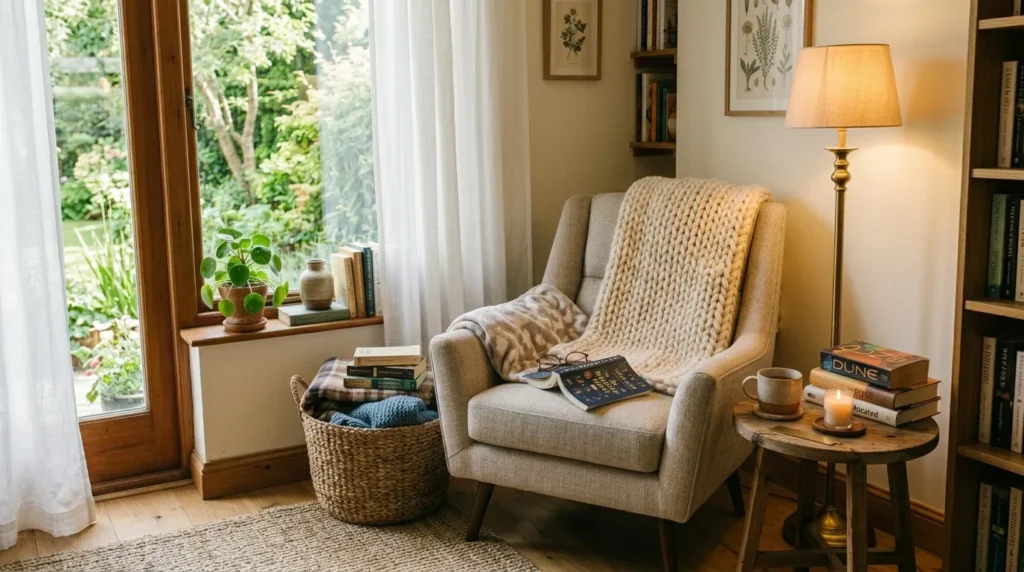
- Create a small corner with one comfortable chair, soft light, and a side table.
- Add a throw blanket, pillow, basket, and small stack of books.
- Place the nook near a window if natural light is available.
- Use a rug or floor lamp to visually define the corner.
- Keep the setup simple so it feels peaceful, not crowded.
A reading nook makes a home feel more personal because it creates a dedicated place to slow down. You do not need a large room or built-in shelves to make one work. A quiet corner with a comfortable chair, small table, lamp, and blanket can become a favorite spot for coffee, journaling, or evening reading. I’ve seen this work well in many homes because the nook gives an unused corner a clear purpose.
The finished space should feel inviting from across the room. Choose a chair that supports your body, then add one pillow and a throw for comfort. A small table gives you a place for tea, glasses, or a book, while a basket keeps extra blankets nearby. If the corner feels empty, add a plant, framed print, or wall sconce. This idea turns overlooked spaces into useful comfort zones and makes the whole room feel more thoughtful.
5. Candle Glow
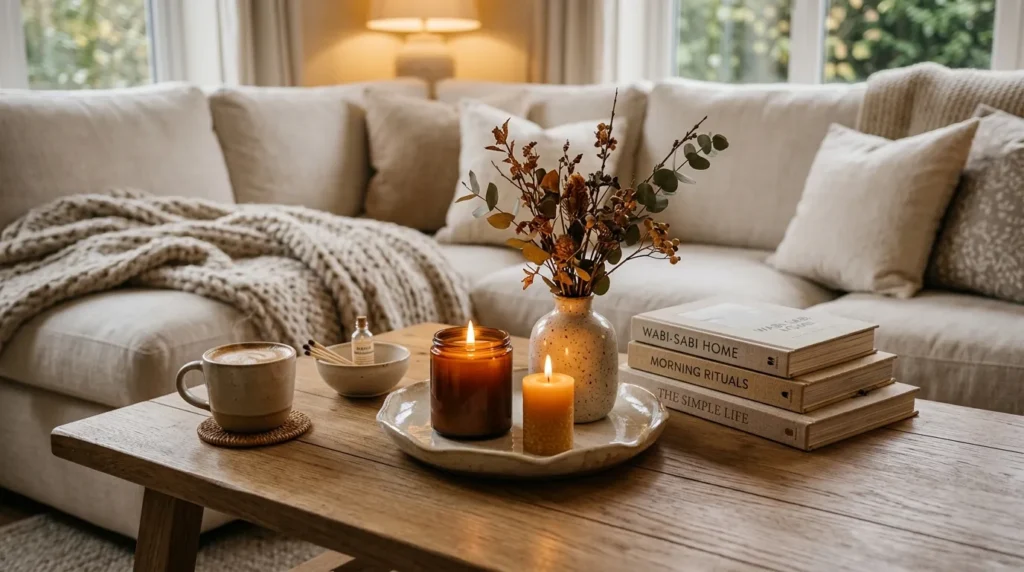
- Use candles, lanterns, LED candles, or wax warmers for soft evening atmosphere.
- Group candles on trays, mantels, coffee tables, or bathroom counters.
- Choose scents that match the season without overwhelming the room.
- Use unscented candles during meals or in smaller rooms.
- Keep open flames away from curtains, pets, kids, and crowded surfaces.
Candle glow adds warmth because it creates movement and softness that regular lighting cannot copy. Even one small flame can make a room feel more peaceful after dark. Candles work well on coffee tables, shelves, bathroom counters, mantels, and nightstands when styled safely. If you prefer a low-maintenance option, LED candles can still create a beautiful glow without worrying about open flames. The goal is atmosphere, not clutter, so a few well-placed candles usually look better than many scattered ones.
The transformation feels especially cozy during fall, winter, rainy evenings, or quiet weekends at home. Place candles on a tray with a small vase, book stack, or ceramic bowl to make the arrangement feel styled. Choose warm scents like vanilla, amber, cedar, pumpkin, cinnamon, or clean cotton depending on the season. Use unscented candles when serving food so the fragrance does not compete. This small detail makes daily routines feel more special without needing expensive decor or major changes.
6. Natural Wood
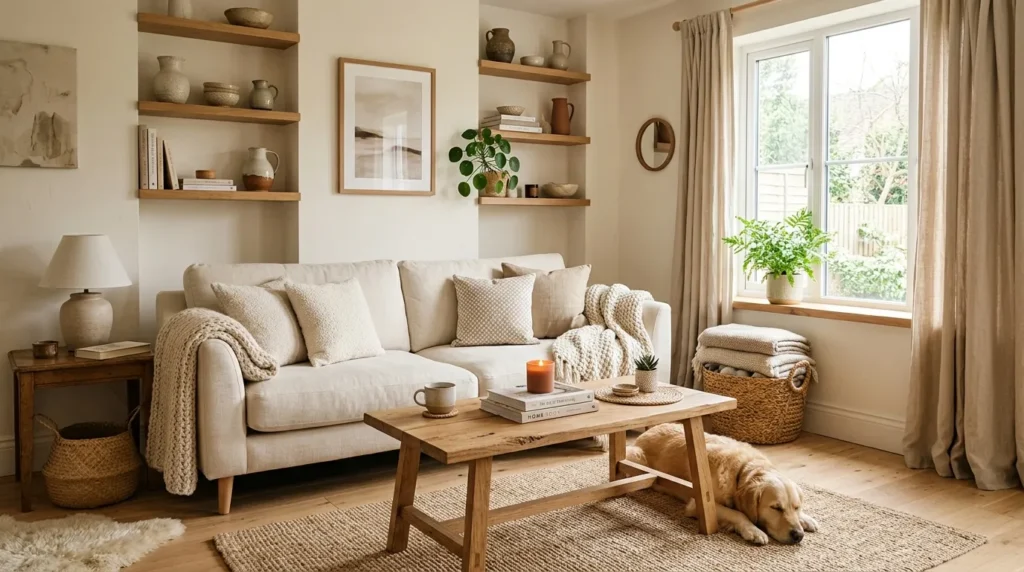
- Add wood through coffee tables, shelves, trays, benches, frames, or side tables.
- Choose warm finishes like oak, walnut, pine, maple, or reclaimed wood.
- Pair wood with soft fabrics, warm lighting, and neutral colors.
- Use lighter wood in small rooms and darker wood for richer contrast.
- Mix wood carefully so the room feels collected, not mismatched.
Natural wood brings warmth into a room in a way that paint and fabric cannot fully replace. It adds texture, grounding, and a sense of comfort that feels timeless. A wood coffee table, open shelf, picture frame, tray, or bench can make a room feel more relaxed and balanced. This idea works because wood connects modern furniture with softer, lived-in details. Even a small wood accent can warm up rooms that feel too white, gray, or polished.
The final look depends on how the wood tones are repeated. If you choose an oak coffee table, try adding an oak frame or woven basket nearby so the finish feels connected. Walnut adds depth, pine feels casual, and reclaimed wood brings rustic character. Pair wood with linen, cotton, wool, ceramic, and plants for a balanced look. This idea is useful in living rooms, bedrooms, kitchens, and entryways because it adds warmth without needing bright color or busy pattern.
7. Plush Rugs
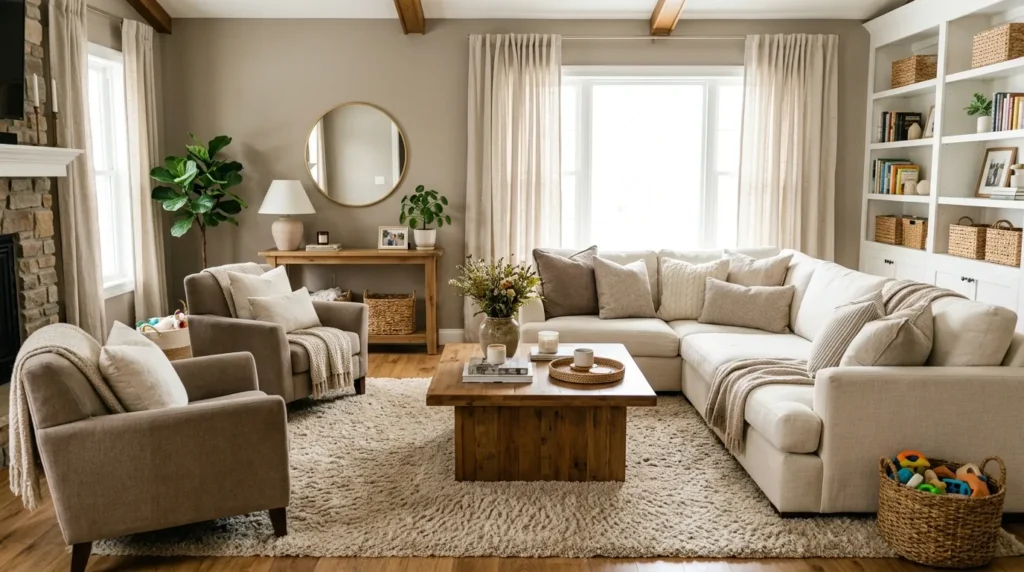
- Use rugs to soften floors and define living areas, bedrooms, and reading corners.
- Choose wool, washable, shag, flatweave, or vintage-style rugs based on your routine.
- Pick a size large enough to connect furniture pieces visually.
- Layer a smaller rug over jute for extra texture and depth.
- Use rug pads for comfort, safety, and better floor protection.
A plush rug can make a room feel cozy from the ground up. Hard floors are practical, but they can make a space feel cold if nothing softens them. A rug adds warmth, texture, sound absorption, and visual structure all at once. It also helps define zones in open layouts, especially in apartments where the living room, dining area, and workspace may share one space. In my experience, a properly sized rug often makes a room feel more finished immediately.
The transformation depends heavily on scale. A rug that is too small can make furniture look disconnected, while a larger rug pulls the seating area together. Choose soft neutrals for a calm look, muted vintage patterns for character, or layered jute and wool for natural texture. In bedrooms, let the rug extend beyond the bed so your feet land on something soft in the morning. This idea adds comfort, style, and warmth without changing the room permanently.
8. Styled Shelves
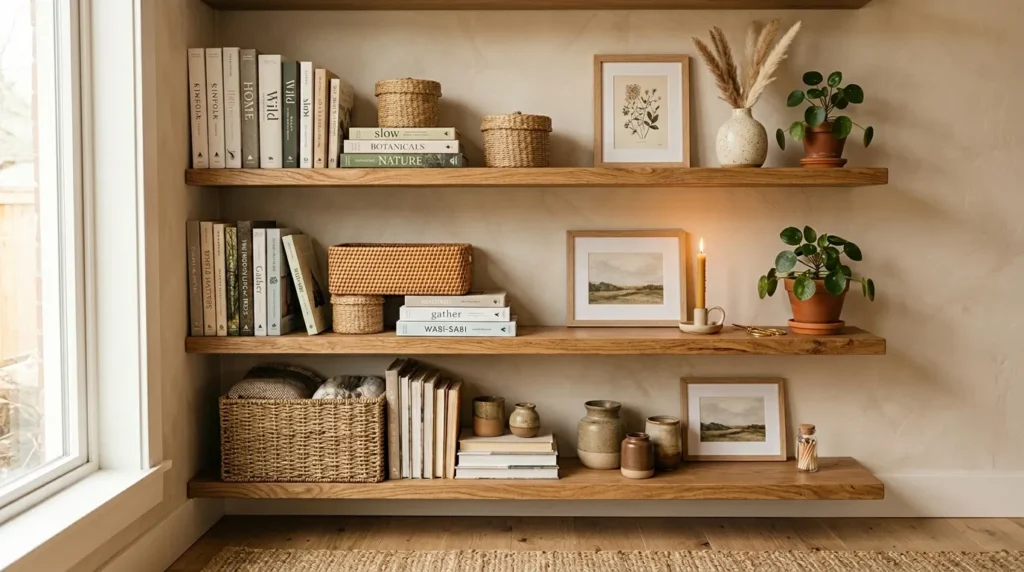
- Use shelves to display books, baskets, ceramics, candles, plants, and framed art.
- Mix practical storage with decorative pieces so shelves feel useful and beautiful.
- Leave empty space between items for a cleaner and calmer look.
- Use baskets or boxes to hide cords, papers, remotes, and small clutter.
- Repeat colors and textures to make the shelves feel intentional.
Styled shelves add personality while helping a room feel complete. Empty shelves can feel unfinished, but crowded shelves can make the room feel busy. The best approach is balance. Mix books, baskets, small plants, framed photos, candles, and ceramics in a way that feels natural. That’s why many designers recommend using a few larger pieces instead of many tiny decorations. Bigger items create structure, while smaller pieces add charm without taking over the whole wall.
The finished shelves should tell a quiet story about the home. Use woven baskets for hidden storage, stack books horizontally and vertically, and add one plant for softness. Keep colors connected with the room so the shelves do not feel random. If your space is small, choose lighter shelves or leave more negative space to keep the wall from feeling heavy. This idea works well in living rooms, bedrooms, kitchens, and home offices where you need both function and warmth.
9. Seasonal Baskets
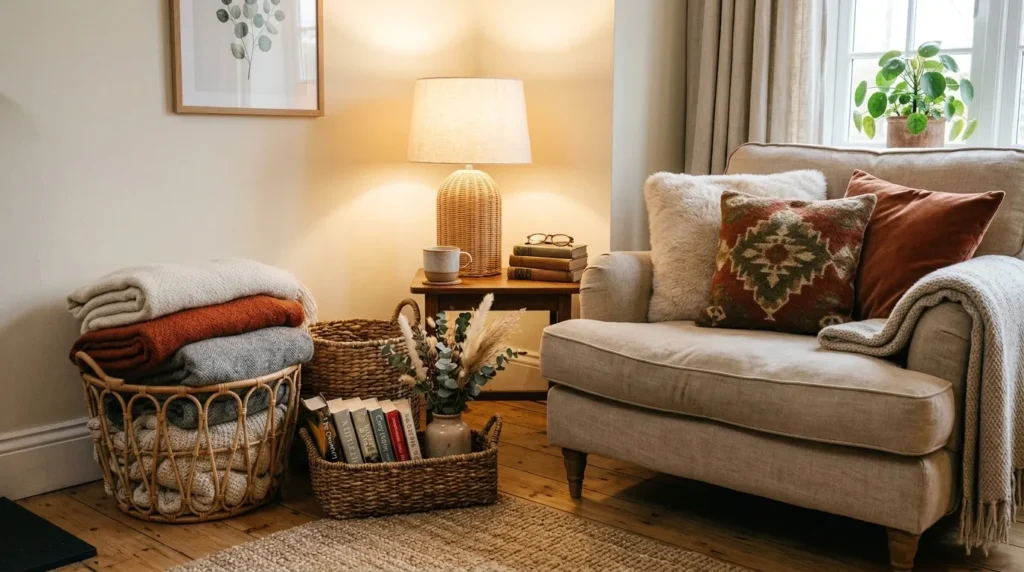
- Use woven baskets for blankets, pillows, firewood, toys, shoes, or magazines.
- Choose natural materials like rattan, seagrass, jute, wicker, or water hyacinth.
- Place baskets near sofas, beds, entryways, fireplaces, or reading corners.
- Rotate contents seasonally with throws in winter and lighter linens in summer.
- Use matching baskets if you want a cleaner, more organized look.
Seasonal baskets make cozy decorating practical because they hold the items people actually use. A beautiful room can still feel messy if blankets, toys, shoes, or magazines have nowhere to go. Woven baskets solve that problem while adding natural texture. They work in almost every room and can slide under consoles, sit beside sofas, or tuck near beds. In my experience, baskets are one of the easiest ways to make storage look like decor instead of cleanup.
The transformation is simple but useful. Place a large basket near the couch for throws, a smaller one by the entry for slippers, or a lidded basket in the bedroom for extra linens. In colder months, fill baskets with chunky blankets and warm pillows. In warmer months, use them for lightweight throws, books, or outdoor cushions. Natural woven texture pairs well with farmhouse, modern, coastal, boho, and rustic styles. This idea keeps daily comfort close while helping rooms stay tidy.
10. Bedroom Layers
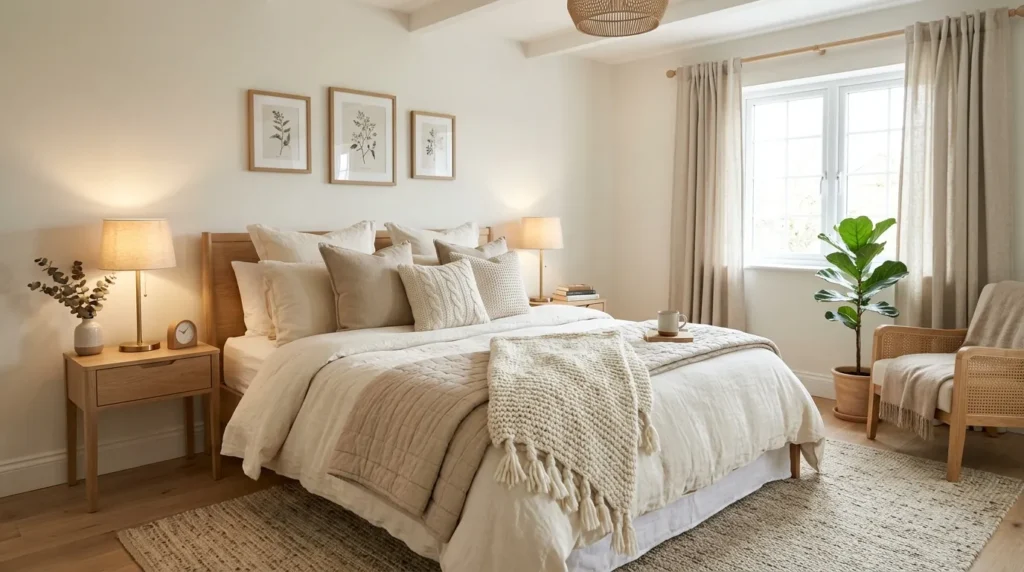
- Layer bedding with sheets, duvet, quilt, throw blanket, and soft pillows.
- Use calm colors like white, cream, beige, sage, taupe, rust, or soft gray.
- Add bedside lamps, curtains, rugs, and baskets for a complete cozy feeling.
- Keep nightstands simple with only useful and beautiful essentials.
- Choose breathable fabrics so the bed feels comfortable across seasons.
Bedroom layers create the kind of comfort that makes the whole home feel more restful. The bed is usually the largest piece in the room, so it sets the tone immediately. A flat, thin bed can make the room feel unfinished, while layered bedding feels soft and inviting. Start with comfortable sheets, add a duvet or quilt, then finish with a folded throw and a few pillows. This does not need to look perfect; it should feel easy to use every day.
The finished bedroom should feel calm when you walk in at night. Use soft colors, warm lighting, and natural textures to create a peaceful retreat. A rug under the bed adds warmth, curtains soften the windows, and a small basket can hold extra blankets or books. Keep nightstands uncluttered so the space feels restful instead of busy. This final idea brings the Cozy Home feeling into the room where comfort matters most, making everyday routines feel slower and softer.