
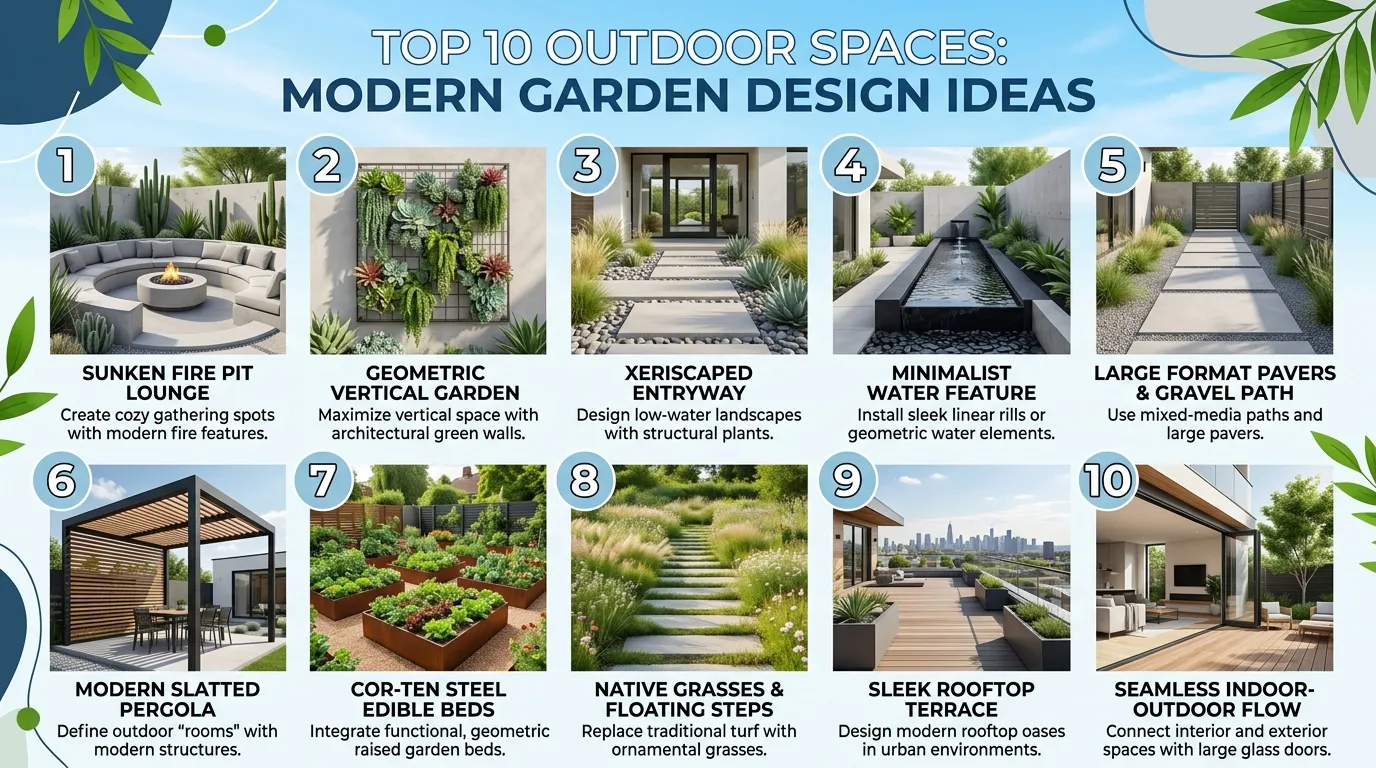
Top 10 Outdoor Spaces: Do Modern Garden Ideas
Introduction
A modern garden does not have to look cold, empty, or expensive. The best designs feel calm, useful, and beautiful at the same time. For USA homes, this matters because every yard is different. Some people have a wide suburban backyard, some have a small patio, and some only have a narrow side garden. Still, with the right layout, materials, plants, lighting, and furniture, even a simple yard can feel like a relaxing outdoor room.
These Outdoor Spaces ideas are designed for real homes, not just perfect magazine gardens. You will find modern garden layouts that are practical, stylish, and easy to picture on Pinterest. Each idea focuses on how the space looks, how it feels, what materials work best, and how you can actually use it for relaxing, hosting, reading, dining, or enjoying quiet evenings outside.
1. Patio Lounge
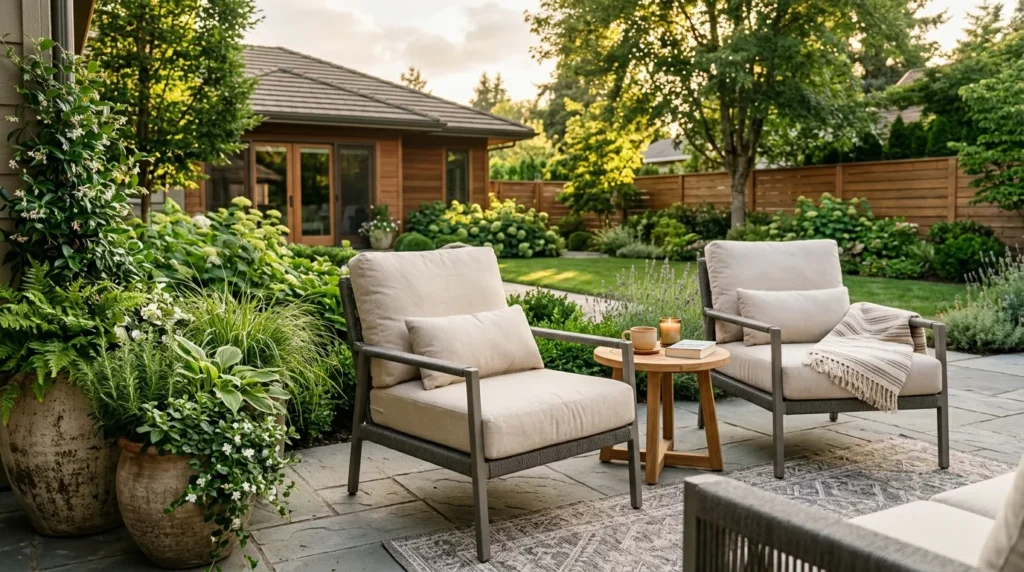
- Creates a comfortable outdoor sitting area.
- Works with concrete, stone, tile, gravel, or pavers.
- Best with low-profile chairs, cushions, and a small table.
- Adds function without needing a large backyard.
- Looks modern when colors stay soft and neutral.
A patio lounge can turn a plain backyard into a place people actually want to use. The idea works because it gives the garden a clear purpose instead of leaving the space open and unfinished. Use concrete pavers, outdoor tile, gravel, or stone as the base, then add comfortable seating that fits the size of the area. In my experience, smaller furniture often looks better than oversized patio sets because it leaves room to walk, breathe, and enjoy the garden without feeling crowded.
The transformation feels immediate because the yard becomes more than something you look at through a window. It becomes a place for coffee, reading, phone calls, or evening conversations. Keep the furniture simple with weather-resistant cushions, one side table, and one large planter nearby. Add a neutral outdoor rug if the surface feels too plain. This setup works for suburban backyards, townhome patios, and even small deck spaces. The final look feels relaxed, modern, and easy to maintain through busy weeks.
2. Gravel Garden
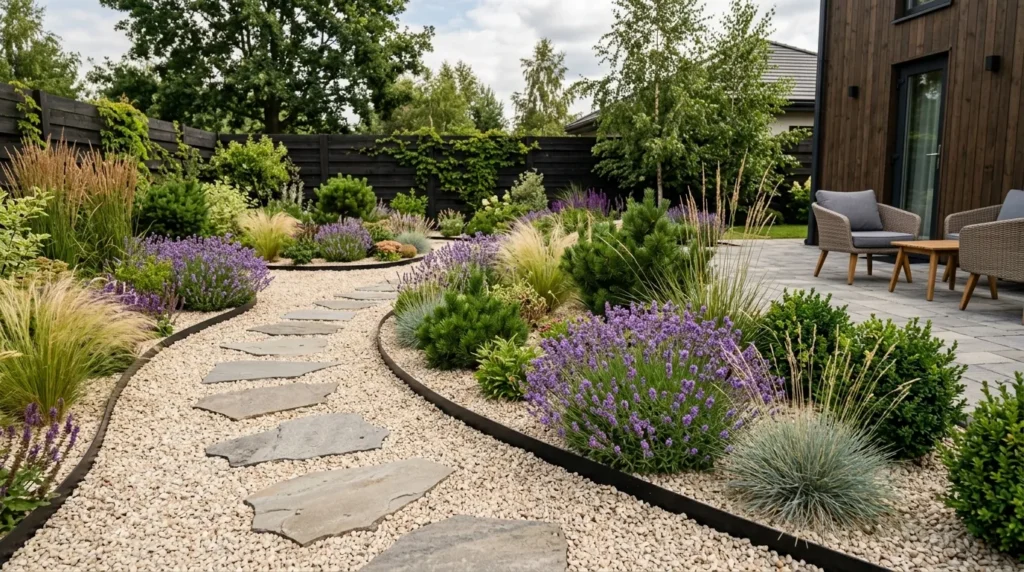
- Gives the yard a clean and low-maintenance base.
- Works well in dry areas or patchy lawn spots.
- Use pea gravel, crushed granite, or decomposed granite.
- Pair with ornamental grasses, lavender, and stone edging.
- Adds texture without making the garden feel busy.
A gravel garden feels modern because it looks clean, simple, and intentional. Instead of fighting with dry grass or muddy corners, you can create a textured base that needs less water and less mowing. Pea gravel, decomposed granite, or crushed stone can all work depending on your climate and budget. That’s why many designers recommend gravel for yards where grass struggles. Add metal edging, stepping stones, and a few structured plants so the layout feels polished rather than unfinished or temporary.
This idea is especially useful for American homes in hot, dry, or low-water regions, but it can work almost anywhere with good drainage. Pair pale gravel with ornamental grasses, lavender, rosemary, boxwood, or drought-tolerant perennials for a soft modern look. A gravel surface also helps define seating corners, pathways, and small firepit areas without pouring concrete. The space becomes easier to care for and more visually organized. It gives the garden a calm, edited feeling while still keeping enough natural texture to feel warm.
3. Raised Planters
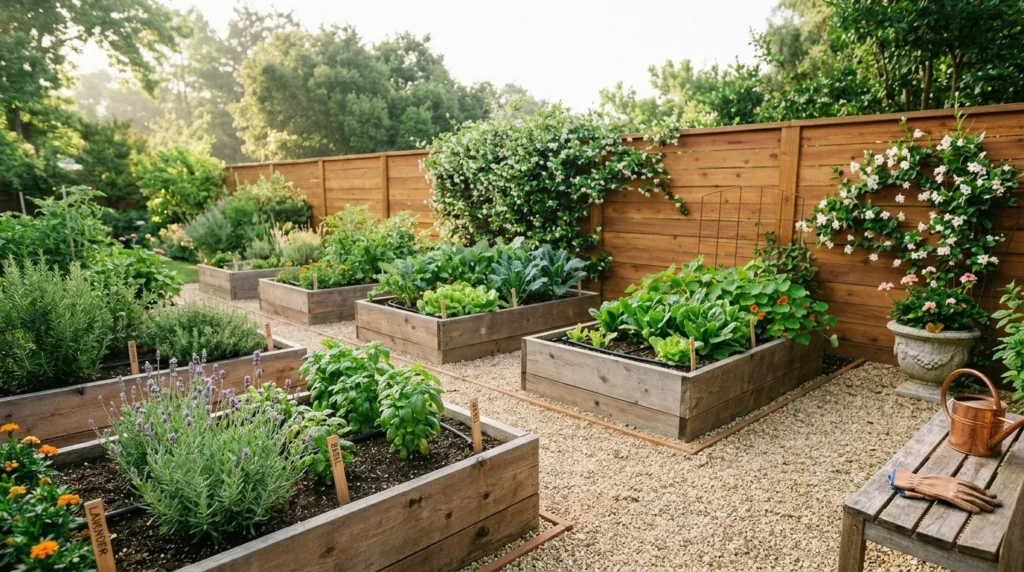
- Adds structure and height to the garden.
- Works well for herbs, flowers, vegetables, or shrubs.
- Use cedar, metal, stone, concrete, or composite boxes.
- Helps separate planting areas from seating zones.
- Makes small gardens look neat and organized.
Raised planters are perfect when you want greenery without a messy layout. They create clear planting zones, which makes the garden feel more designed and easier to maintain. Cedar boxes bring warmth, metal planters feel modern, and concrete containers add a strong architectural look. Use them along fences, beside patios, or around lounge areas. I’ve noticed raised planters work especially well in small yards because they bring plants upward instead of spreading everything across the ground in a crowded way.
The best part is how useful they are for real life. You can grow herbs near an outdoor kitchen, flowers beside a seating area, or compact vegetables in a sunny corner. Raised planters also help with poor soil, drainage issues, and easier maintenance because you control the soil inside the box. Keep the shapes simple and repeat the same material for a cleaner look. When styled well, these planters act like garden furniture, giving the yard structure, greenery, and a polished modern finish.
4. Fire Feature
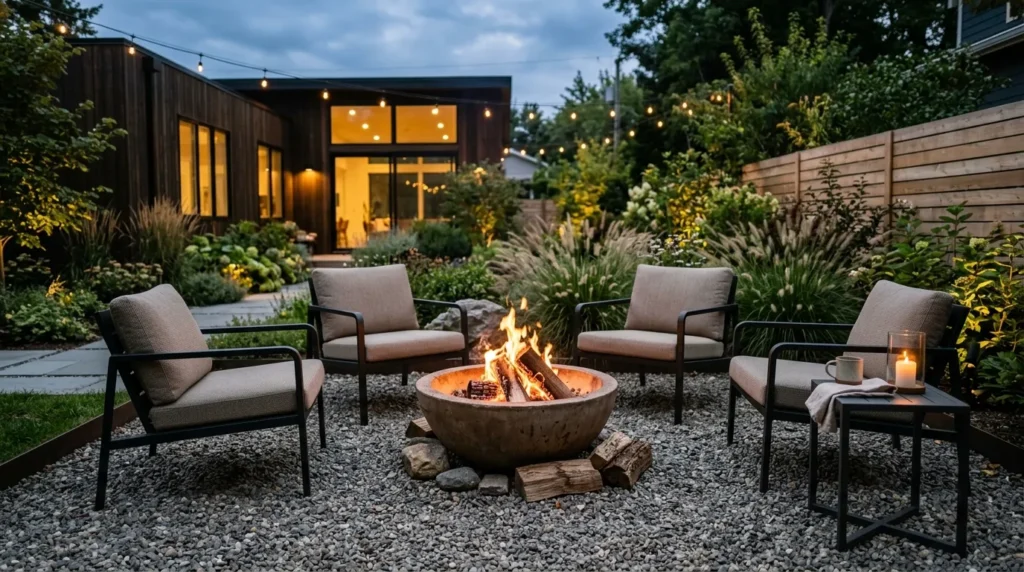
- Creates a warm gathering point in the garden.
- Works with fire bowls, gas fire tables, or built-in pits.
- Place on gravel, pavers, concrete, or stone.
- Keep seating simple and safely spaced.
- Adds evening use and cozy visual appeal.
A fire feature gives a modern garden a natural center. It creates warmth, movement, and a reason for people to gather outside, even when the weather gets cooler. You can choose a round fire bowl, a rectangular gas fire table, or a small built-in firepit depending on your space. The key is scale. A huge firepit can overwhelm a small yard, while a compact feature can feel stylish and useful. Always place it on a safe surface like stone, gravel, concrete, or pavers.
This idea changes how the garden is used after sunset. Instead of going inside once the evening cools down, the yard becomes a place for conversation, snacks, and quiet time. Add two to four chairs, one side table, and soft lighting nearby. Avoid crowding the area with too many decorations because the fire already acts as the main feature. When planned carefully, the fire area feels cozy but still modern. It gives the garden a strong focal point without needing a complicated renovation.
5. Dining Corner
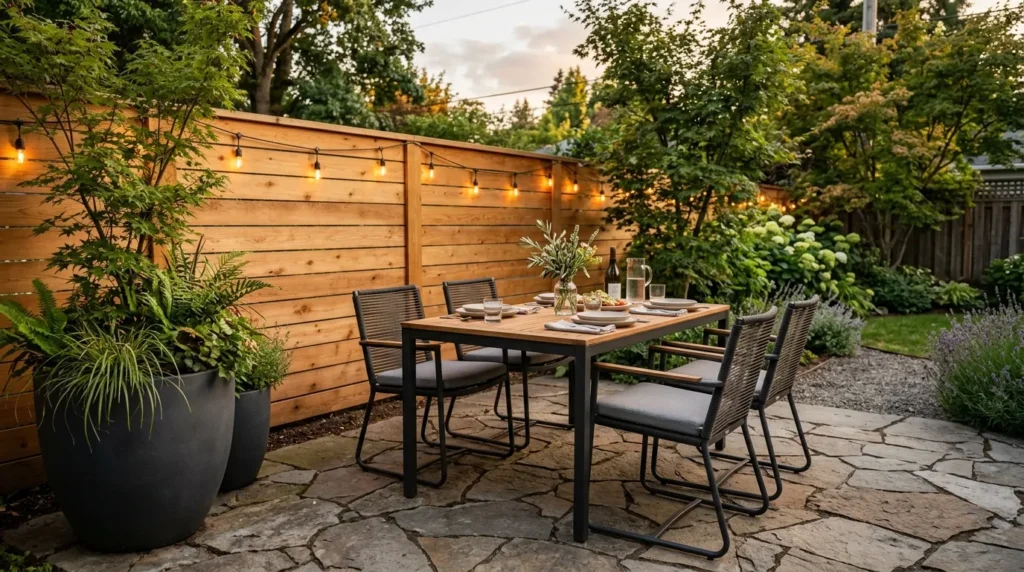
- Creates a dedicated place for outdoor meals.
- Works with small bistro sets or full dining tables.
- Use shade, lighting, and easy-clean surfaces.
- Best near the kitchen, patio door, or grill area.
- Adds function for family meals and casual hosting.
A dining corner makes a garden feel more useful right away. Even a small table with two chairs can completely change how often the backyard gets used. Place the dining area close to the kitchen door if possible, because carrying food, drinks, and dishes becomes easier. Use pavers, decking, gravel, or outdoor tile under the table so chairs stay level. In my experience, people use outdoor dining spaces more when they feel convenient, shaded, and easy to clean after meals.
The visual upgrade comes from making the corner feel intentional. Add a slim table, comfortable chairs, one planter, and warm overhead lighting if the setup allows. A pergola, umbrella, or shade sail can make the area more comfortable during sunny afternoons. Choose materials that handle weather well, such as powder-coated metal, teak, resin wicker, or concrete. The finished space becomes perfect for weekend brunch, summer dinners, or simple weeknight meals outside. It makes the garden feel lived-in, not just decorated.
6. Pergola Shade
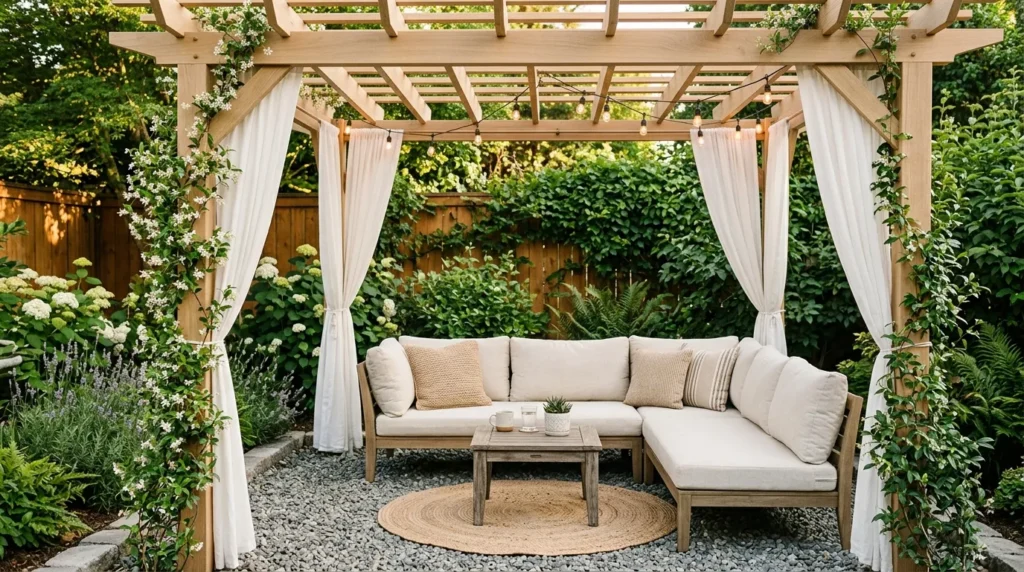
- Adds height, shade, and structure to the yard.
- Works over seating, dining, or lounge areas.
- Use wood, vinyl, aluminum, or black metal.
- Can be styled with vines, curtains, or lights.
- Helps define the garden like an outdoor room.
A pergola gives a modern garden instant architecture. It adds height where the yard may feel flat and creates a clear zone for sitting, dining, or relaxing. Wood pergolas feel warm and natural, while black metal or aluminum designs look cleaner and more contemporary. Place one over a patio, gravel lounge, or dining area to make that section feel finished. That’s why many designers recommend pergolas when a garden needs structure but not a full roof or enclosed room.
The usability improves because shade makes the space more comfortable during sunny days. Add climbing plants like jasmine, wisteria, roses, or grapevine if your climate supports them, or keep the structure clean with string lights and outdoor curtains. For a modern look, avoid too many hanging decorations. Let the frame, furniture, and planting do the work. The result feels calm, stylish, and practical. A pergola can make even a basic patio feel like a planned outdoor living space.
7. Water Bowl
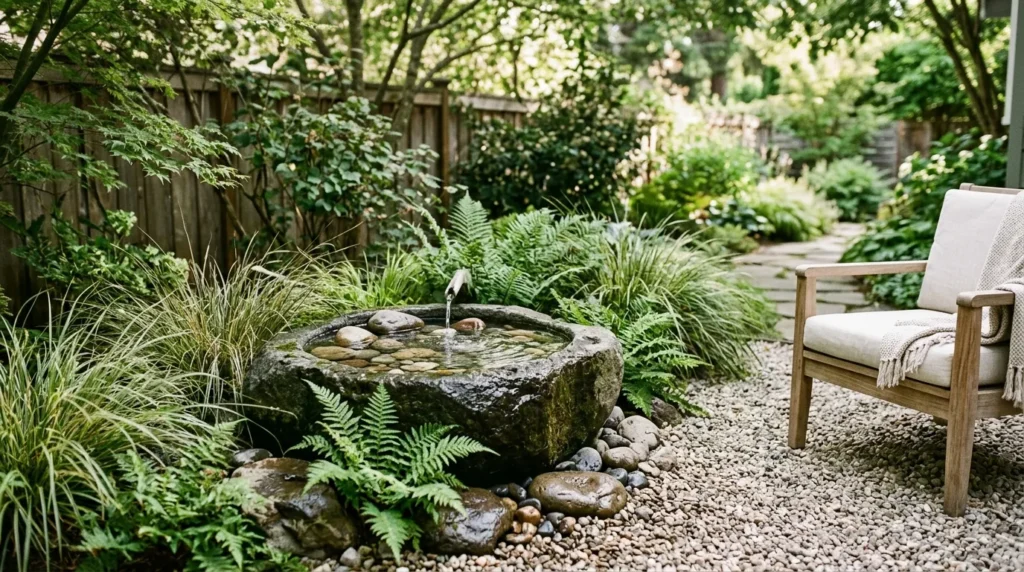
- Adds sound, reflection, and calm movement.
- Works with stone, ceramic, concrete, or metal.
- Best near seating, windows, or quiet corners.
- Pair with smooth rocks, grasses, or simple plants.
- Keep the size compact for easier maintenance.
A water bowl brings peace into the garden without taking up much space. The sound of moving water can soften traffic noise, neighbor sounds, and the general busyness around a home. Choose a simple stone basin, ceramic bowl, concrete fountain, or matte black metal feature for a modern look. Keep the design low and clean rather than overly decorative. In my experience, small water features look best when they feel like part of the planting, not a random object placed in the yard.
This idea works beautifully near a lounge chair, patio bench, or kitchen window where you can actually hear the water. Surround the bowl with gravel, river stones, ferns, ornamental grasses, or one sculptural plant. Make sure the pump is easy to reach for cleaning and refilling. The space becomes softer, calmer, and more spa-like without needing a large pond. A compact water bowl is especially helpful in smaller gardens because it adds atmosphere while keeping the layout open and easy to manage.
8. Vertical Wall
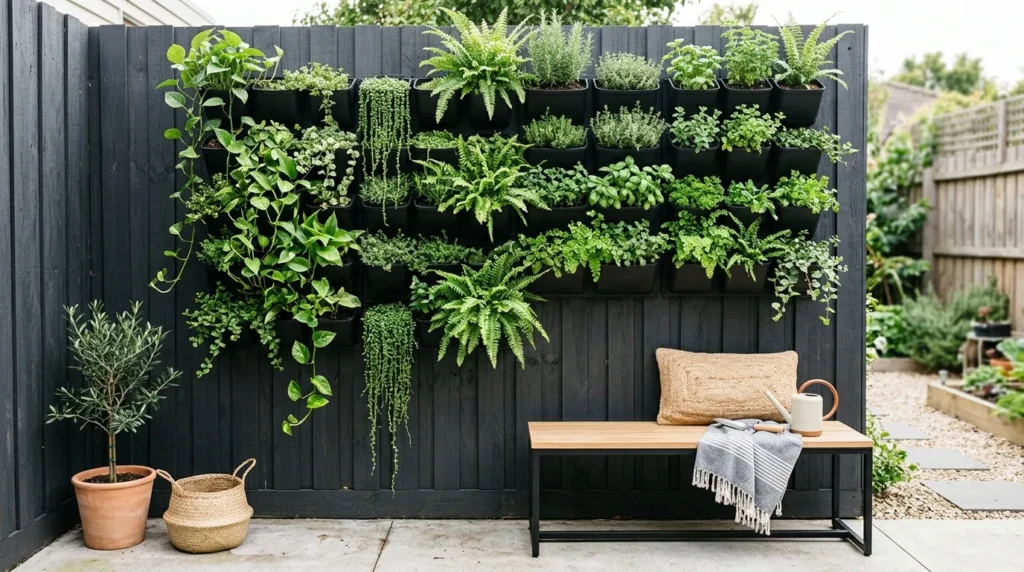
- Adds greenery without using ground space.
- Works for patios, fences, balconies, and narrow yards.
- Use wall planters, trellises, shelves, or pocket systems.
- Best with herbs, ferns, vines, or trailing plants.
- Helps hide plain walls and create privacy.
A vertical wall is a smart way to make a modern garden feel lush without losing floor space. Instead of spreading plants across the ground, you use a fence, wall, railing, or trellis as a growing surface. This is especially useful for patios, townhomes, and narrow side yards. Use wall-mounted planters, slim shelves, trellis panels, or pocket systems. Keep the containers matching so the design feels clean. Random pots can look messy, but repeated shapes make the wall feel planned.
The transformation can be dramatic because a blank wall suddenly becomes a living feature. You can grow herbs near a kitchen area, trailing greenery behind a bench, or climbing vines for privacy. Choose plants with similar light and watering needs so care stays simple. Good drainage matters, especially if the wall is close to siding or stucco. Once planted, the wall adds color, texture, and height. It also creates a beautiful backdrop for photos, making the garden feel fuller without becoming crowded.
9. Native Border
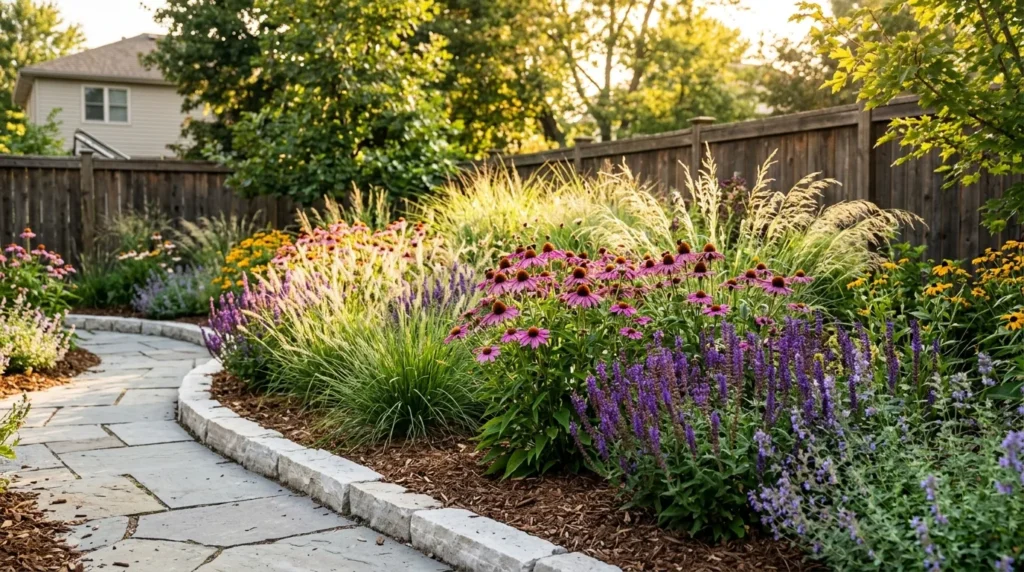
- Uses plants suited to local weather and soil.
- Supports pollinators like bees, butterflies, and birds.
- Reduces maintenance when planted correctly.
- Works along fences, patios, walkways, or lawn edges.
- Adds natural movement and seasonal interest.
A native border makes the garden feel alive and connected to its region. Instead of choosing only trendy plants, use varieties that naturally suit your area’s climate, rainfall, and soil. This can reduce watering, fertilizer needs, and plant stress over time. Native grasses, flowering perennials, shrubs, and pollinator-friendly plants can create a softer edge around patios, fences, and pathways. I’ve seen this work well in many homes because it gives the yard beauty while also making maintenance feel more manageable.
The look can still feel modern if the planting is controlled and repeated. Choose a limited group of plants instead of mixing too many colors and shapes. Use taller grasses or shrubs at the back, medium flowers in the middle, and low groundcover near the front. Add mulch, stone edging, or gravel to keep the border neat. The garden gains texture, movement, and seasonal change while staying practical. It also feels more personal because the plants belong to the place where the home sits.
10. Night Lighting
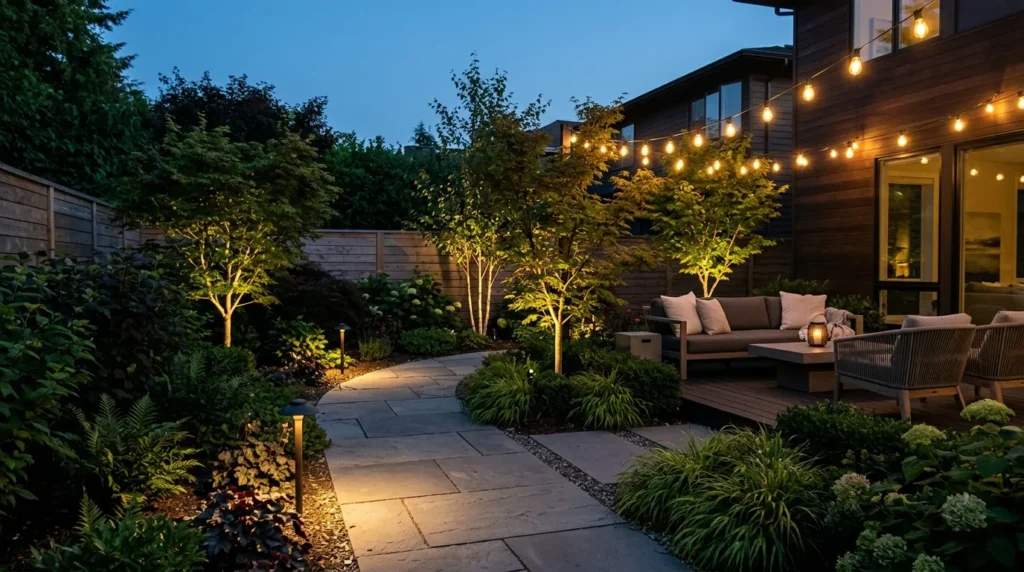
- Makes the garden usable after sunset.
- Adds safety near steps, paths, and seating.
- Works with path lights, uplights, lanterns, or string lights.
- Use warm white light for a softer modern mood.
- Highlight only key features to avoid visual clutter.
Night lighting can make a simple garden feel expensive and finished. The goal is not to make the yard bright like a parking lot. The goal is to create soft pools of warm light where people walk, sit, and gather. Use path lights along steps, uplights near trees, string lights over dining areas, or low lanterns near seating. Warm white bulbs usually feel more welcoming than cool bright light. Good lighting makes Outdoor Spaces feel safer, calmer, and more inviting.
The biggest change happens after sunset, when the garden becomes usable for more hours. A patio can turn into a dinner spot, a bench can become a reading corner, and a path can feel safe for guests. Keep fixture styles consistent and avoid lighting every single plant. Highlight one tree, one path, and one seating zone for a clean effect. Solar lights are easy, while low-voltage systems usually look more professional. With thoughtful placement, the whole garden feels polished without adding clutter.