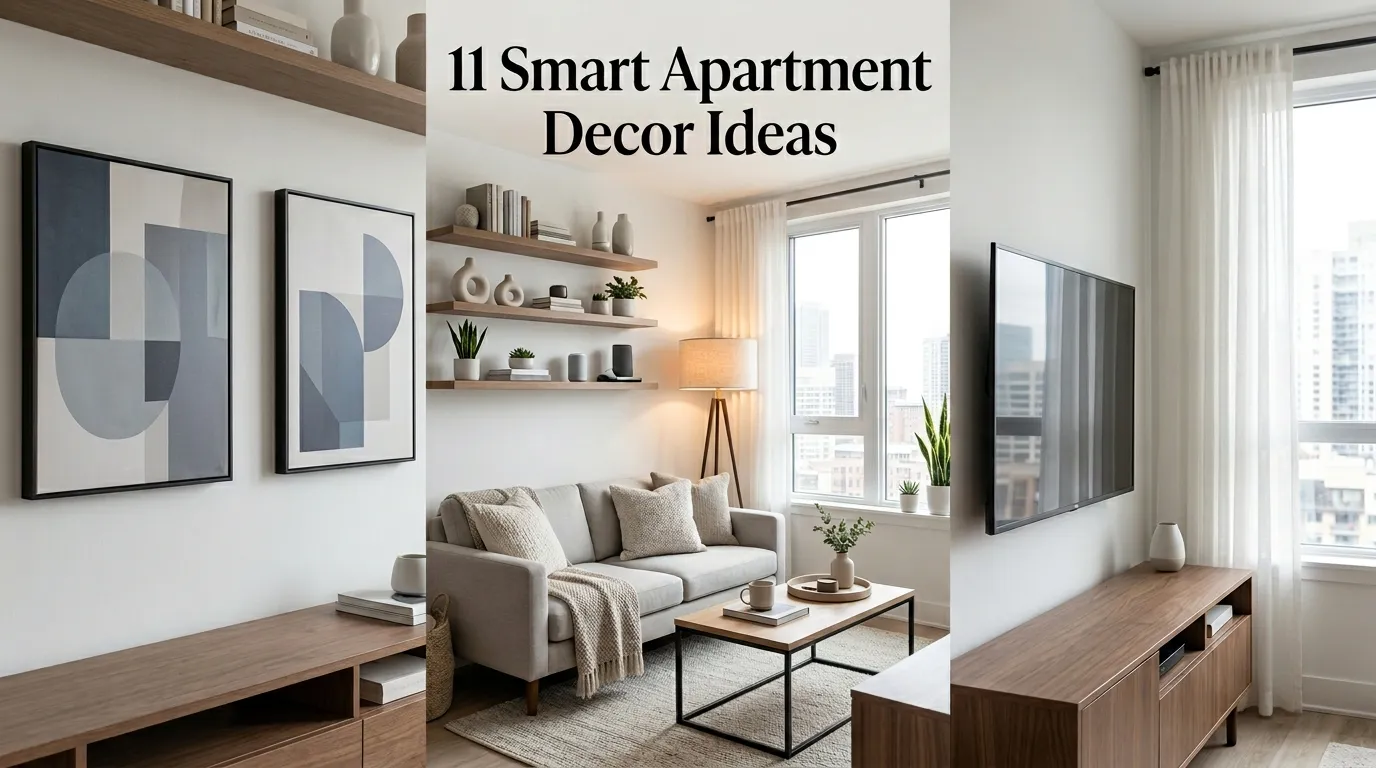
11 Smart Apartment Decor Ideas
11 Smart Apartment Decor Ideas
A stylish apartment should make daily life easier, not just look pretty for photos. The best small-space decor solves real problems: clutter, awkward corners, poor lighting, limited storage, tight walkways, and rooms that need to serve more than one purpose. When every piece has a reason to be there, even a compact rental can feel calm, polished, and comfortable.
For USA renters, students, city dwellers, and first-apartment decorators, a Smart Apartment setup is about choosing pieces that work harder without making the space feel crowded. Think hidden storage, flexible furniture, soft lighting, clean entry systems, wall-mounted solutions, and decor that adds beauty while supporting everyday routines. These ideas are Pinterest-friendly but still practical enough for real life.
1. Hidden Storage
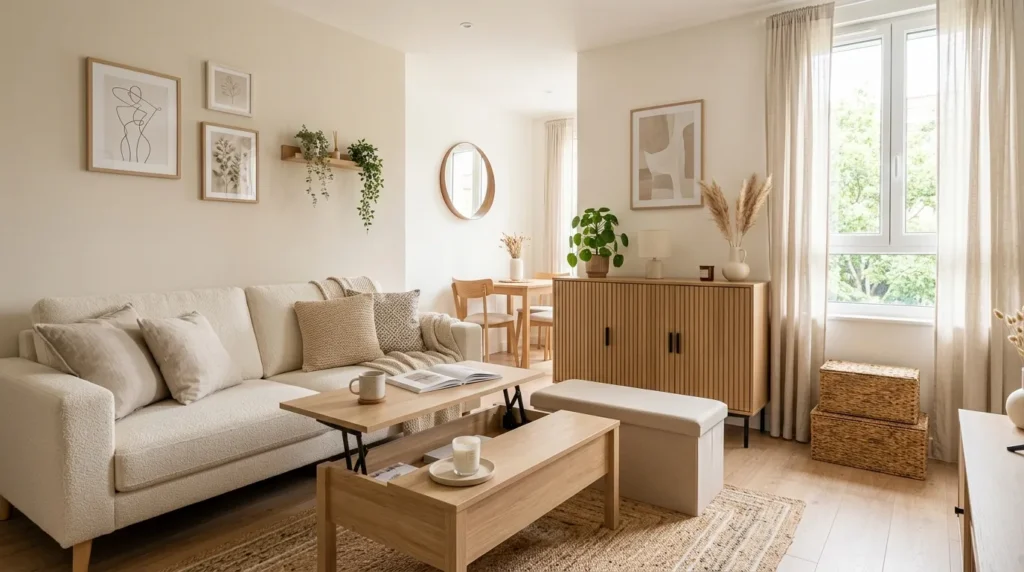
- Use storage ottomans, lift-top tables, closed cabinets, and under-bed bins.
- Hide blankets, chargers, paperwork, shoes, extra linens, and seasonal items.
- Choose furniture that looks decorative while still offering storage inside.
- Use dividers or small bins so hidden storage does not become messy.
- Keep visible surfaces clear for a calmer and more polished apartment look.
Hidden storage is one of the easiest ways to make an apartment feel larger. Small spaces become stressful when everyday items have nowhere to go, especially chargers, blankets, shoes, paperwork, and extra pillows. A storage ottoman can hold throws, a lift-top table can hide remotes, and a closed cabinet can keep supplies out of sight. In my experience, rooms look instantly more expensive when clutter is controlled behind clean furniture lines instead of sitting on every visible surface.
The transformation works best when storage is easy to use. If a basket, drawer, or cabinet is too hard to reach, clutter will return quickly. Keep daily items in simple hidden spots near where you use them. Store seasonal pieces higher, lower, or farther away. Choose pieces that match your decor style, such as a fluted cabinet, upholstered bench, woven trunk, or wood console. This idea makes the apartment feel calmer because cleanup becomes part of the design.
2. Flexible Zones
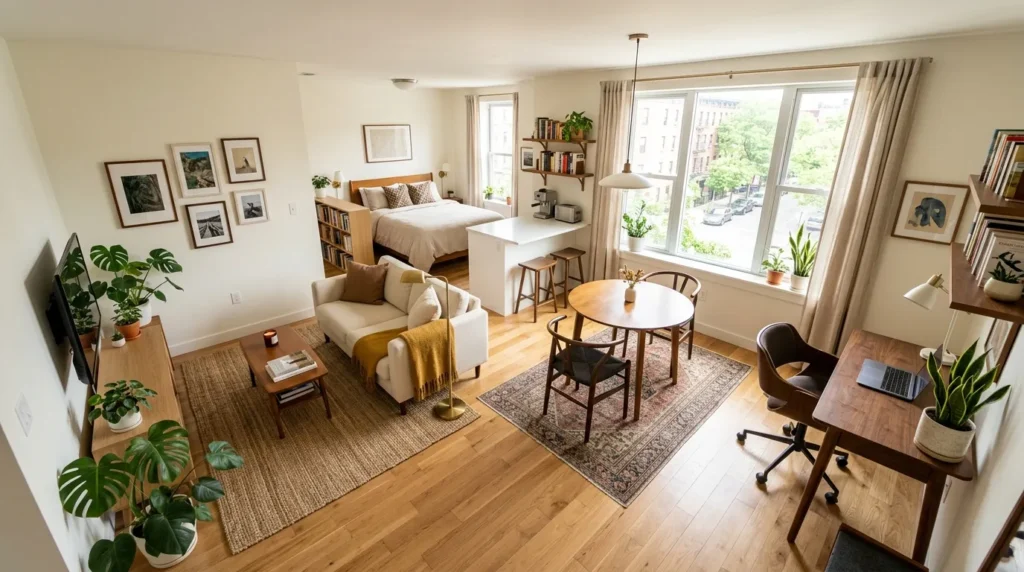
- Divide open rooms into living, dining, sleeping, working, and entry areas.
- Use rugs, lighting, shelves, curtains, or furniture placement to define zones.
- Keep walkways clear so the apartment still feels open and easy to move through.
- Repeat colors across each zone so the layout feels connected.
- Avoid adding too many dividers that block light or make the room feel smaller.
Flexible zones help one apartment room serve several purposes without feeling chaotic. Many apartments need the same space to work as a living room, office, dining area, and sometimes bedroom. The solution is not always adding walls or large dividers. A rug can define seating, a lamp can mark a reading corner, and a small desk near a window can become a focused work zone. That simple visual organization helps the room feel more intentional.
The finished layout should support your daily routine. Place the desk where light is good, keep the dining surface close to the kitchen, and arrange seating so it feels comfortable for relaxing. Use matching wood tones, repeated black accents, or similar neutral textiles to connect different areas. If you live in a studio, a curtain, bookcase, or low shelf can gently separate sleeping from daytime activities. This idea makes the apartment feel organized without making it feel boxed in.
3. Slim Furniture
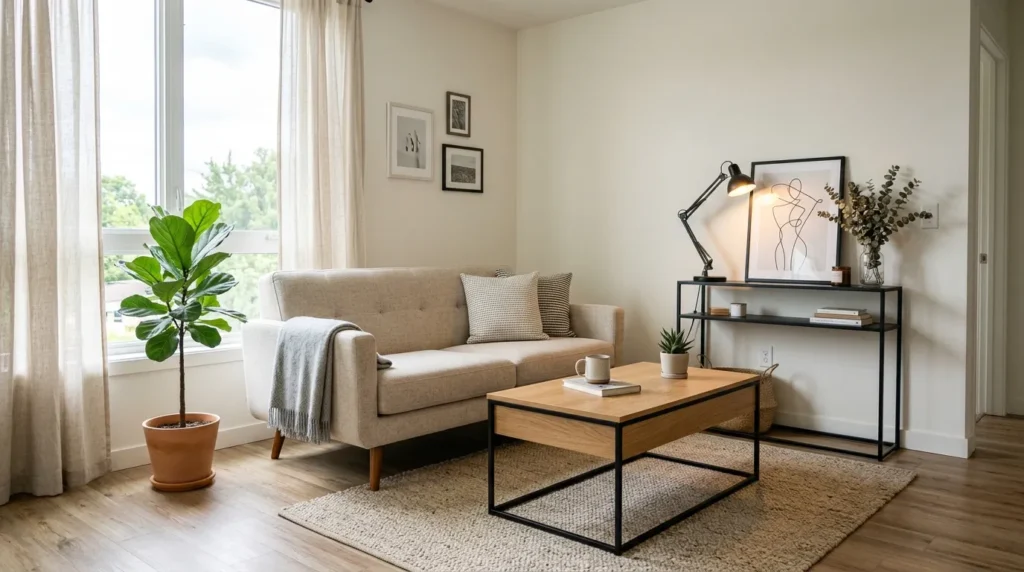
- Choose sofas, desks, tables, and consoles with narrow profiles and raised legs.
- Use apartment-scale furniture instead of oversized pieces made for large homes.
- Pick rounded edges if the room has tight walkways or narrow corners.
- Try nesting tables instead of one heavy coffee table.
- Measure before buying so furniture does not block doors, cabinets, or windows.
Slim furniture keeps a compact apartment comfortable without swallowing the room. Oversized sofas, deep chairs, and bulky tables can make even a beautiful space feel difficult to use. Pieces with raised legs, narrow arms, and clean lines allow more floor to show, which creates a lighter feeling. That’s why many designers recommend apartment-scale furniture for rentals and city homes. You still get comfort, but the room does not feel like every walkway has been sacrificed.
The final result feels more open and easier to live in. A loveseat may work better than a full sofa, while nesting tables may replace a large coffee table. A slim console can create storage behind a sofa or near an entry without blocking movement. Choose furniture that fits your actual floor plan, not just your dream inspiration photo. This idea is especially helpful in studio apartments, narrow living rooms, and older rentals where every inch of walking space matters.
4. Wall Storage
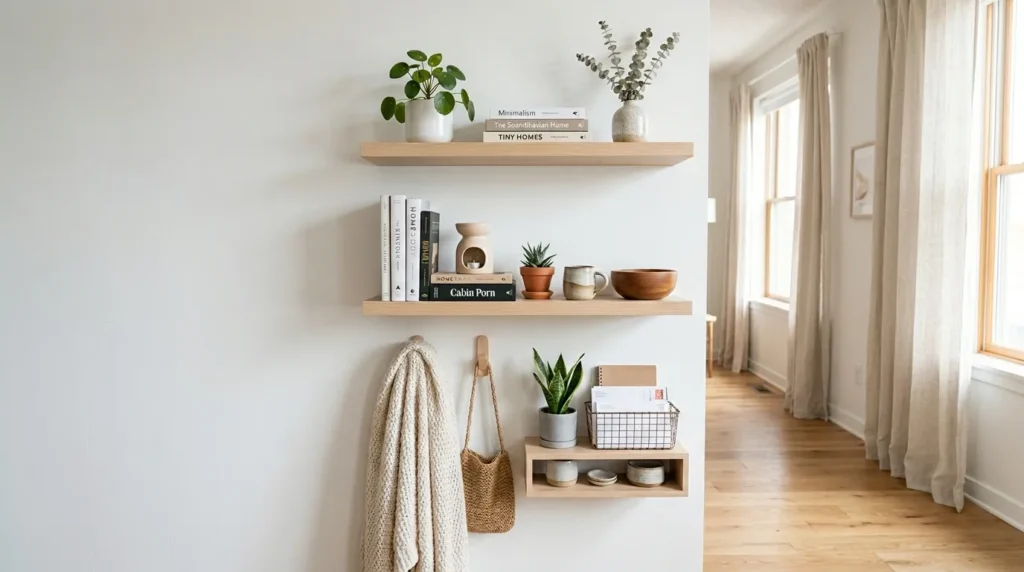
- Use floating shelves, wall hooks, pegboards, rails, or mounted cabinets.
- Store upward when floor space is limited.
- Add baskets or boxes to hide small clutter on open shelves.
- Keep shelf styling simple with books, plants, frames, and ceramics.
- Use renter-friendly options when drilling is not allowed.
Wall storage helps a small apartment work harder without adding bulky furniture. Empty walls often have more potential than crowded floors, especially in kitchens, bathrooms, work corners, and entryways. Floating shelves can hold books and baskets, hooks can organize bags or coats, and pegboards can manage craft supplies, tools, or office items. This idea works because it lifts storage off the floor, keeping the apartment easier to clean and less visually crowded.
The best wall storage looks intentional, not improvised. Use matching baskets, simple labels, and a limited color palette so shelves do not look messy. Place daily items at easy-to-reach levels and keep decorative pieces higher or lighter. If you rent, try leaning shelves, over-door hooks, removable rails, or freestanding units that mimic built-ins. This approach gives you more function while keeping the room stylish. It is especially useful when closet space is limited or oddly shaped.
5. Mirror Placement

- Place mirrors near windows to reflect daylight and brighten the room.
- Use tall, round, arched, black-framed, brass, or frameless mirror styles.
- Check what the mirror reflects before choosing the final spot.
- Lean a full-length mirror if wall mounting is not allowed.
- Use mirrors in entries, bedrooms, dining corners, and living rooms.
Mirror placement can make an apartment feel brighter without adding square footage. A well-placed mirror reflects light, creates depth, and makes tight areas feel less closed in. A tall mirror can make a bedroom corner feel elegant, while a round mirror above a console can make an entry feel finished. I’ve noticed mirrors work best when they reflect something calm, such as a window, lamp, plant, artwork, or clean seating area.
The transformation depends on what appears inside the reflection. Avoid placing mirrors where they double visual clutter, laundry piles, open closets, trash bins, or busy shelves. A brass frame adds warmth, black feels modern, wood looks natural, and frameless mirrors feel minimal. In narrow apartments, mirrors can visually widen hallways and brighten dark corners. This is a renter-friendly decor trick because leaning mirrors or removable mounting strips can create the effect without permanent changes.
6. Foldaway Dining
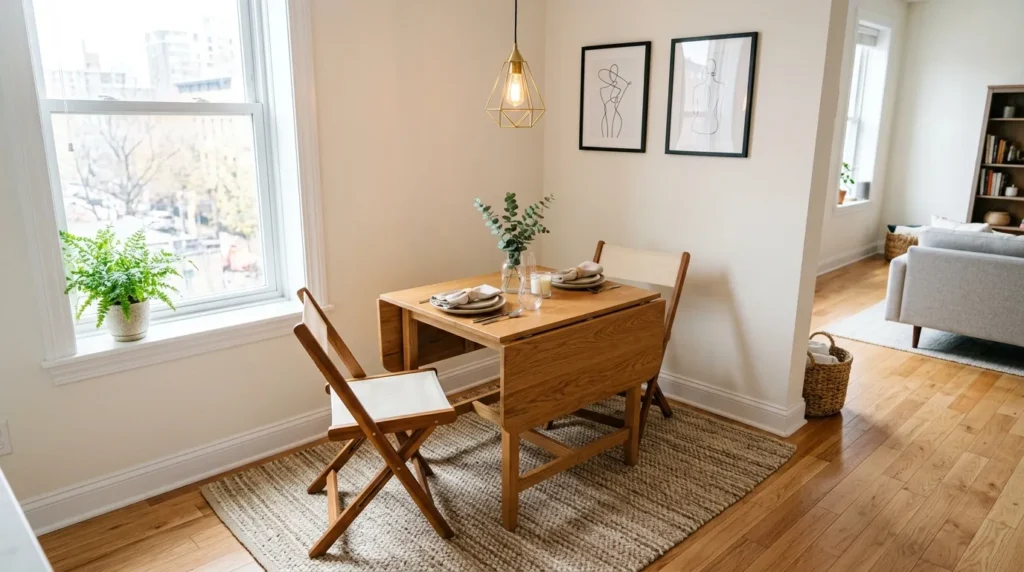
- Use drop-leaf tables, folding chairs, wall-mounted tables, or nesting stools.
- Choose a dining setup that can shrink when not in use.
- Place dining furniture near the kitchen or window for better flow.
- Use rounded tables in tight rooms to soften movement paths.
- Store extra chairs vertically, behind a door, or inside a closet.
Foldaway dining is perfect when your apartment does not have a true dining room. A full-size table may look lovely, but it can quickly block walkways in a compact layout. A drop-leaf table, folding table, or wall-mounted surface gives you a place for meals, laptop work, and weekend projects without permanently taking over the room. This idea works because the space can expand when needed and open back up afterward.
The finished setup should feel like real furniture, not emergency furniture. Choose wood, black metal, white laminate, or warm-toned finishes that match the rest of your decor. Add two comfortable chairs for everyday use, then store extra folding chairs for guests. A small pendant, wall art, or rug can make the dining corner feel intentional. This idea is practical for studios, one-bedroom rentals, and apartments where every surface must support more than one routine.
7. Layered Lighting
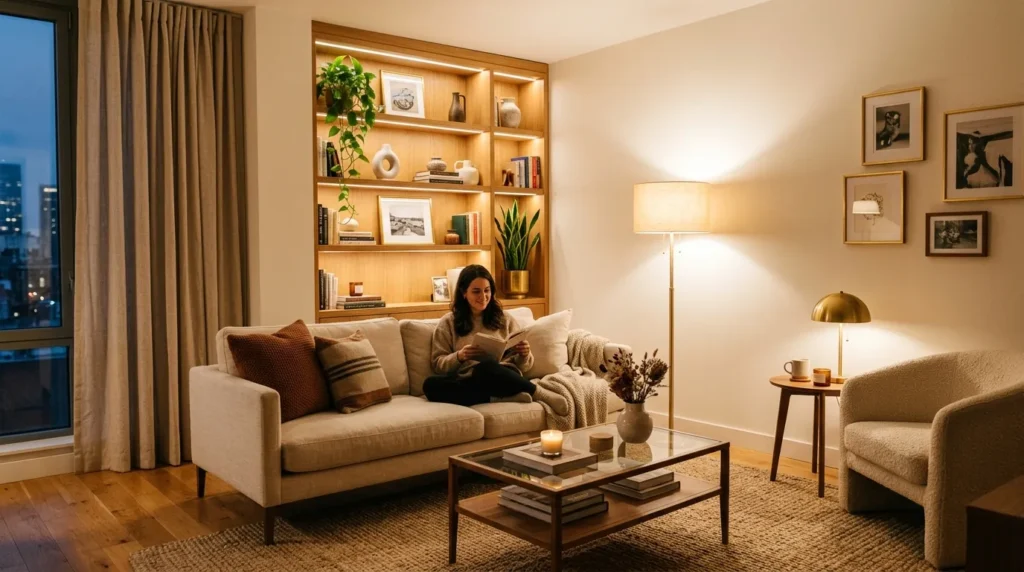
- Use floor lamps, table lamps, sconces, LED candles, and shelf lights.
- Choose warm white bulbs for a softer and more flattering room mood.
- Place light sources at different heights for depth.
- Avoid relying only on harsh ceiling fixtures.
- Use smart plugs or dimmable bulbs for better evening control.
Layered lighting makes an apartment feel warmer, more expensive, and easier to enjoy. Many rentals come with one overhead light that feels too bright, too cold, or awkwardly placed. Adding lamps at different heights changes the entire atmosphere. A floor lamp beside the sofa, a table lamp on a nightstand, and a small accent light on a shelf can make the room feel softer and more finished. Good lighting is one of the quickest decor upgrades.
The final effect is especially noticeable at night. Instead of one harsh light flattening the room, several warm light sources create depth and comfort. Use linen shades, ceramic lamp bases, brass accents, or black metal fixtures depending on your style. Battery lamps and plug-in sconces work well when outlets are limited or drilling is not allowed. This idea improves both function and mood, making the apartment feel comfortable for reading, hosting, relaxing, and winding down after work.
8. Entry System
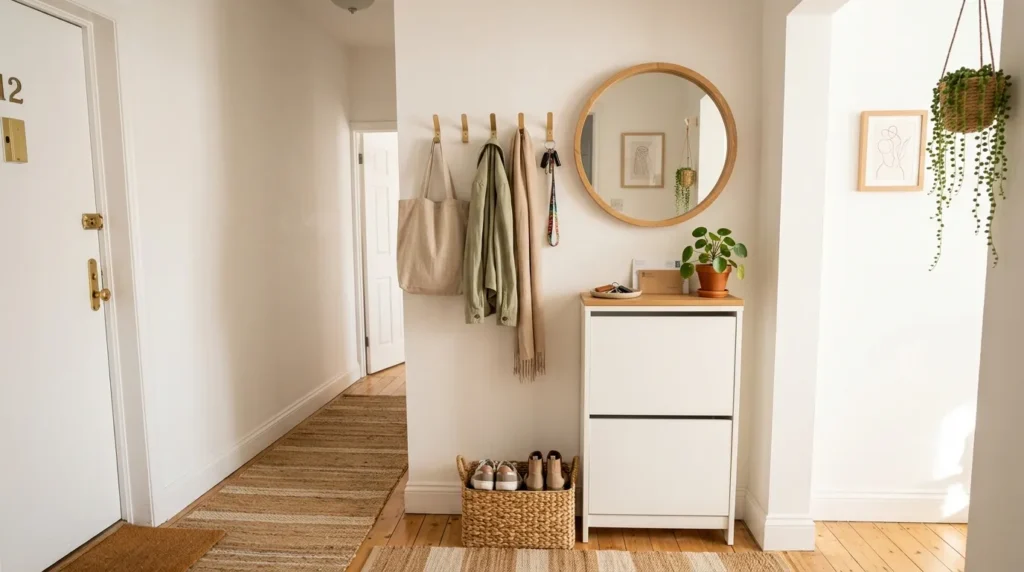
- Create a small landing zone with hooks, a tray, basket, mirror, or shoe cabinet.
- Use narrow furniture if the door opens directly into the living room.
- Give keys, mail, shoes, bags, and jackets a clear home.
- Add a mirror or lamp to make the entry feel brighter.
- Reset the entry daily so clutter does not spread inward.
An entry system keeps apartment clutter from spreading into the whole home. Many rentals do not have a real foyer, so bags, shoes, keys, and mail often land on the nearest chair or counter. A small landing zone changes that routine. Even one wall hook, a slim shoe cabinet, a key tray, and a mirror can make the apartment feel more organized the moment you walk in. In my experience, entry clutter is easier to stop at the door than fix later.
The finished entry should be simple and narrow. Use a wall-mounted shelf if there is no space for a console, or place a woven basket below hooks for shoes and bags. A mirror brightens the area and gives the entry a styled look. Keep the surface limited to keys, mail, and one decorative piece so it does not become another messy drop zone. This idea is small, but it can change how the entire apartment feels day to day.
9. Desk Nook
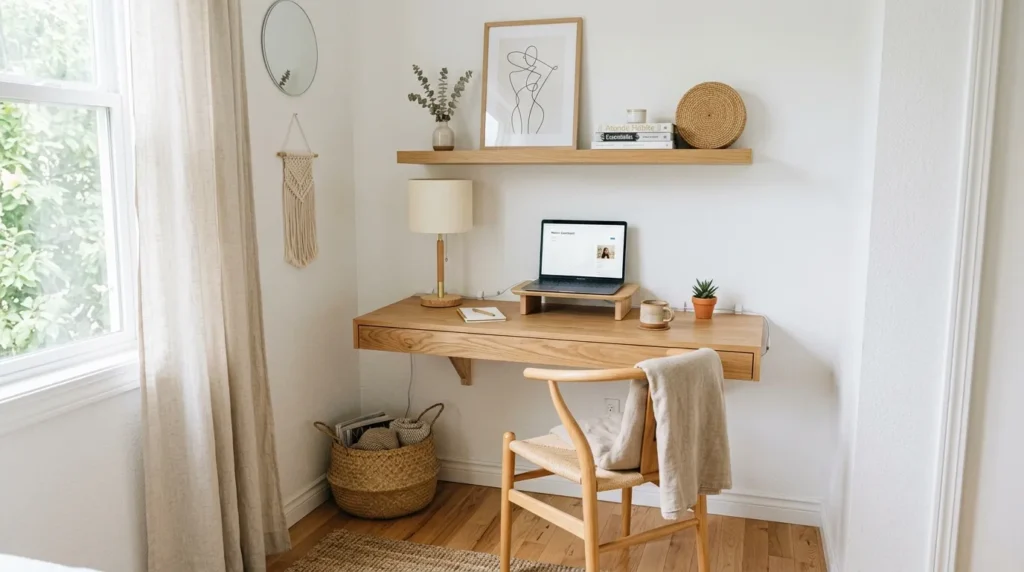
- Turn an unused wall, closet corner, or window area into a small workspace.
- Use a floating desk, narrow table, or fold-down work surface.
- Add a lamp, shelf, cable clips, and one storage basket.
- Keep the work zone visually calm if it sits in a bedroom or living room.
- Store work items away after hours to protect personal space.
A desk nook makes remote work feel more organized without needing a separate office. Many apartment dwellers work from dining tables or sofas, but that can blur the line between work and rest. A small wall desk, floating surface, or closet nook gives work a clear location. The goal is not a large office setup. It is a clean, focused spot for a laptop, notebook, lamp, and a few daily tools.
The transformation is strongest when the nook is easy to close down. Use cable clips to control wires, a basket for notebooks, and a small shelf for supplies. Choose a chair that tucks under the desk so the area stays open. If the nook is visible from the living room, keep the color palette calm and coordinated. This idea is perfect for students, freelancers, hybrid workers, and anyone who wants productivity without letting work take over the apartment.
10. Tech Control
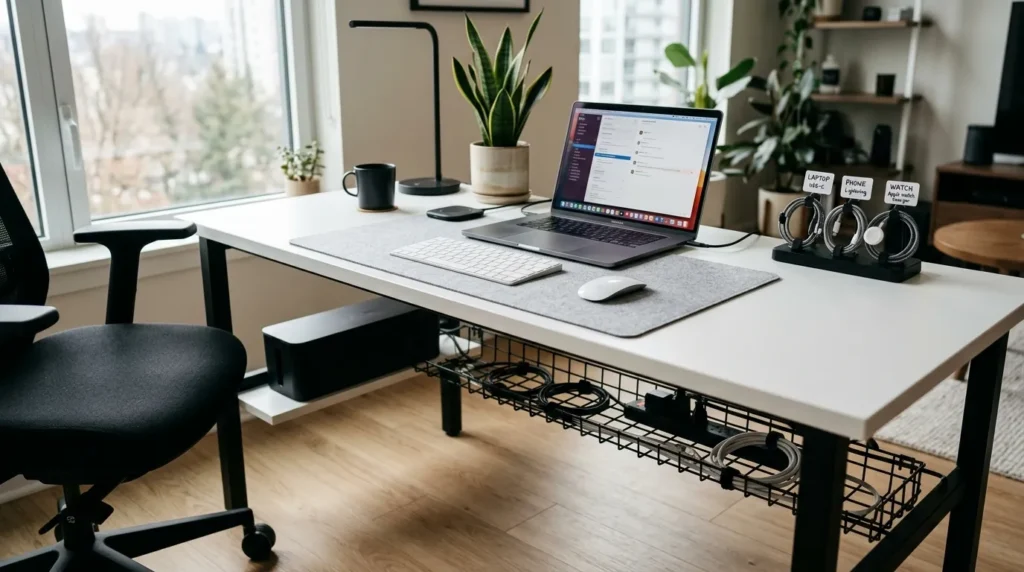
- Hide cords with cable boxes, clips, sleeves, trays, or under-desk organizers.
- Create one charging station for phones, tablets, earbuds, and laptops.
- Use cord labels if multiple devices share the same outlet area.
- Choose wireless accessories when possible to reduce visual clutter.
- Keep routers, power strips, and chargers inside breathable storage areas.
Tech control makes a modern apartment feel cleaner and more peaceful. Cords, chargers, power strips, routers, speakers, laptops, and gaming accessories can quickly make a stylish room look messy. A cable box, under-desk tray, charging drawer, or labeled cord system can make a huge difference. This idea works because technology is part of daily life, but it does not need to dominate every surface or corner.
The finished setup feels calmer because your eye no longer catches tangled wires everywhere. Place chargers in one station near the desk, entry, or nightstand so devices have a predictable home. Use clips to route cords behind furniture and sleeves to group wires together. Make sure routers and power strips still have airflow and remain easy to access. This practical detail supports a Smart Apartment lifestyle because it keeps the space functional, current, and visually clean.
11. Styled Storage
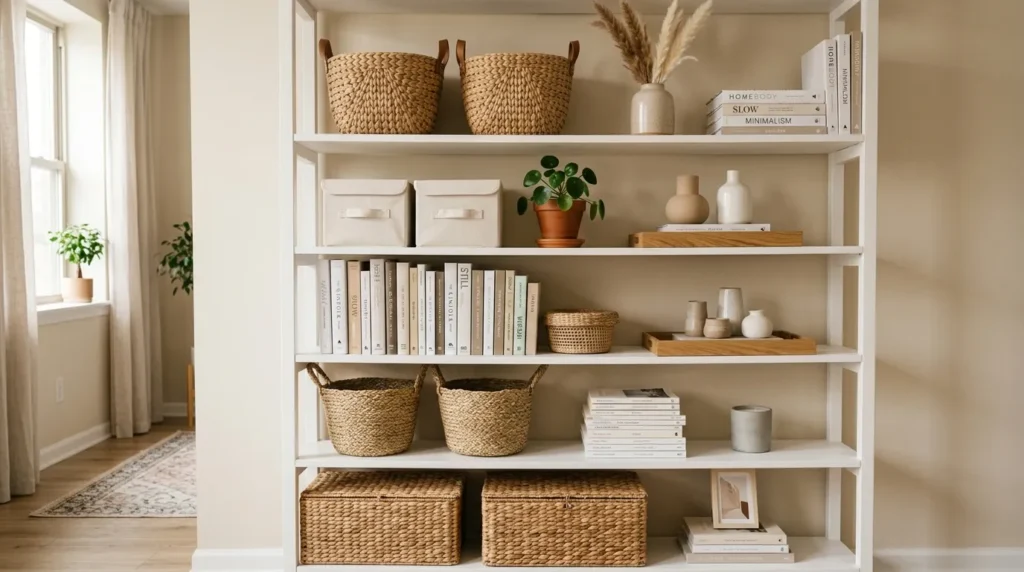
- Use baskets, boxes, trays, cabinets, carts, and drawer organizers as decor tools.
- Choose storage materials that match your room style.
- Use trays to group items on tables, counters, and nightstands.
- Pick lidded containers when you want clutter fully hidden.
- Keep open storage neat with repeated colors and textures.
Styled storage turns organization into part of the decor. Instead of using random bins, mismatched boxes, and temporary piles, choose storage that looks like it belongs in the room. Woven baskets add warmth, fabric boxes soften shelves, acrylic organizers feel clean, and wood trays make surfaces look intentional. This idea works because small apartments need storage everywhere, but storage should not make the home feel like a supply closet.
The final look comes from consistency. Repeat materials such as rattan, black metal, white bins, warm wood, or clear acrylic so the apartment feels pulled together. Use trays on coffee tables, baskets under benches, and boxes on shelves. Keep labels simple if they are visible. This final idea is useful because it makes everyday organization easier while improving the room’s appearance. When storage looks beautiful, you are more likely to use it and maintain the system.