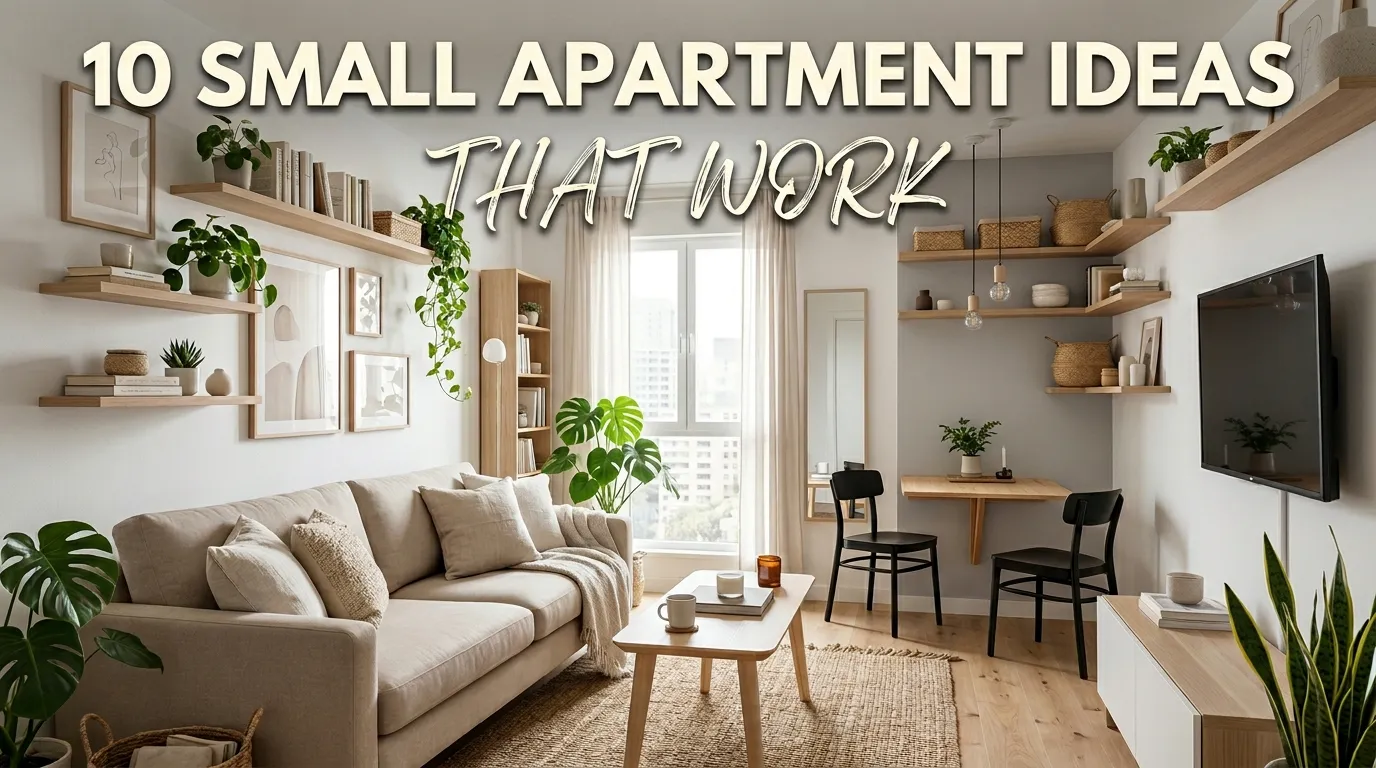
10 Small Apartment Ideas That Work
10 Small Apartment Ideas That Work
Living in a compact apartment does not mean your home has to feel cramped, cluttered, or unfinished. The real secret is choosing ideas that solve everyday problems while still making the space feel beautiful. A sofa should fit the room, storage should hide what you actually use, lighting should make the space feel warm, and every corner should have a purpose. When a Small Apartment is planned well, it can feel calm, stylish, and surprisingly comfortable.
For USA renters, students, city dwellers, couples, and anyone working with limited square footage, smart decorating is less about buying more and more about choosing better. A compact home needs furniture that fits, zones that make sense, and decor that adds warmth without stealing space. These ideas are practical, Pinterest-friendly, and realistic for real apartment life.
1. Clear Zones
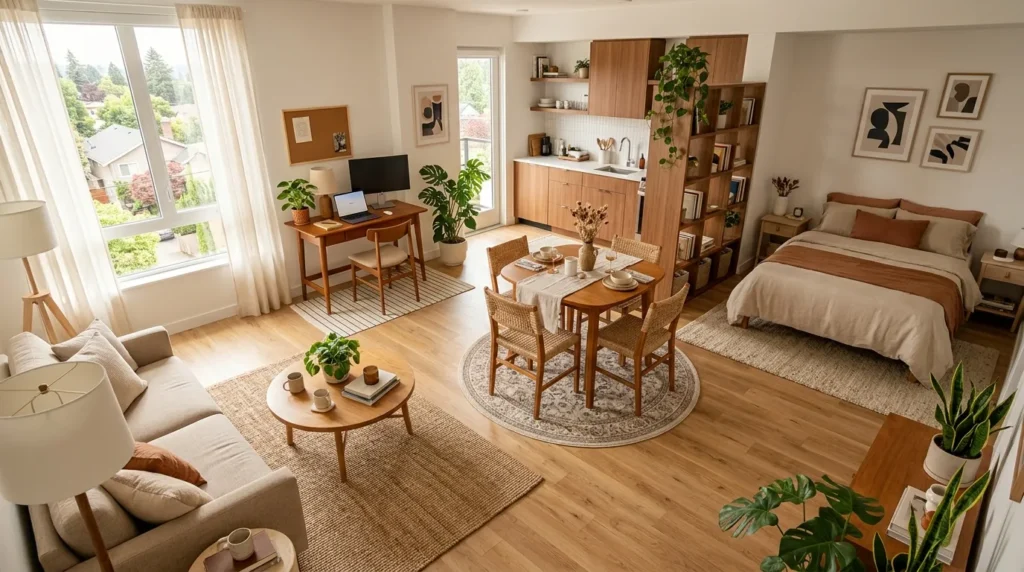
- Use rugs, lighting, shelves, or furniture placement to separate living areas.
- Create zones for relaxing, eating, working, sleeping, and entry storage.
- Keep walkways open so the apartment feels easy to move through.
- Repeat colors across zones so the space still feels connected.
- Avoid pushing every item against the wall if it makes the room feel awkward.
Clear zones make a compact apartment feel organized instead of chaotic. When one room has to serve as the living room, dining area, workspace, and sometimes bedroom, the layout needs visual boundaries. A rug can define the sofa area, a small desk can sit near a window, and a narrow console can create an entry spot. In my experience, small homes feel larger when each section has a clear job, because the room stops looking like one crowded collection of furniture.
The transformation comes from using simple signals rather than building walls. A floor lamp can mark a reading corner, a rug can ground a seating area, and open shelving can separate a work zone without blocking light. Keep furniture scaled to the room so zones feel useful, not squeezed. If you live in a studio, use bedding, curtains, or a bookcase to gently separate sleep from daily life. This makes the apartment feel calmer, more intentional, and easier to reset each evening.
2. Slim Furniture
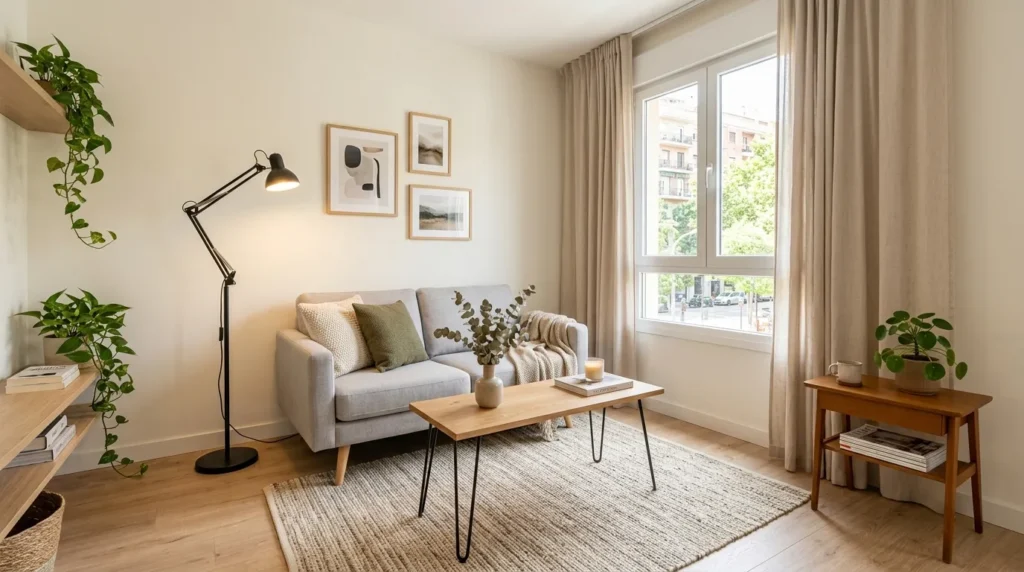
- Choose sofas, tables, desks, and consoles with narrow profiles.
- Look for raised legs so more floor remains visible.
- Use nesting tables or small side tables instead of bulky coffee tables.
- Measure walkways before buying large furniture pieces.
- Pick rounded edges if the room has tight movement paths.
Slim furniture helps a small room breathe. Oversized sofas, deep chairs, and heavy coffee tables can make an apartment feel packed even when the decor is beautiful. Pieces with narrow arms, open legs, and clean lines create comfort without adding too much visual weight. That’s why many designers recommend apartment-scale furniture for compact layouts. It gives you the function you need while allowing the floor, walls, and windows to remain visible, which helps the whole space feel more open.
The finished layout should support daily movement. You should be able to walk from the door to the sofa, kitchen, bathroom, and bed without turning sideways around furniture. A loveseat may work better than a full sofa, while nesting tables may be more useful than one large table. Use a slim console behind the sofa or near the entry to create storage without crowding the room. This idea keeps the apartment comfortable while preventing the furniture from overpowering the space.
3. Hidden Storage
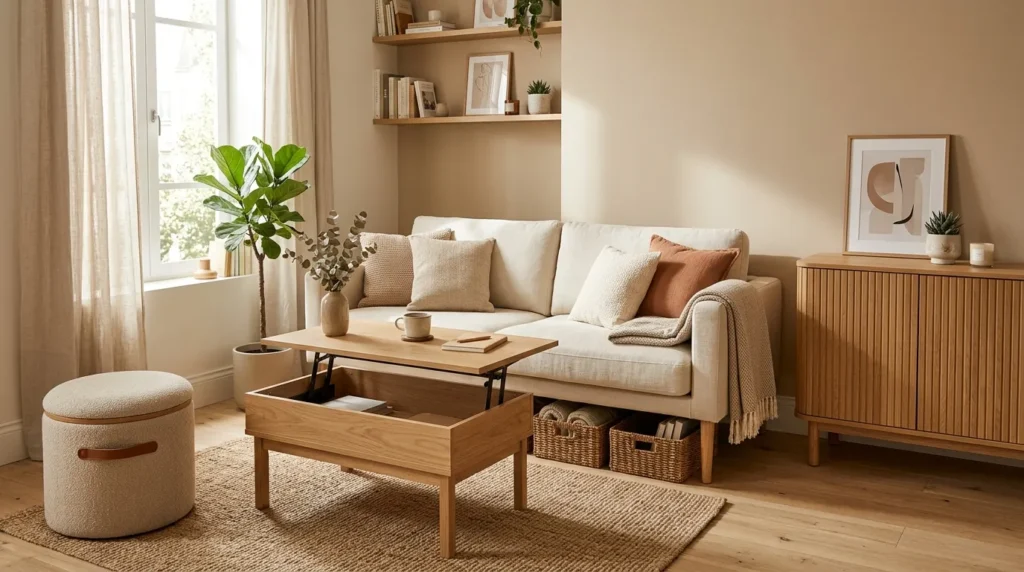
- Use storage ottomans, under-bed bins, closed cabinets, and lift-top tables.
- Hide blankets, chargers, shoes, paperwork, bags, and seasonal items.
- Choose storage pieces that look like real furniture, not temporary fixes.
- Use drawer dividers and labeled bins to keep hidden storage organized.
- Keep visible surfaces clear so the apartment feels calmer.
Hidden storage is one of the biggest reasons small spaces stay beautiful. Clutter appears faster in compact homes because there are fewer places for daily items to land. A storage ottoman can hold blankets, a bed frame with drawers can hide linens, and a closed cabinet can keep paperwork out of sight. This idea works because it protects the look of the room while still supporting real life. You do not need fewer belongings; you need smarter places to keep them.
The transformation happens when cleanup becomes easy. Instead of moving clutter from one surface to another, everything has a clear hidden home. Use baskets inside cabinets, slim bins under the bed, and dividers in drawers so storage does not become a mess behind closed doors. Choose furniture that matches your style, such as a fluted cabinet, upholstered bench, or woven storage trunk. This keeps the apartment polished during busy weeks and makes the whole space feel more peaceful.
4. Tall Curtains
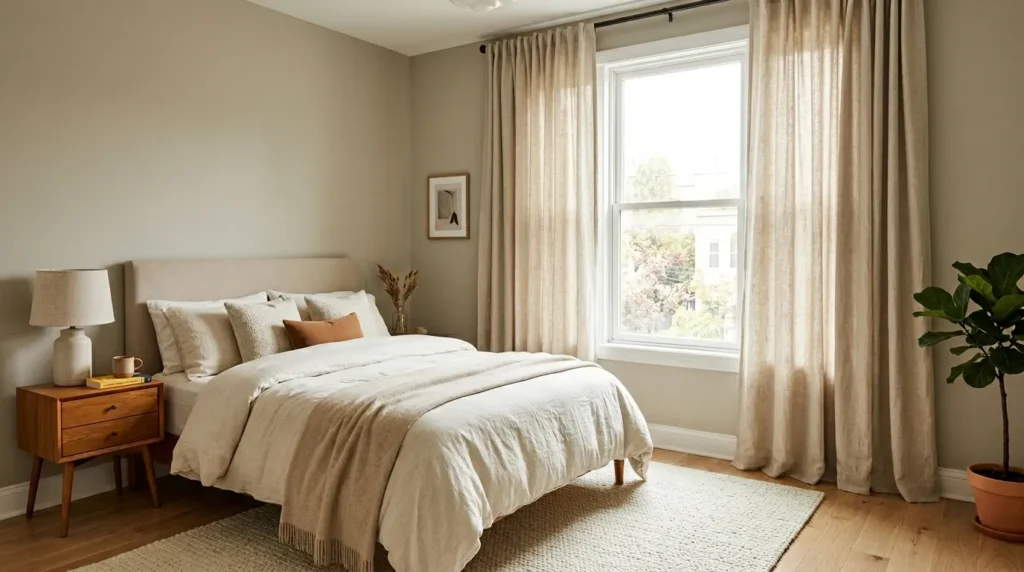
- Hang curtains close to the ceiling to make windows appear taller.
- Choose floor-length panels for a more polished and custom look.
- Extend the curtain rod wider than the window frame.
- Use linen, cotton, sheer, or light-filtering fabric for softness.
- Pick neutral curtain colors to keep the room feeling open.
Tall curtains can make an apartment look more expensive almost instantly. When curtains are hung too low or stop above the floor, the room often feels shorter and less finished. Hanging the rod closer to the ceiling draws the eye upward and makes the walls feel taller. Floor-length panels also soften hard lines around windows, especially in rentals with basic trim or blinds. This simple change adds height, elegance, and warmth without taking up any extra floor space.
The finished look should feel light and intentional. Linen panels create an airy mood, sheer curtains soften daylight, and thicker cotton panels add privacy. Extend the rod wider than the window so the curtains frame the glass instead of covering it when open. This lets in more natural light and makes the window feel larger. Choose cream, beige, soft gray, or warm white if the room is compact. This idea works beautifully in living rooms, bedrooms, and studio apartments.
5. Mirror Placement
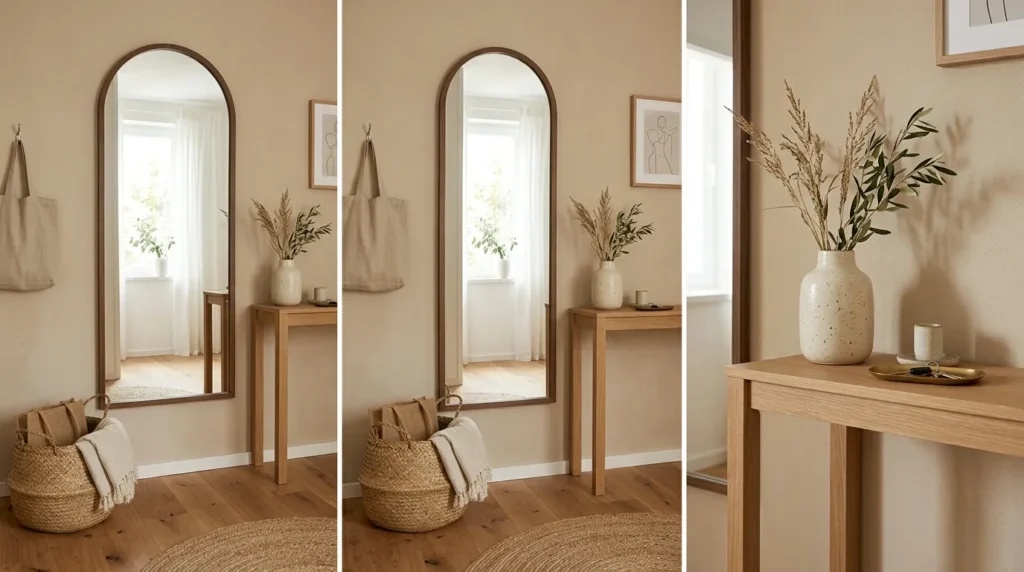
- Place mirrors near windows to reflect natural light.
- Use tall mirrors, round mirrors, arched mirrors, or mirrored cabinet doors.
- Check what the mirror reflects before choosing the final location.
- Lean a mirror if you cannot drill into rental walls.
- Use mirrors in entries, bedrooms, living rooms, and dining corners.
Smart mirror placement can make a compact apartment feel brighter and more open. Mirrors create depth, reflect light, and help tight rooms feel less boxed in. A tall leaning mirror can make a bedroom corner feel elegant, while a round mirror above a console can make an entryway feel finished. I’ve noticed mirrors work best when they reflect something beautiful, such as a window, lamp, plant, artwork, or clean seating area.
The final effect depends on careful placement. Avoid reflecting clutter, open closets, trash bins, or messy shelves because that doubles the visual noise. A brass frame adds warmth, black feels modern, wood feels natural, and frameless styles look clean and minimal. In narrow rooms, a mirror can make the wall feel deeper. In dark corners, it can bounce light and soften shadows. This idea is renter-friendly, stylish, and useful because it improves both the look and feeling of the apartment.
6. Floating Shelves
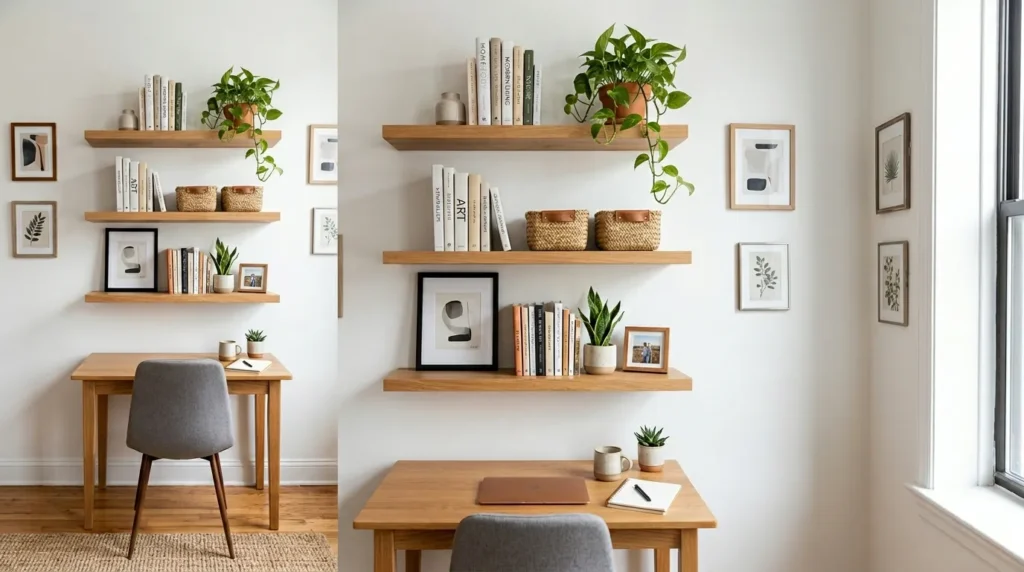
- Use floating shelves above desks, sofas, beds, or entry consoles.
- Style shelves with books, baskets, plants, frames, and ceramics.
- Leave open space so the wall does not look crowded.
- Use baskets or boxes to hide cords, papers, and small clutter.
- Try freestanding shelves if drilling is not allowed.
Floating shelves add storage without using valuable floor space. In compact apartments, walls often have more potential than the floor. A few shelves can hold books, plants, baskets, art, and everyday items while making the room feel styled. This idea is especially helpful above a desk, beside a sofa, over a dining nook, or near the entry. The key is balance. Shelves should feel useful and beautiful, not overloaded with tiny objects that create visual clutter.
The finished wall should look calm and personal. Use a mix of vertical books, stacked books, woven baskets, framed prints, and one or two small plants. Keep colors connected to the rest of the room so the shelves feel intentional. If you rent and cannot drill, a leaning shelf or narrow bookcase can give a similar effect. This idea helps you store more while making the apartment feel taller, warmer, and more complete without adding bulky furniture.
7. Foldable Pieces
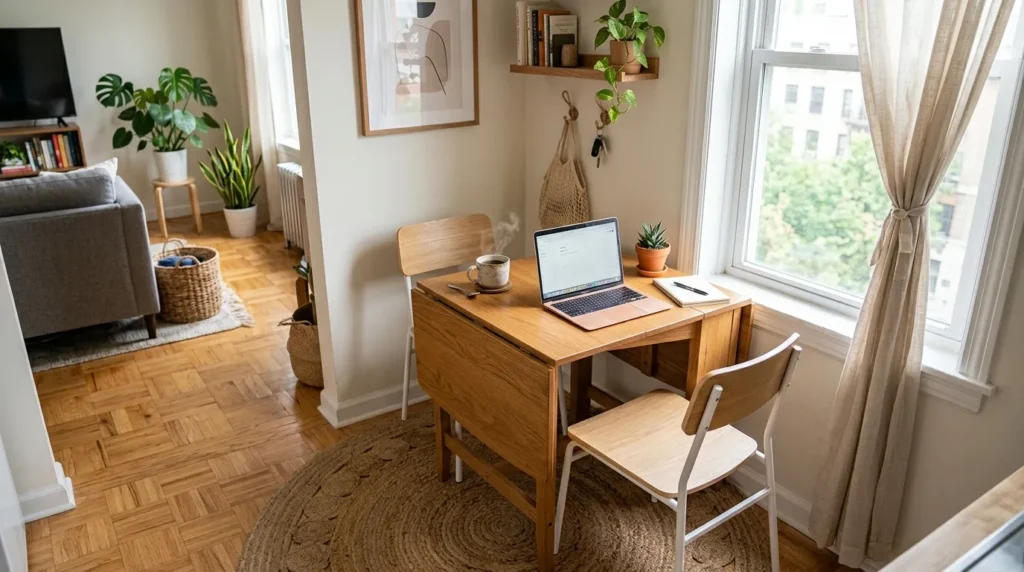
- Choose folding tables, drop-leaf desks, nesting tables, and stackable chairs.
- Use flexible pieces for dining, working, hosting, and hobbies.
- Store items flat or tucked away when not in use.
- Pick finishes that match your main furniture so they look intentional.
- Avoid flimsy pieces that feel temporary or unstable.
Foldable pieces make apartment life more flexible. A compact home often needs to change throughout the day. The same corner might serve as a breakfast spot in the morning, a work desk in the afternoon, and a dinner area at night. Folding tables, drop-leaf desks, nesting tables, and stackable chairs support those changes without permanently taking over the room. This idea works because it gives you function only when you need it.
The transformation is practical and freeing. A wall-mounted drop-leaf table can become a desk, dining surface, or craft station, then fold away to open the walkway. Nesting tables can spread out when guests visit and tuck together afterward. Stackable chairs can live in a closet or corner until needed. Choose designs that look like part of your decor instead of emergency furniture. This helps the apartment stay stylish while still adapting to work, meals, guests, and everyday routines.
8. Light Colors
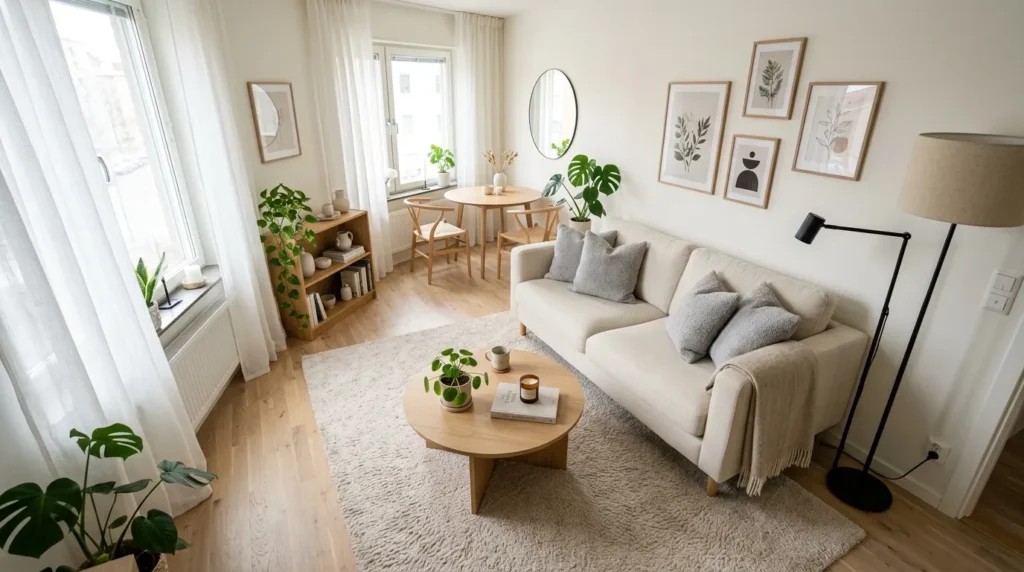
- Use soft white, cream, beige, pale gray, light wood, and muted pastels.
- Keep large surfaces light so the room feels brighter and more open.
- Add contrast with black, bronze, walnut, or deep green accents.
- Use texture to keep light rooms from feeling plain.
- Repeat tones across rugs, curtains, bedding, and pillows.
Light colors help compact rooms feel calmer and more spacious. Dark colors can be beautiful, but when used heavily in a small apartment, they may make the room feel tighter. Soft whites, warm beige, cream, and light wood help reflect daylight and reduce visual heaviness. This does not mean the space has to feel boring. The goal is to create a bright foundation, then add depth through texture, contrast, and a few carefully chosen accents.
The finished room feels best when light tones are layered. Pair a cream sofa with a beige rug, white curtains, a warm wood table, and black metal lighting for definition. Add woven baskets, linen pillows, textured throws, or ceramic vases so the palette feels rich rather than flat. This idea is especially helpful in rentals with limited windows or standard finishes. A lighter base makes the room feel fresh, open, and easier to decorate over time.
9. Styled Entry
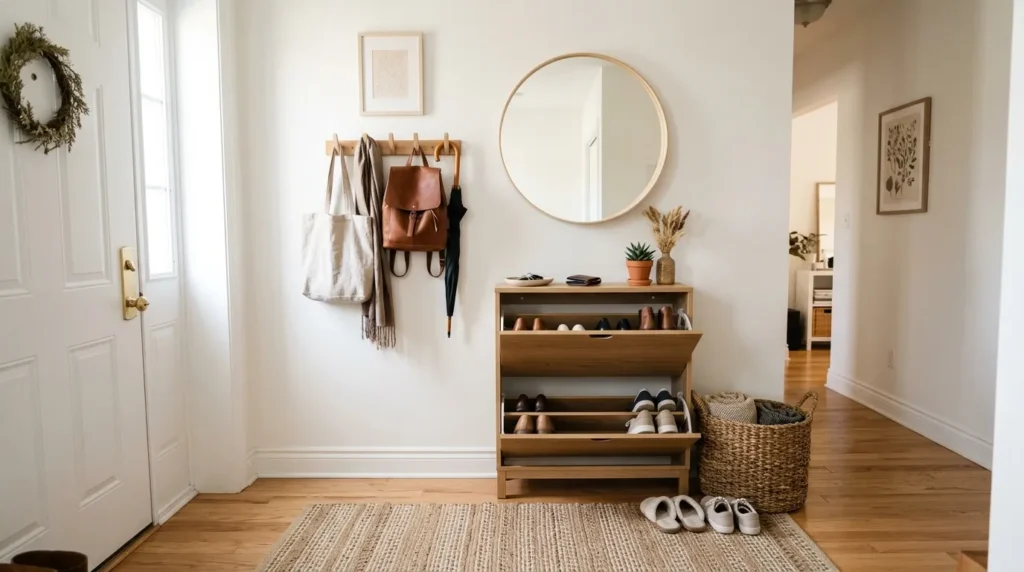
- Create a landing zone near the door with hooks, a tray, and storage.
- Use a slim console, wall shelf, small bench, or shoe cabinet.
- Add a mirror to brighten the entry and create a finished look.
- Keep keys, mail, bags, shoes, and daily items contained.
- Choose narrow pieces that do not block the door swing.
A styled entry can make the entire apartment feel more organized. Many compact homes open directly into the living room, which means shoes, keys, mail, and bags can quickly spread into the main space. A small landing zone gives these items a place to go. You do not need a full hallway. A hook rail, narrow shelf, mirror, tray, and basket can create a simple entry system that looks good and works every day.
The transformation is immediate because clutter stops at the door. Use a slim shoe cabinet if footwear piles up, or place a woven basket under a console for quick storage. A mirror makes the entry feel brighter and gives you a last check before leaving. Keep the surface simple with a tray for keys and one decorative accent. This idea is especially useful for apartments where the front door opens into a shared living and dining area.
10. Vertical Storage
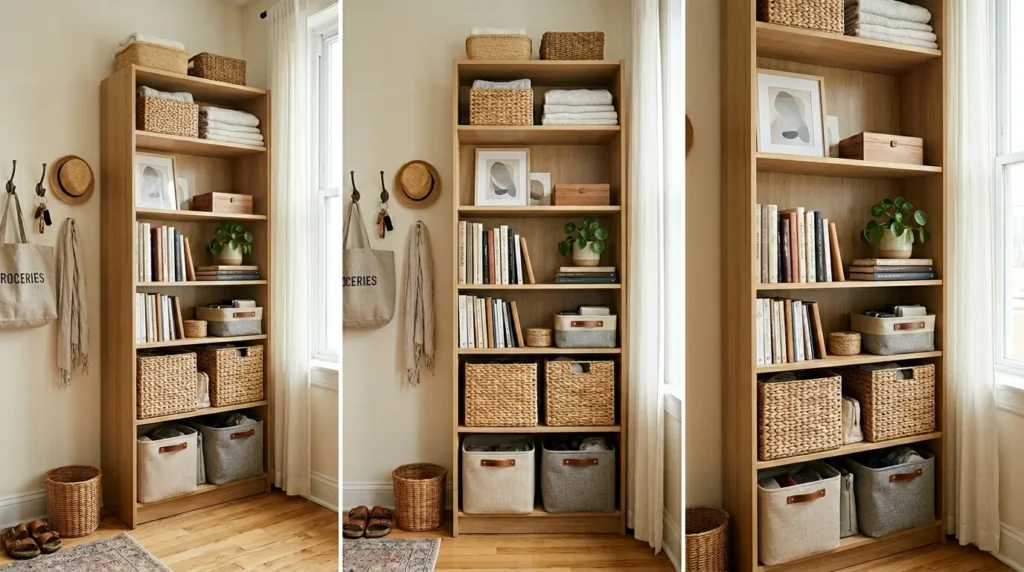
- Use tall bookcases, wall hooks, pegboards, over-door racks, or stacked cabinets.
- Store upward when floor space is limited.
- Place daily items at easy-to-reach levels and seasonal items higher up.
- Use matching bins to make vertical storage look cleaner.
- Secure tall furniture safely, especially in homes with kids or pets.
Vertical storage helps a compact apartment hold more without feeling crowded. When floor space is limited, the walls become valuable. Tall bookcases, over-door organizers, hooks, pegboards, and stacked cabinets can keep items organized while leaving walkways open. This idea works well in kitchens, closets, bathrooms, bedrooms, and living rooms. That’s why many designers recommend thinking upward before buying another low cabinet or floor basket.
The finished setup should be easy to use, not just full. Keep daily items at eye level or below, and place seasonal or rarely used pieces higher. Matching bins, labels, and baskets make tall storage look calmer. In a bathroom, use over-toilet shelving. In a kitchen, use wall racks. In a bedroom, use tall wardrobes or under-shelf baskets. This final idea helps a Small Apartment work harder without looking messy, making every wall feel more useful and intentional.