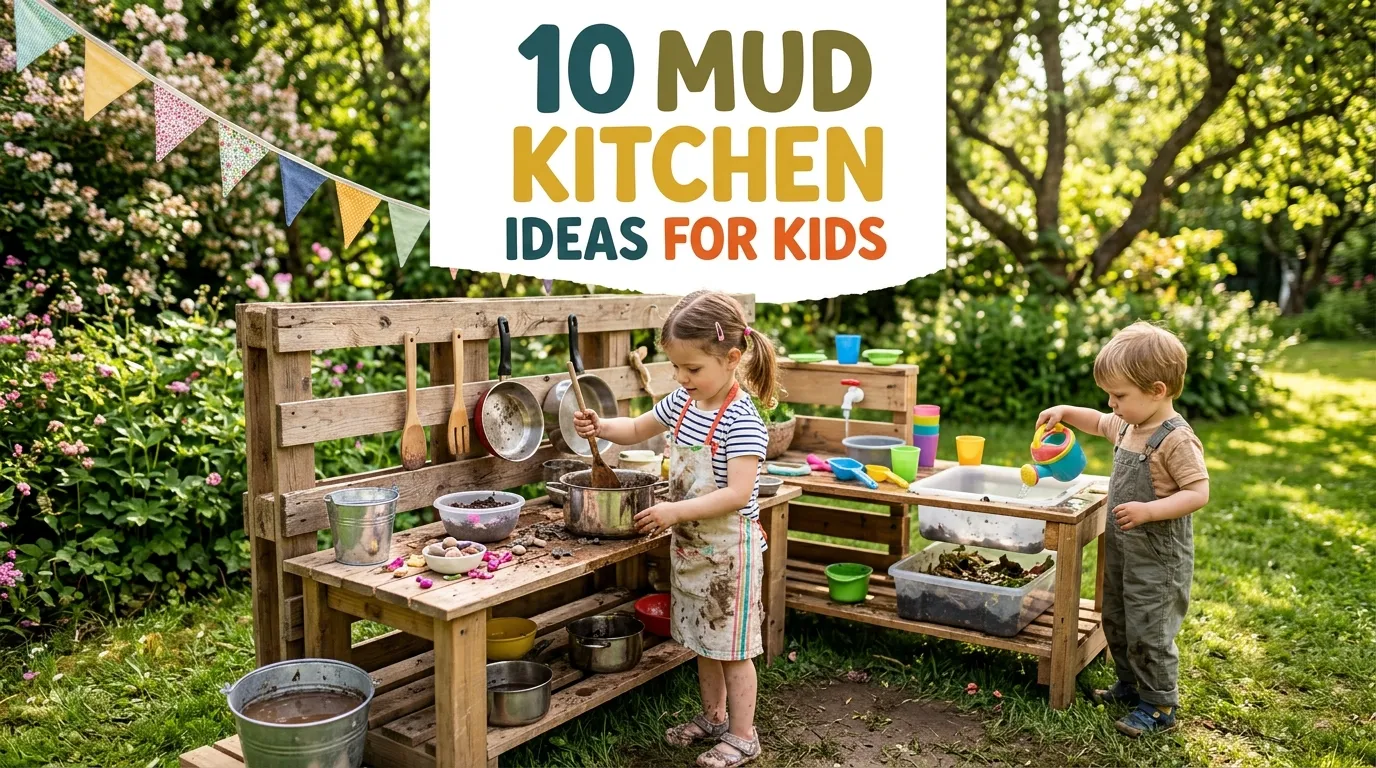
10 Mud Kitchen Ideas for Kids
Outdoor play is one of the most powerful ways for kids to learn, grow, and develop creativity in a natural environment. In many USA homes, parents are now looking for simple, budget-friendly backyard setups that encourage hands-on learning instead of screen time. A mud kitchen is one of the most engaging outdoor play ideas because it allows children to mix, build, pour, and imagine using natural materials like soil, water, leaves, and stones.
In my experience, children don’t need expensive toys to stay entertained. They thrive when they are given open-ended spaces where imagination leads the activity. That’s why many designers recommend outdoor sensory play areas that evolve with a child’s creativity instead of limiting it. A mud kitchen is exactly that kind of space—it’s flexible, educational, and endlessly fun.
This guide shares practical, creative, and easy DIY ideas that can turn any backyard into a playful learning zone where kids can explore nature while building imagination, confidence, and coordination skills.
1. Pallet Base
Bullet Points
- Budget-friendly DIY structure
- Strong and durable foundation
- Easy to customize layout
- Eco-friendly recycled material
- Perfect for beginners
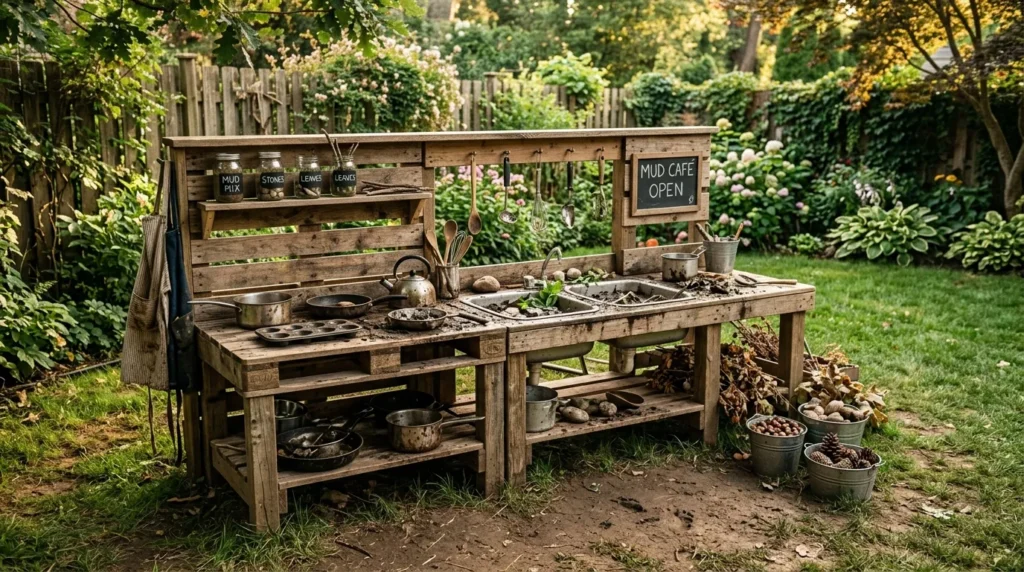
A pallet base is one of the most popular and practical ways to build an outdoor play setup for kids. Wooden pallets are easy to find, inexpensive, and perfect for creating a sturdy foundation for a mud kitchen. I’ve noticed this approach works especially well for families who want a rustic outdoor look without spending much money. The natural wood texture blends beautifully into backyard environments and creates a warm, organic play atmosphere.
Building with pallets is also highly flexible. In my experience, you can stack, cut, or rearrange them to create counters, shelves, and storage areas. Many parents also sand and seal the wood to make it safer for children and weather-resistant. Some even paint the structure in soft or bright tones to make it more playful. I’ve seen this work well in many homes where a simple pallet base turned into a long-lasting outdoor activity center for kids.
2. Sink Station
Bullet Points
- Realistic water play feature
- Enhances sensory learning
- Reuses old household items
- Encourages imaginative play
- Easy DIY installation
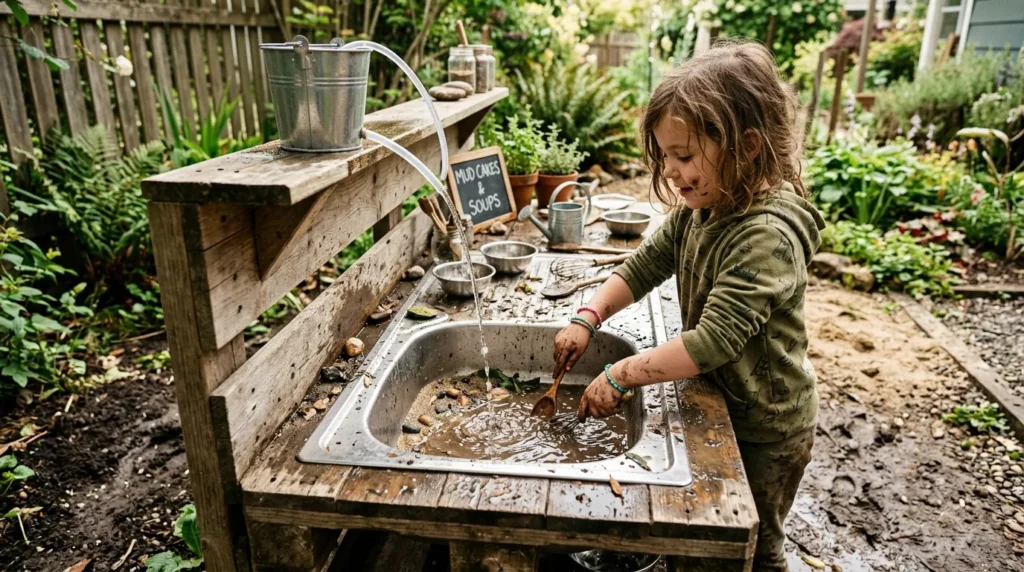
A sink station adds a realistic and highly engaging element to any mud kitchen because it introduces water play into the experience. Kids naturally love interacting with water, and combining it with mud or sand creates endless creative possibilities. Old basins, plastic tubs, or unused sinks can be easily repurposed into a functional washing or mixing area. I’ve noticed children become deeply engaged when they can pretend to wash dishes or prepare food like in a real kitchen.
Installation is simple and adaptable for different backyard spaces. In my experience, placing a basin into a wooden frame creates a realistic sink setup while keeping it safe for kids. Adding nearby buckets or a hose improves functionality and interaction. Many parents also include drainage solutions for easy cleanup. I’ve seen this work well in many homes where a basic sink station became the most exciting part of the entire outdoor play area.
3. Mud Counter
Bullet Points
- Dedicated creative workspace
- Encourages storytelling play
- Supports group interaction
- Simple wooden structure
- Improves imagination skills
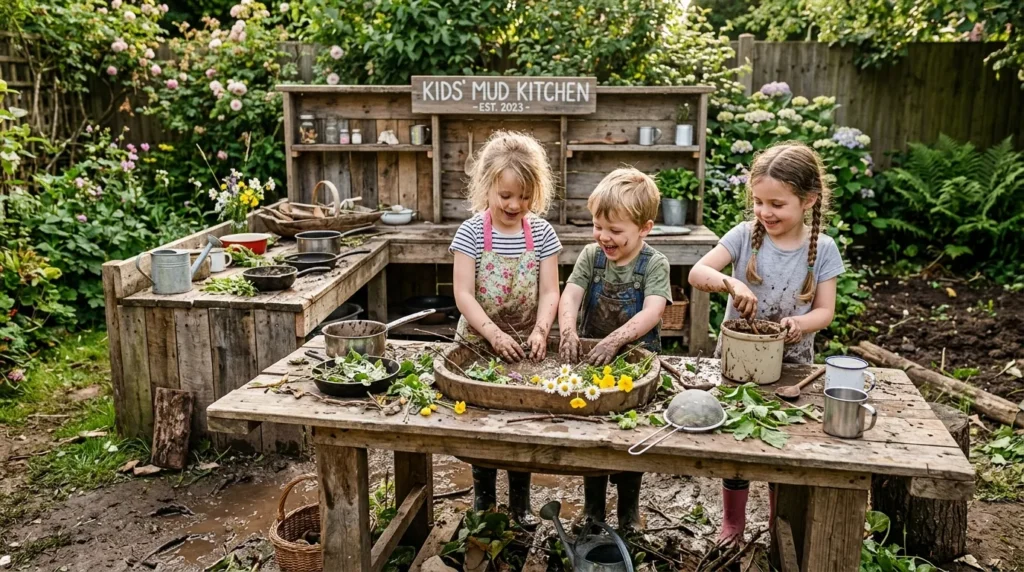
A mud counter is the heart of any outdoor play setup because it gives kids a defined space to explore creativity. This simple surface allows them to mix mud, water, leaves, and flowers into imaginative recipes. I’ve noticed that when children have a dedicated “work area,” they take their play more seriously and stay engaged for longer periods. Even a basic wooden plank or repurposed table can become a powerful creative station in the backyard.
Design flexibility is another major advantage. In my experience, dividing the counter into sections or adding small containers makes play more organized and fun. Some parents also include stools so multiple kids can play together comfortably. I’ve seen this work well in many homes where a simple counter became the center of outdoor storytelling, helping children build imagination, cooperation, and communication skills naturally.
4. Stove Setup
Bullet Points
- Realistic cooking simulation
- Encourages roleplay activities
- Easy recycled DIY design
- Enhances creative thinking
- Budget-friendly upgrade
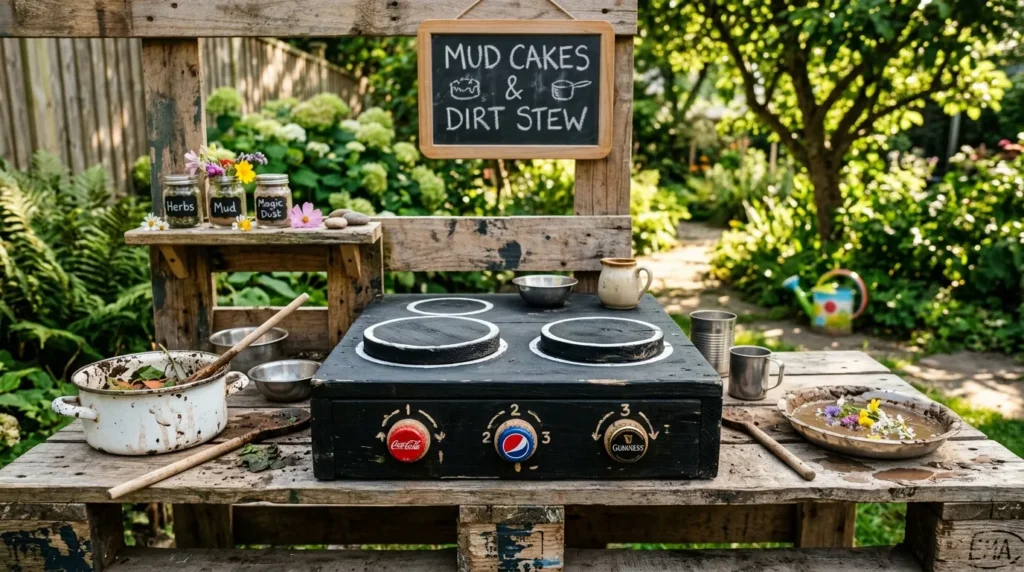
A stove setup is a creative addition that makes any mud kitchen feel more realistic and exciting for kids. Children love copying adult cooking behaviors, and a simple stove design allows them to act out real-life kitchen scenarios. Painted circles, wooden discs, or recycled lids can be used as burners, while small knobs add extra realism. I’ve noticed that even small visual details can significantly increase engagement during playtime.
This setup is very easy to build using everyday materials. In my experience, most parents use scrap wood or leftover household items to create burner designs. Some even paint stove outlines directly on wooden surfaces. I’ve seen this work well in many homes where a basic DIY stove became the highlight of the backyard, encouraging storytelling, teamwork, and hours of imaginative cooking adventures.
5. Water Play Area
Bullet Points
- Boosts sensory development
- Encourages hands-on exploration
- Keeps kids engaged longer
- Simple bucket or hose setup
- Ideal for outdoor fun
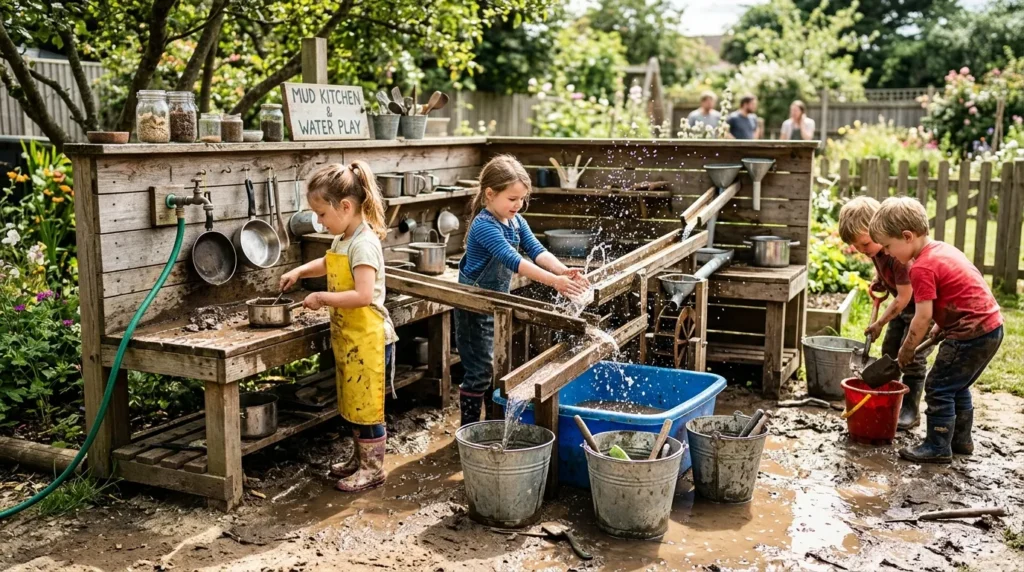
A water play area is one of the most exciting additions to a mud kitchen because it introduces dynamic sensory interaction. Kids love pouring, mixing, and transferring water between containers, especially when combined with mud and natural materials. I’ve noticed this type of setup keeps children engaged for long periods because it allows open-ended experimentation. Even simple buckets, tubs, or hose connections can create a highly interactive outdoor experience.
Safety and simplicity are important in design. In my experience, shallow containers or controlled water flow systems work best for younger children. Many parents also position water zones near cooking stations to create a complete play ecosystem. I’ve seen this work well in many homes where a simple water area became the most frequently used part of the backyard, supporting creativity, coordination, and sensory learning.
6. Nature Decor
Bullet Points
- Blends with outdoor environment
- Uses natural materials creatively
- Enhances visual appeal
- Encourages eco-friendly habits
- Budget-friendly design option
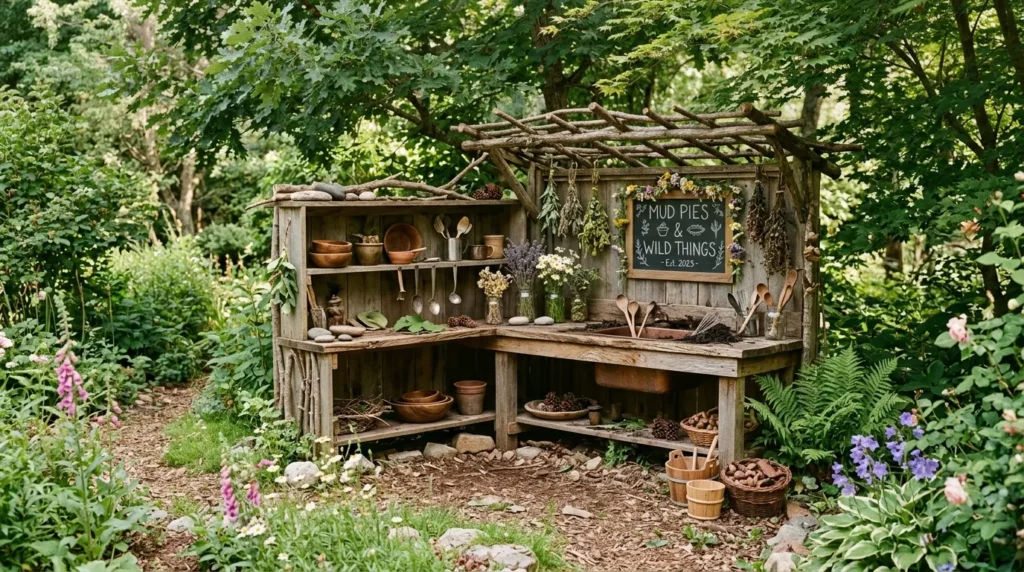
Nature decor is the finishing touch that brings a mud kitchen to life by blending it with the outdoor environment. Using elements like leaves, stones, branches, and flowers creates a natural and immersive play space. I’ve noticed that children become more creative when they interact with real natural textures instead of artificial toys. This approach keeps the design simple, affordable, and highly adaptable to different seasons.
Styling with nature does not require expensive materials or complex setups. In my experience, even small decorative touches like wooden accents or hanging plants can transform the entire space. Many parents also refresh natural elements regularly to keep the area interesting. I’ve seen this work well in many homes where a simple nature theme turned a basic backyard corner into a magical and educational outdoor learning environment.
7. Storage Bins
Bullet Points
- Keeps outdoor space organized
- Easy cleanup after play
- Separates materials clearly
- Improves long-term usability
- Teaches responsibility to kids
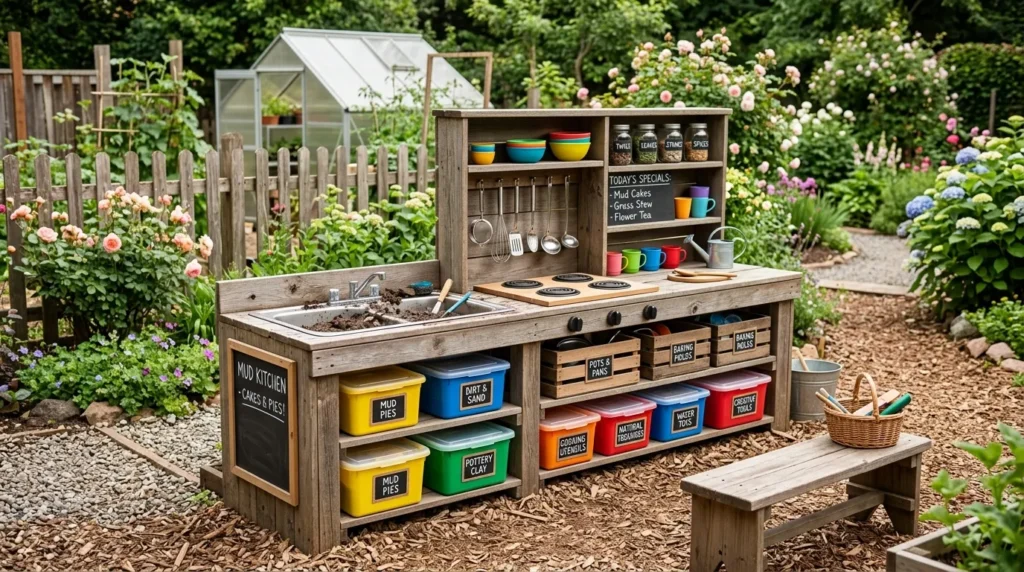
Storage bins are one of the most practical additions to any mud kitchen because outdoor play can quickly become messy without organization. Kids use mud, water, leaves, stones, and sand, and having separate containers makes everything easier to manage. I’ve noticed that children actually enjoy organizing when bins are labeled and easy to access. It turns cleanup into part of the play experience instead of a chore, which is a huge benefit for parents.
In my experience, durable plastic bins or wooden crates work best for outdoor conditions. Many parents also use color-coded containers to help kids identify materials quickly. Designers often recommend placing bins at child height so they can independently access and store items. I’ve seen this work well in many homes where simple storage systems transformed a messy backyard into a structured and educational play environment that supports responsibility and independence.
8. Mini Stove
Bullet Points
- Adds realistic cooking feel
- Encourages imaginative roleplay
- Easy DIY recycled design
- Boosts storytelling skills
- Budget-friendly construction
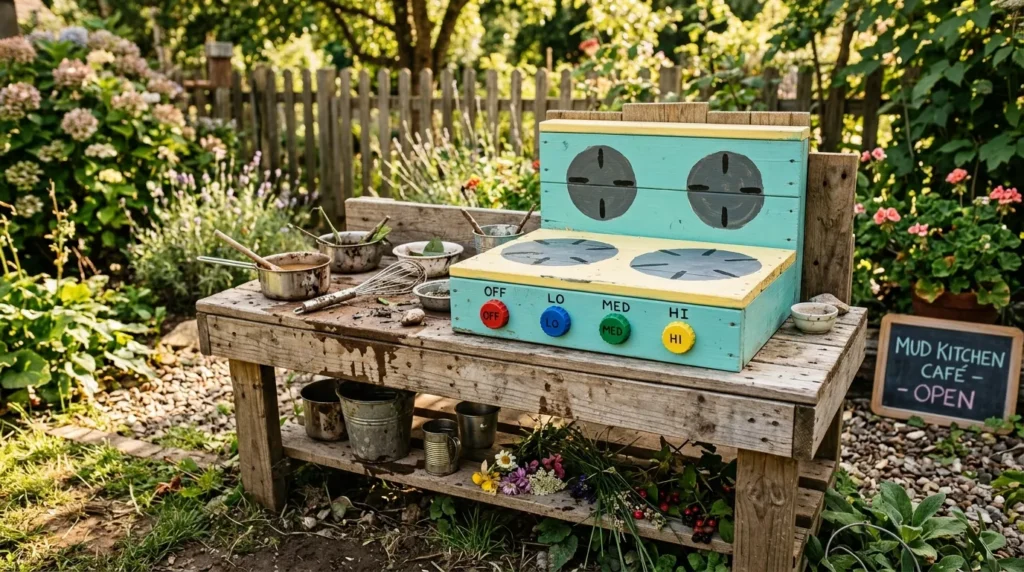
A mini stove brings a realistic kitchen experience into outdoor play and instantly increases engagement. Kids love copying real cooking behaviors, and a stove setup allows them to fully act out those experiences. Simple materials like painted wood, bottle caps, or old lids can be used to create burners and knobs. I’ve noticed children spend much more time playing when the setup feels realistic and detailed.
This idea is extremely flexible and easy to build. In my experience, even a flat wooden board with painted circles can work perfectly. Parents often add rotating knobs or small decorative touches to increase realism. I’ve seen this work well in many homes where a simple mini stove became the centerpiece of outdoor imagination, helping kids develop storytelling skills, creativity, and cooperative play habits naturally.
9. Herb Garden
Bullet Points
- Introduces real nature learning
- Adds sensory exploration
- Encourages responsibility
- Enhances play realism
- Eco-friendly backyard upgrade
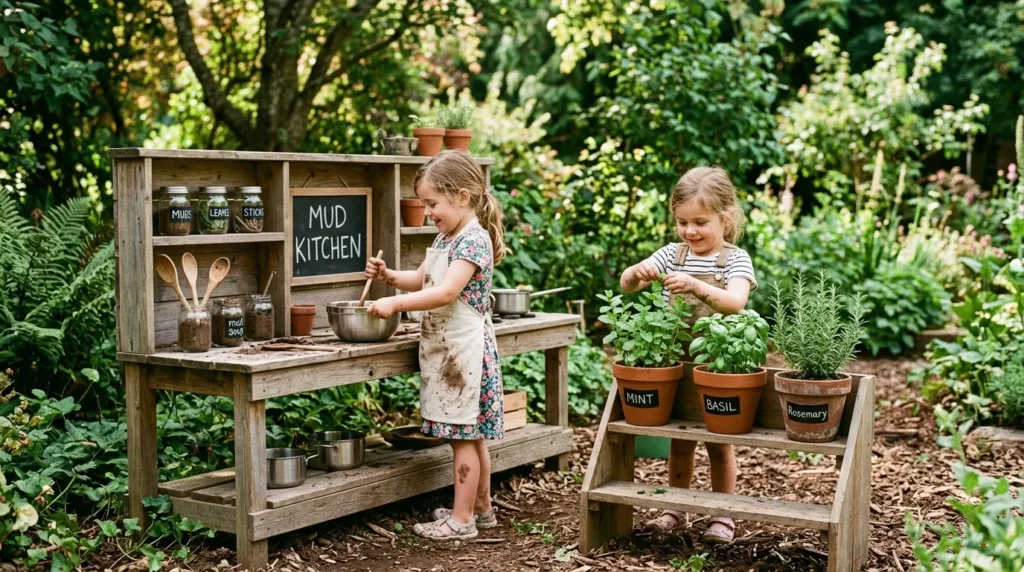
An herb garden is a beautiful and educational addition to any mud kitchen because it introduces real plants into imaginative play. Kids can use herbs like mint, basil, or rosemary in their pretend cooking activities, which adds a sensory-rich experience. I’ve noticed that children become more curious about nature when they can touch, smell, and interact with real plants during play. It turns simple outdoor fun into meaningful learning.
In my experience, small pots or raised beds work best for kids’ access. Many parents label herbs to help children recognize them easily. Designers often recommend placing herbs near the cooking area so kids can naturally integrate them into play. I’ve seen this work well in many homes where a small garden corner became both a learning tool and a creative extension of the mud kitchen.
10. Water Station
Bullet Points
- Boosts sensory play experience
- Encourages active exploration
- Keeps kids engaged longer
- Simple DIY setup
- Perfect for hot weather
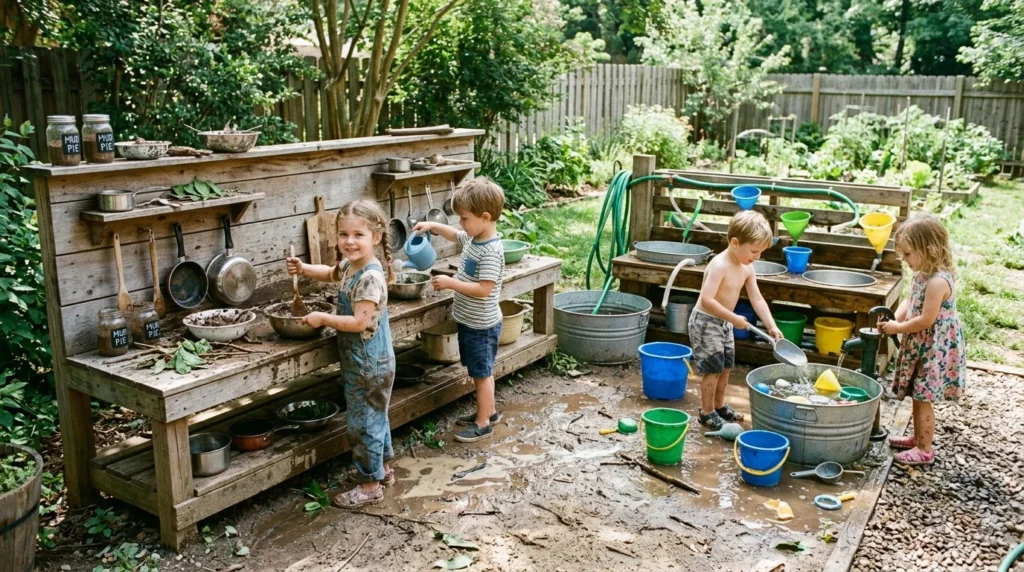
A water station is one of the most engaging features you can add to a mud kitchen because it creates endless sensory play opportunities. Kids love pouring, splashing, and mixing water with natural materials like mud and sand. I’ve noticed that this type of setup keeps children entertained for long periods because it allows free experimentation without strict rules. Even simple buckets or hoses can create a highly interactive play zone.
Safety and control are important in design. In my experience, shallow containers or controlled water flow systems are best for younger children. Many parents position water stations near cooking areas to create a full play ecosystem. I’ve seen this work well in many homes where a basic water setup became the most active and enjoyable part of the backyard, supporting coordination, creativity, and sensory development naturally.
11. Nature Styling
Bullet Points
- Blends with outdoor environment
- Uses natural materials
- Enhances visual beauty
- Encourages eco-friendly play
- Budget-friendly decor option
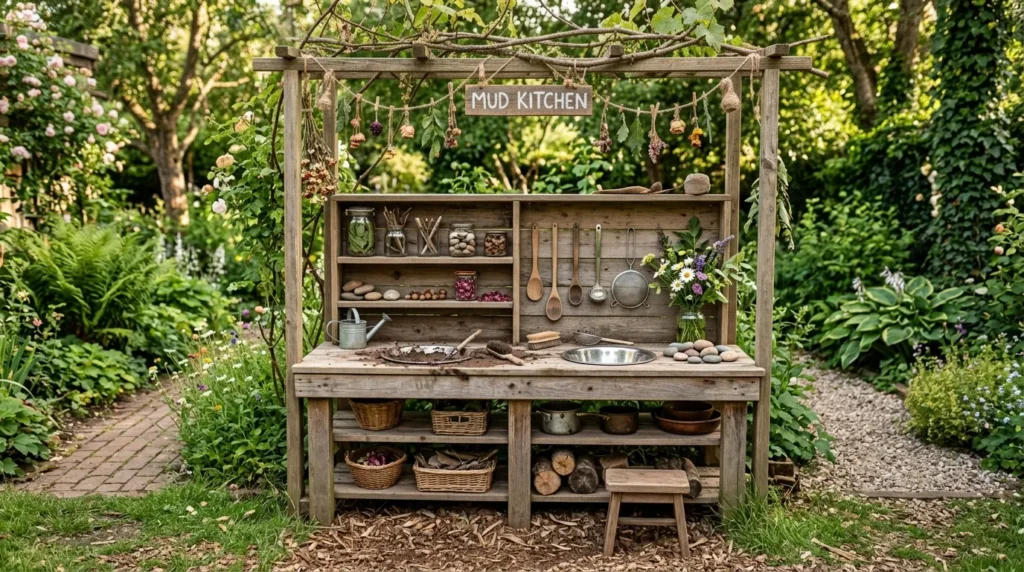
Nature styling brings everything together by making the mud kitchen feel like a natural part of the backyard. Using leaves, stones, branches, and flowers helps create an immersive environment where kids feel connected to nature. I’ve noticed that children become more creative when surrounded by real outdoor textures instead of artificial toys. It also keeps the setup simple, flexible, and affordable.
In my experience, small decorative touches like wooden accents or hanging plants make a big difference. Many parents also refresh natural elements seasonally to keep the space interesting. Designers often recommend avoiding clutter and letting nature be the main design element. I’ve seen this work well in many homes where simple styling transformed a basic outdoor corner into a magical and inspiring play environment.