
11 Creative Mud Kitchen Ideas
Creative Mud Kitchen Ideas
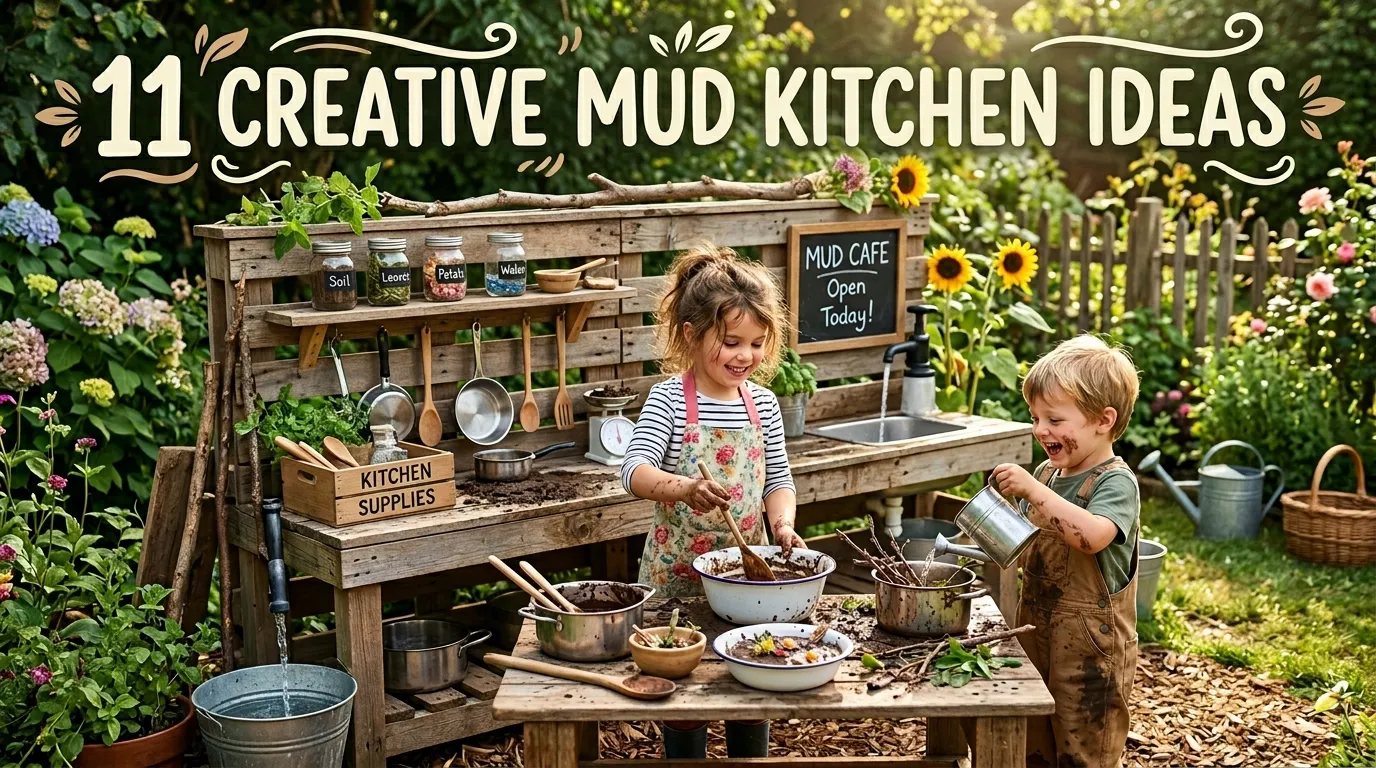
Outdoor creativity is becoming a big focus for parents in the USA who want to encourage kids to play away from screens and spend more time in natural environments. One of the most engaging and budget-friendly backyard setups is a mud kitchen. It allows children to explore textures like soil, water, leaves, and stones while building imagination and problem-solving skills through hands-on play.
In my experience, children learn best when they are not restricted by structured toys. They need open-ended environments where they can create their own rules and stories. That’s why many educators and designers recommend sensory-based outdoor play zones. A mud kitchen is a perfect example—it combines creativity, nature, and learning in one simple backyard setup that grows with a child’s imagination.
1. Pallet Base
Bullet Points
- Strong and budget-friendly foundation
- Easy DIY construction
- Natural rustic outdoor look
- Long-lasting structure
- Eco-friendly recycled material
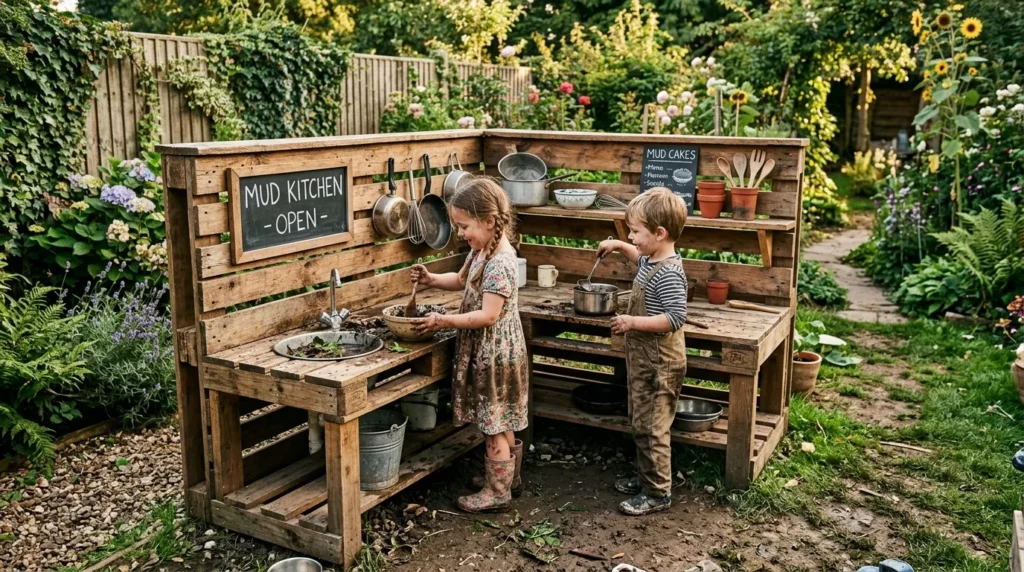
A pallet base is one of the most practical ways to start building a mud kitchen because it provides a strong and affordable foundation. Wooden pallets are easy to find and can be repurposed into counters, shelves, or full play stations. I’ve noticed that families love this option because it requires minimal tools and still creates a professional-looking setup in the backyard.
In my experience, pallets are extremely flexible for DIY projects. You can stack them, cut them, or rearrange them based on your available space. Many parents sand and seal the wood for safety and durability. I’ve seen this work well in many homes where a simple pallet structure turned into a long-lasting outdoor creative zone for kids.
2. Sink Station
Bullet Points
- Realistic water play experience
- Enhances sensory development
- Encourages imaginative roleplay
- Reuses household items
- Great for group interaction
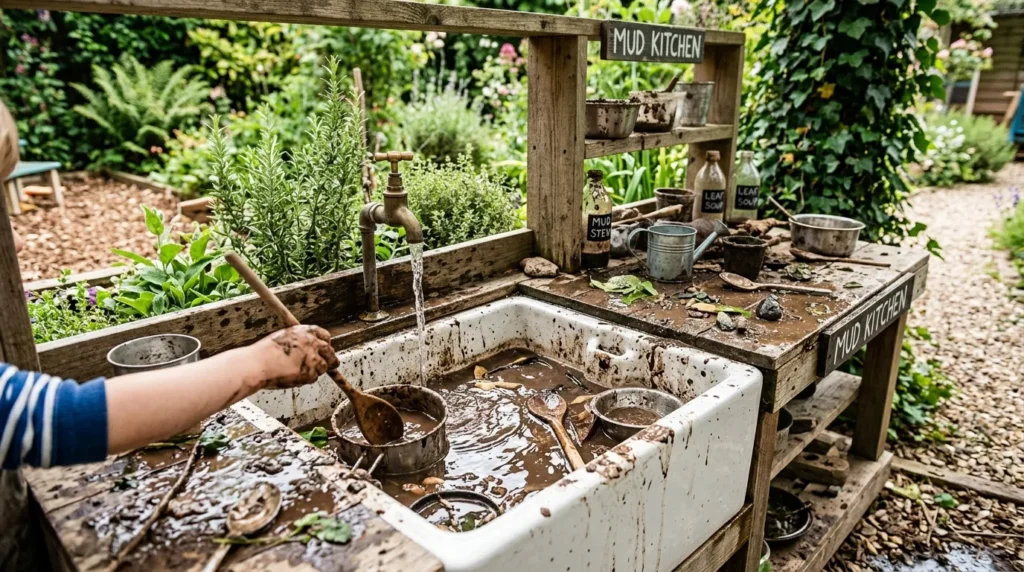
A sink station adds a highly interactive water element to any mud kitchen, making play more realistic and engaging. Kids naturally love water activities, and combining water with mud increases creativity and sensory exploration. Old basins, tubs, or unused sinks can easily be transformed into functional outdoor stations.
In my experience, even a simple wooden frame with a basin can create a very realistic setup. Parents often add buckets or small pumps for extra fun. Designers recommend placing it near the cooking area so kids can move freely between activities. I’ve seen this become the most exciting part of many backyard setups.
3. Mud Counter
Bullet Points
- Dedicated play workspace
- Encourages storytelling
- Supports group interaction
- Simple wooden design
- Boosts imagination skills
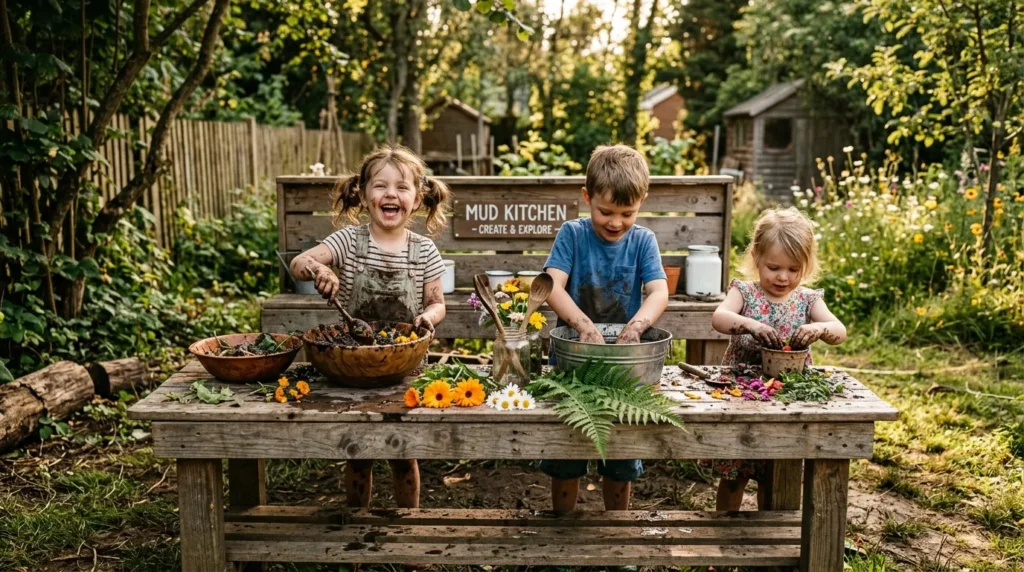
A mud counter acts as the main workspace where kids can fully explore creativity. It gives them a surface to mix mud, water, leaves, and stones into imaginative creations. I’ve noticed children stay more focused when they have a dedicated area for play instead of scattered spaces.
In my experience, even a basic wooden plank works well as a counter. Adding small sections or containers increases engagement. Many parents also include stools so multiple kids can play together. I’ve seen this become the heart of outdoor storytelling and collaborative creative play.
4. Stove Setup
Bullet Points
- Realistic cooking simulation
- Encourages roleplay
- Easy DIY design
- Boosts storytelling
- Budget-friendly upgrade
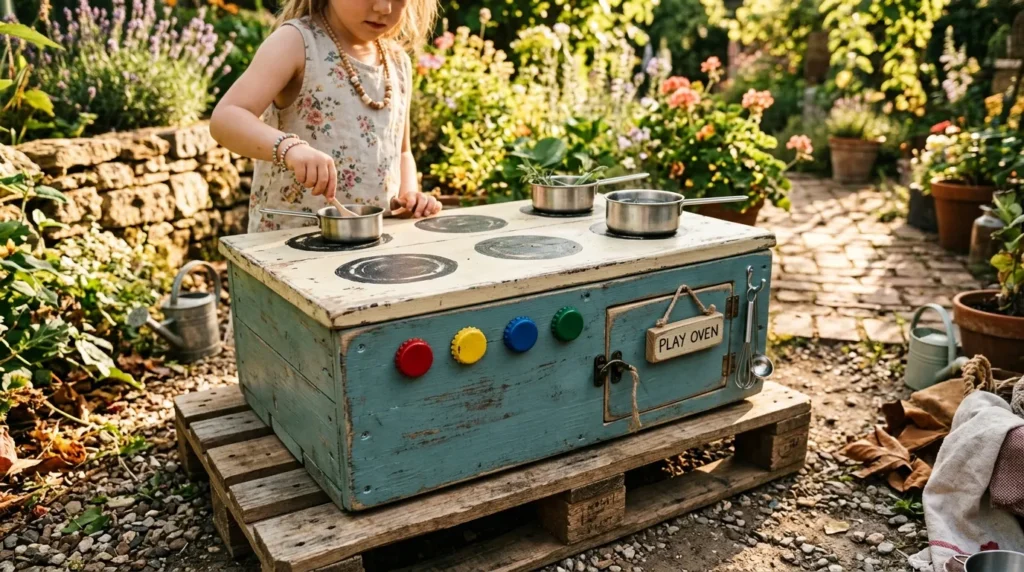
A stove setup adds realism to a mud kitchen and makes roleplay more exciting. Kids enjoy copying real cooking behavior, and a stove setup allows them to act like real chefs. Painted circles, bottle caps, or wooden discs can be used to create burners and knobs.
In my experience, even a simple painted board can look highly realistic to kids. Parents often customize colors and details to make it more engaging. I’ve seen this setup become a favorite feature in many backyards, encouraging creativity and teamwork.
5. Water Zone
Bullet Points
- Sensory learning experience
- Active outdoor play
- Encourages creativity
- Simple bucket setup
- Ideal for warm weather
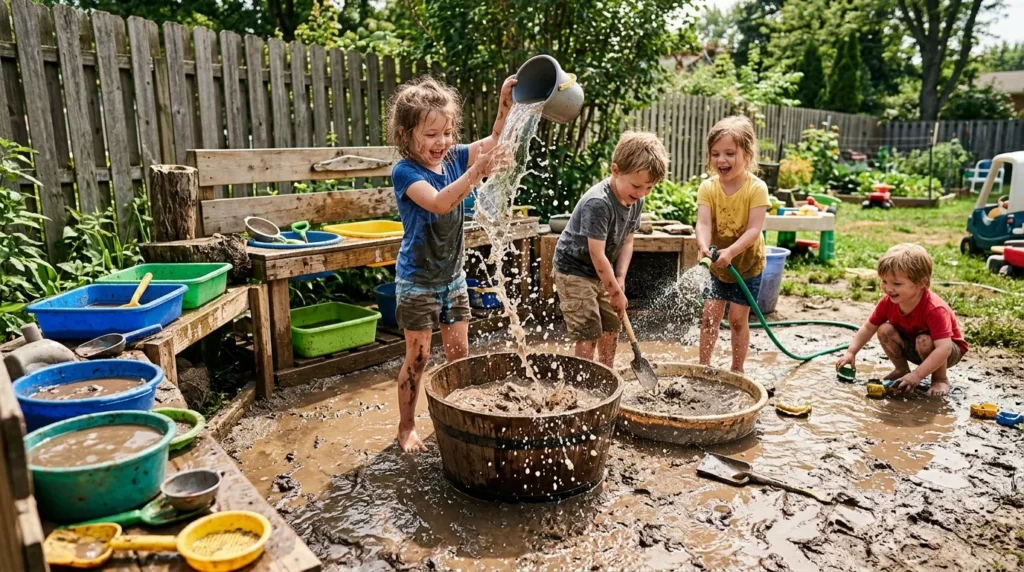
A water zone is one of the most engaging elements you can add to a mud kitchen. Kids love pouring, splashing, and mixing water with natural materials. It provides sensory stimulation and keeps children active for long periods of time.
In my experience, simple buckets or hose systems work best for safety and control. Parents often place water zones near cooking areas for easy interaction. I’ve seen this become one of the most frequently used parts of backyard play setups.
6. Nature Decor
Bullet Points
- Blends with outdoor environment
- Uses natural materials
- Enhances visual appeal
- Encourages eco awareness
- Budget-friendly styling
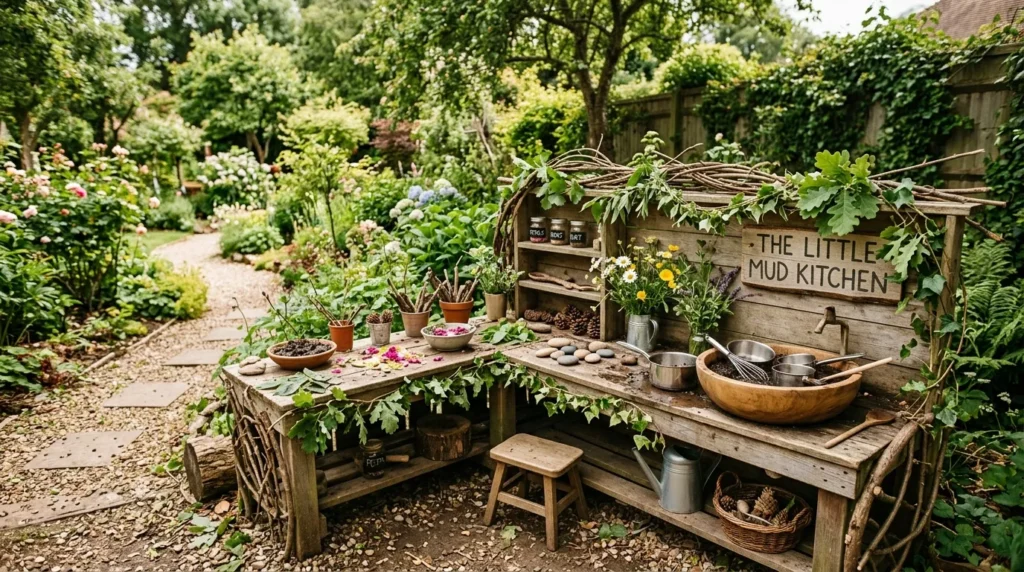
Nature decor helps integrate the mud kitchen into the backyard environment. Using leaves, stones, branches, and flowers creates a natural and immersive play space. I’ve noticed children become more imaginative when they interact with real natural textures instead of artificial toys.
In my experience, small decorative touches like plants or wooden accents make a big difference. Designers recommend keeping it simple and organic. I’ve seen this transform basic outdoor corners into magical and inspiring play areas.
7. Storage Bins
Bullet Points
- Keeps space organized
- Easy cleanup system
- Teaches responsibility
- Separates materials
- Improves usability
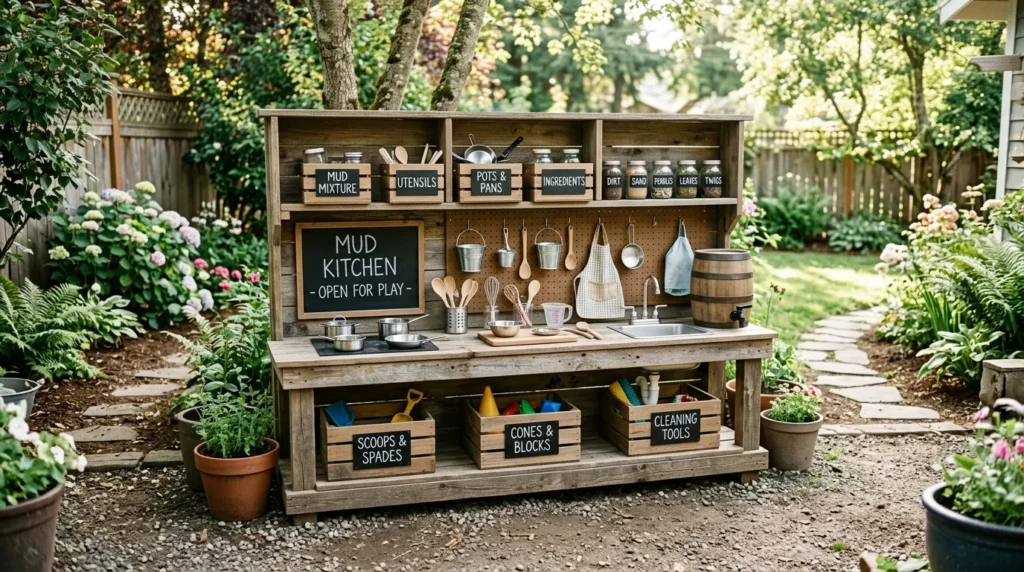
Storage bins help keep a mud kitchen organized by separating materials like sand, water, leaves, and tools. Kids learn responsibility when they know where everything belongs. I’ve noticed that labeled bins make cleanup feel like part of the game rather than a chore.
In my experience, plastic or wooden containers work best outdoors. Parents often color-code them for easier identification. I’ve seen this turn messy spaces into structured and efficient play zones.
8. Mini Stove
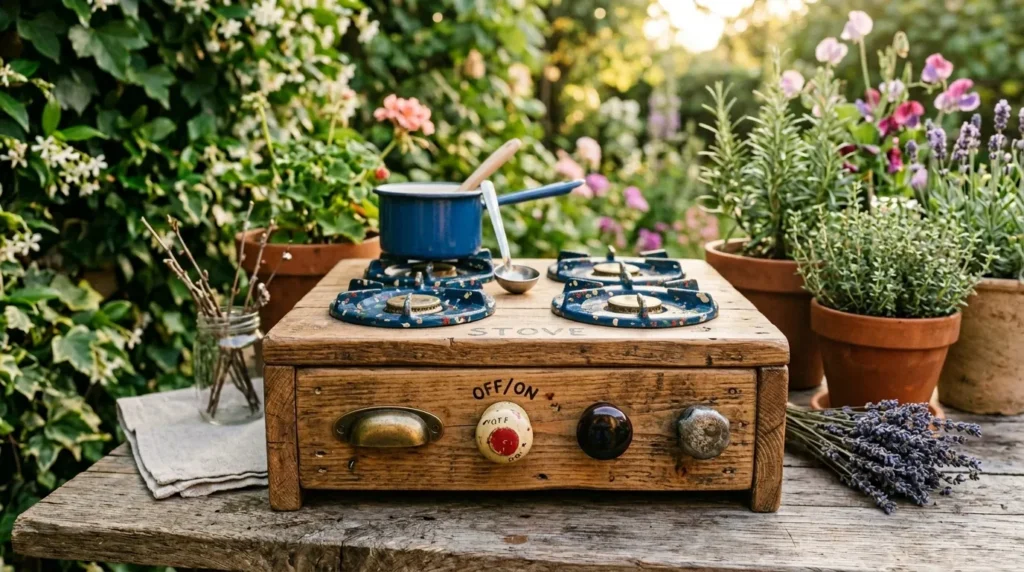
Bullet Points
- Realistic play cooking
- Encourages imagination
- Simple DIY design
- Boosts storytelling
- Budget-friendly idea
A mini stove makes outdoor play more realistic and engaging for kids. It allows them to pretend they are cooking meals just like adults. Painted burners and simple knobs add extra detail and fun.
In my experience, even basic designs are enough to spark imagination. Parents often reuse scrap materials for this setup. I’ve seen this become a central feature in many creative backyard spaces.
9. Herb Garden
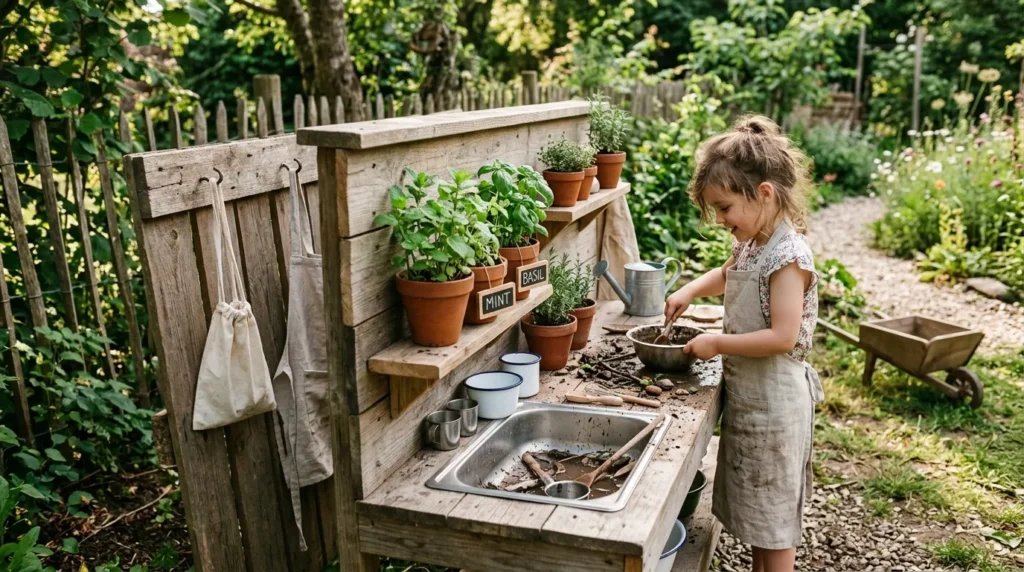
Bullet Points
- Real nature learning
- Sensory exploration
- Encourages responsibility
- Adds realism
- Eco-friendly design
An herb garden brings real plants into the mud kitchen experience. Kids can use herbs like mint or basil during play, making activities more realistic and educational. I’ve noticed children develop curiosity about nature through this setup.
In my experience, small pots or raised beds work best. Parents often label plants for learning purposes. I’ve seen this blend learning and play beautifully in many backyard setups.
10. Water Station
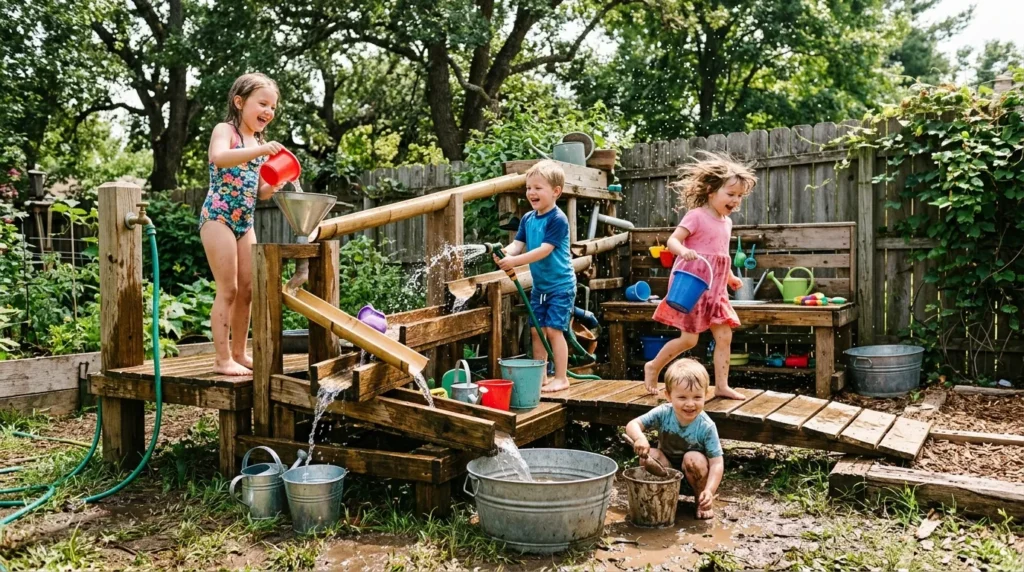
Bullet Points
- Enhances sensory play
- Encourages exploration
- Simple DIY setup
- Active learning space
- Perfect outdoor feature
A water station adds dynamic play opportunities to a mud kitchen. Kids enjoy transferring water between containers and mixing it with mud or sand. It keeps them engaged for long periods.
In my experience, shallow containers are safest for children. Parents often place stations near other play zones for easy interaction. I’ve seen this become the most active area in many backyard setups.
11. Nature Styling
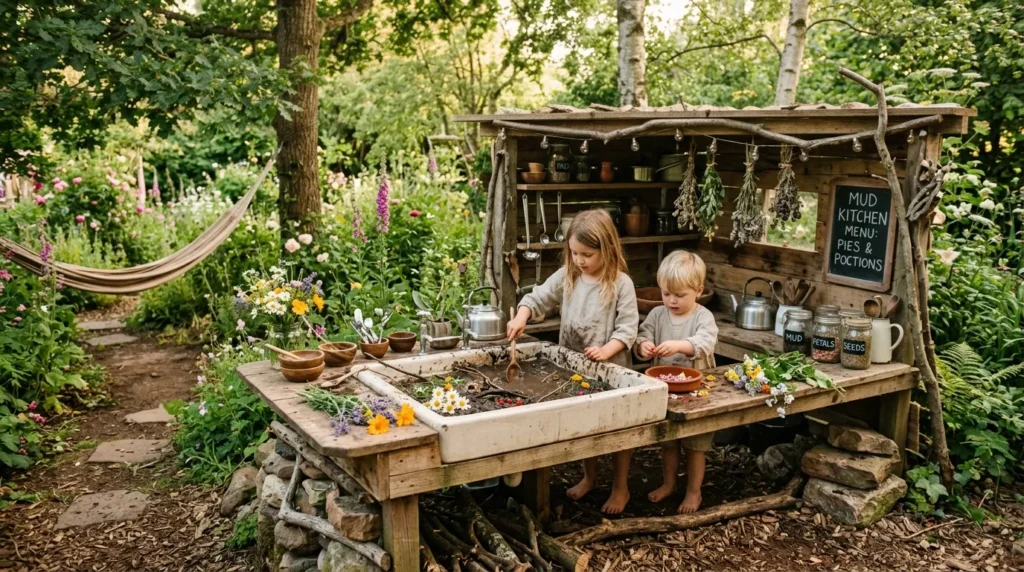
Bullet Points
- Natural outdoor integration
- Eco-friendly design
- Enhances beauty
- Simple materials
- Creative finishing touch
Nature styling completes the mud kitchen by blending it with the outdoor environment. Using stones, branches, leaves, and flowers creates a calm and natural play atmosphere. I’ve noticed children become more creative in natural surroundings.
In my experience, simple styling works best. Parents often refresh natural elements seasonally. I’ve seen this transform basic setups into magical outdoor learning spaces.