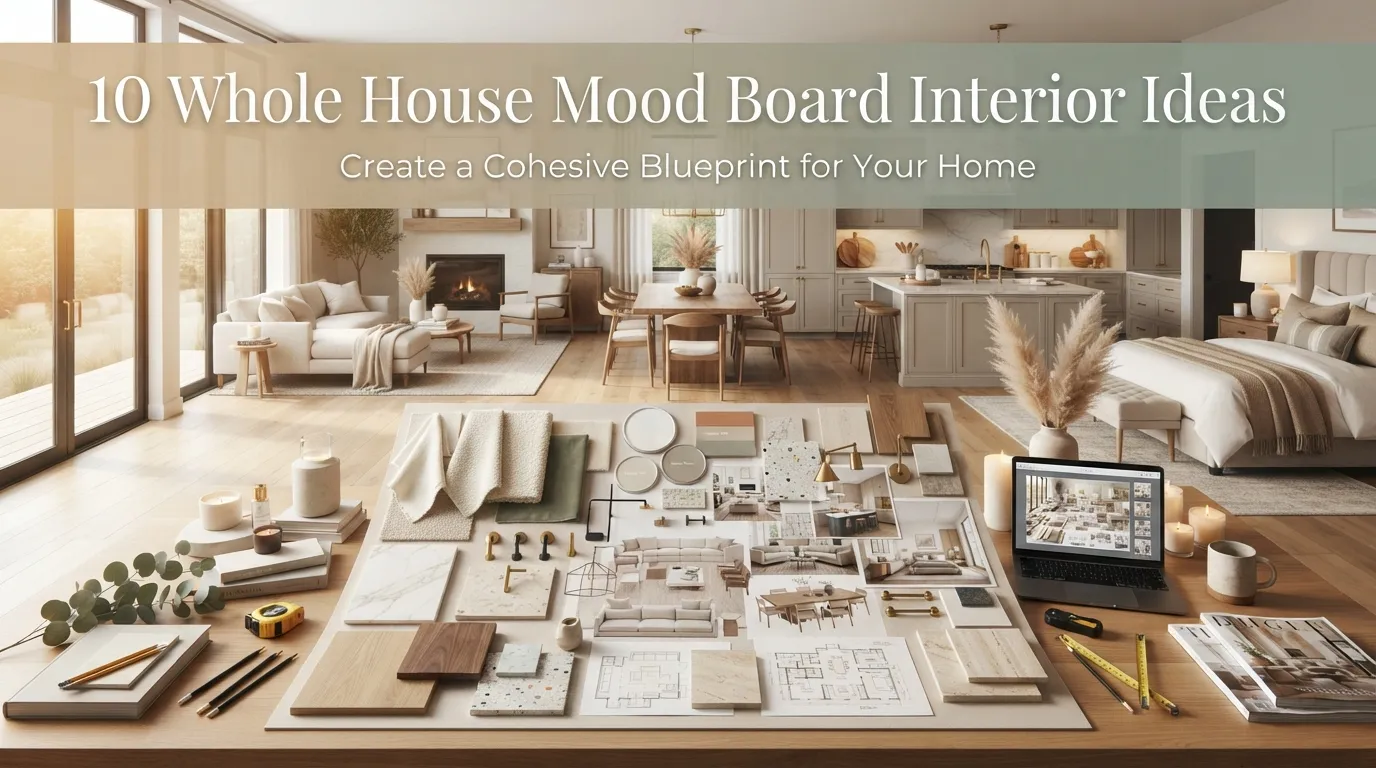
10 Whole House Mood Board Interior Ideas: How to Create a Cohesive Blueprint for Your Home
Walking into a home that feels entirely disconnected from room to room is a deeply unsettling design experience. We have all stepped into houses where the entryway screams ultra-modern minimalism, the living room leans heavily into rustic farmhouse, and the kitchen features stark, cold industrial elements. When a home lacks a singular design narrative, it triggers an unspoken sense of visual chaos that prevents you from truly relaxing. If you are anything like me, you want your living spaces to feel like a seamless sanctuary—a beautifully choreographed story where each room introduces a new chapter while maintaining the same underlying rhythm. Yet, a mistake many homeowners make is buying furniture and selecting paint colors for individual rooms in total isolation, completely forgetting to look at the big picture.
Over my fifteen years as a luxury home publisher and digital strategist, I have noticed that the most jaw-dropping, high-end homes achieve their effortless beauty because the owners relied on a comprehensive Whole House Mood Board Interior strategy before buying a single throw pillow or paint sample. Developing a unified vision allows you to establish a foundational color thread, a repetitive mix of natural textures, and a consistent hardware language that ties your entryway, kitchen, living spaces, and bedrooms together. You do not need to spend tens of thousands of dollars on high-end interior designers to achieve this editorial, high-end look. By learning how to curate your visual inspiration into distinct, functional stylistic blueprints, you can eliminate expensive design mistakes and curate your home with ultimate confidence.
The secret to success lies in building a framework that perfectly balances architectural logic with the highly inspiring, texture-rich imagery that captures real user intent on modern digital discovery platforms. In this definitive guide, we are exploring ten distinct whole-house design maps built for longevity, daily functionality, and incredible visual appeal. Whether you are remodeling a historic coastal bungalow, modernizing a suburban property, or styling a cozy rental apartment, these expert concepts will help you design a harmonious, expansive home that supports your lifestyle.
Table of Contents
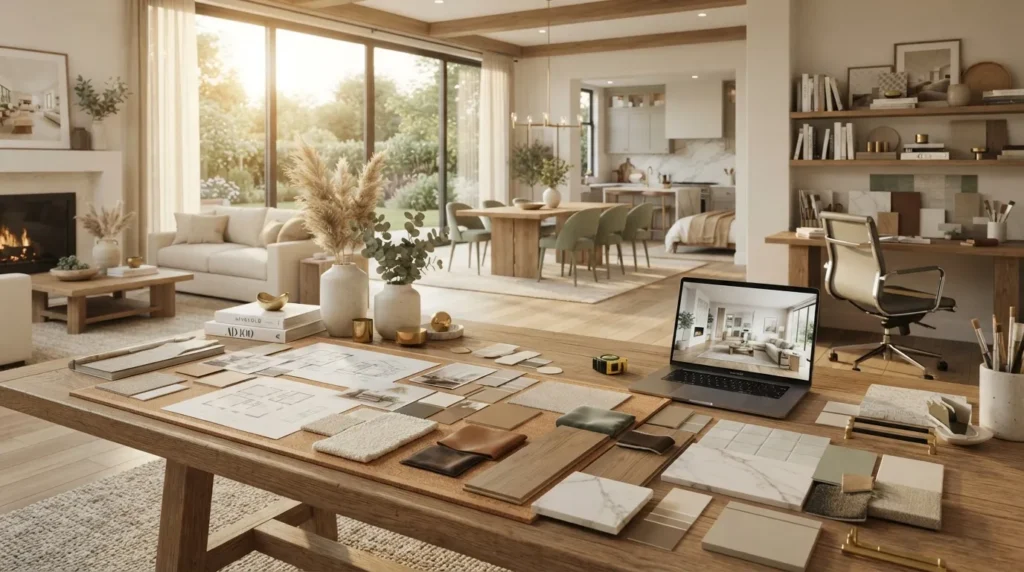
- Organic Modern Blueprint Discover how warm neutral linen tones, textured boucle furniture, and raw travertine stone establish a peaceful minimalist baseline.
- Warm Heritage Concept Learn the art of combining deep historical paint colors, rich unlacquered brass hardware, and vintage Turkish textiles.
- Coastal Editorial Palette Explore a fresh coastal look built around weathered white oak finishes, crisp woven grasses, and soft watery blues.
- Moody Minimalist Canvas Find out how dramatic dark charcoal paneling, matte black iron plumbing, and rich walnut accents build high-end contrast.
- Elevated European Farmhouse See how rustic lime-washed plaster walls, antiqued flagstone floors, and exposed structural timber beams bring old-world warmth.
- Contemporary Industrial Blend Discover the balance of raw exposed concrete textures, sleek black steel window casings, and warm caramel leather upholstery.
- Earthy Botanical Haven Learn how soft sage green backdrops, woven rattan statement lighting, and natural terracotta details invite the outdoors inside.
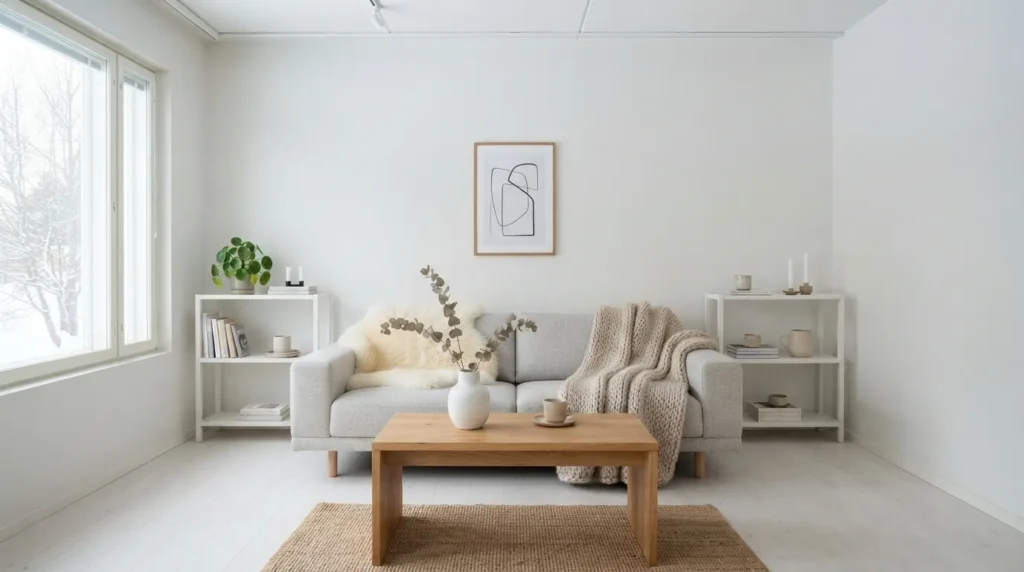
- Crisp Nordic Sanctuary Explore the Scandinavian approach using clean pale ash wood finishes, bright minimalist whites, and cozy sheepskin layers.
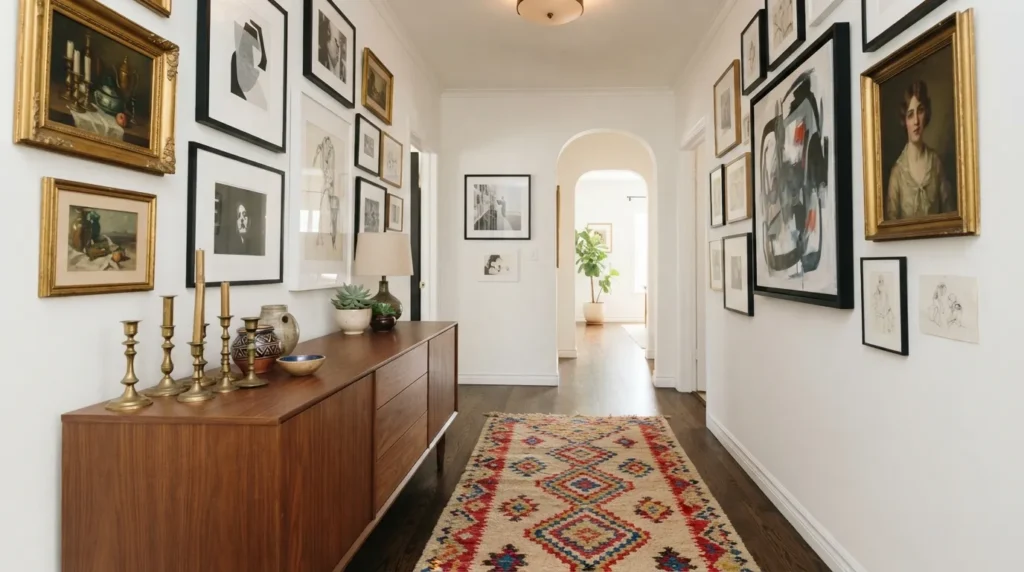
- Vintage Eclectic Narrative See how curated antique oil paintings, mixed metal accents, and unexpected colorful velvet statements tell a personal story.
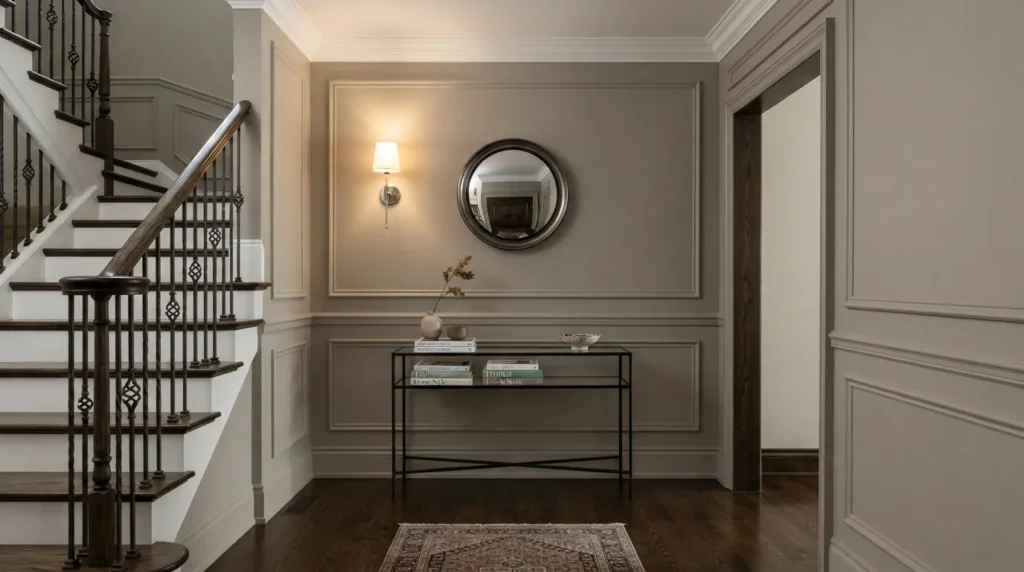
- Soft Transitional Framework Master the classic pairing of traditional crown molding details, tailored track-arm sofas, and warm sophisticated greige paints.
1. Organic Modern Blueprint
Quick Benefits
- Creates a calming spa-like atmosphere
- Increases natural light circulation pathways
- Reduces visible daily visual clutter
- Blends minimalist architecture with warmth
- Works beautifully across open layouts
Why It Works
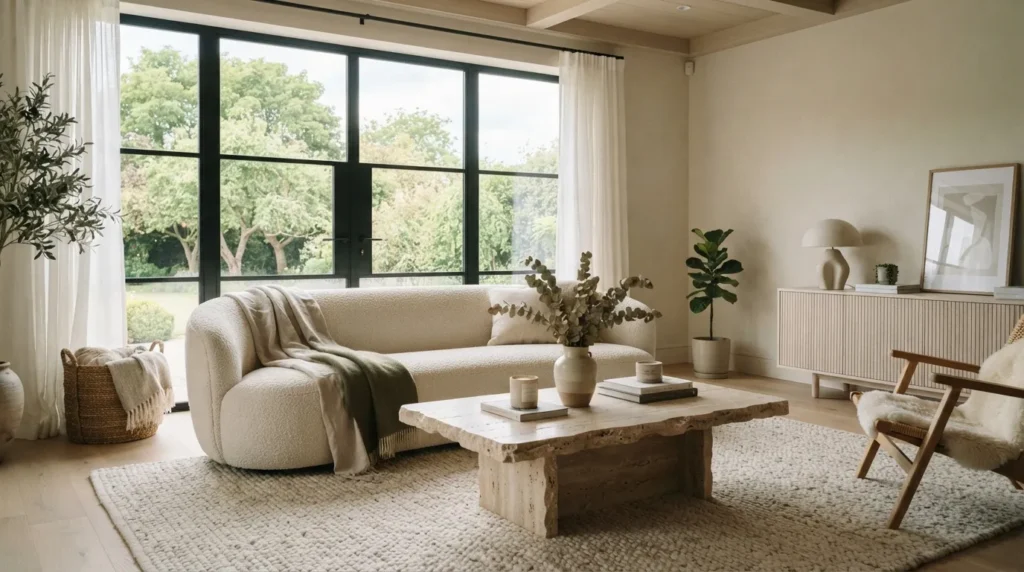
One simple trick I always suggest to instantly elevate a home’s overall flow is focusing heavily on tactile surfaces rather than relying on bright accent colors. An all-white modern space can quickly feel clinical, but an organic modern approach grounds the architecture by relying on materials directly sourced from nature. In my experience, using a consistent Whole House Mood Board Interior plan rooted in warm oatmeal tones, soft plaster finishes, and matte travertine allows different rooms to blend together seamlessly. The eye tracks across open floor plans smoothly because there are no harsh, artificial color breaks to disrupt the visual transition, making small homes feel instantly larger and more expensive.
How To Style It
To carry this organic modern concept throughout your home, start by painting your primary walls a soft, light-reflective warm cream with chalky undertones. In the living room, anchor the seating arrangement with a deep cream linen sofa, structured boucle accent chairs, and a solid travertine stone coffee table. Transition into the kitchen by using flat-panel white oak cabinetry paired with unpolished stone slab countertops. Keep bedrooms peaceful by utilizing layered linen bedding in soft clay and sand tones, and introduce large, hand-knotted wool area rugs in every zone to soften your hardwood floors.
2. Warm Heritage Concept
Quick Benefits
- Infuses instant architectural soul into new builds
- Camouflages high-traffic scuffs and wear beautifully
- Establishes a deeply cozy, lived-in character
- Pairs effortlessly with authentic antique furniture
- Develops a gorgeous unpolished natural patina
Why It Works
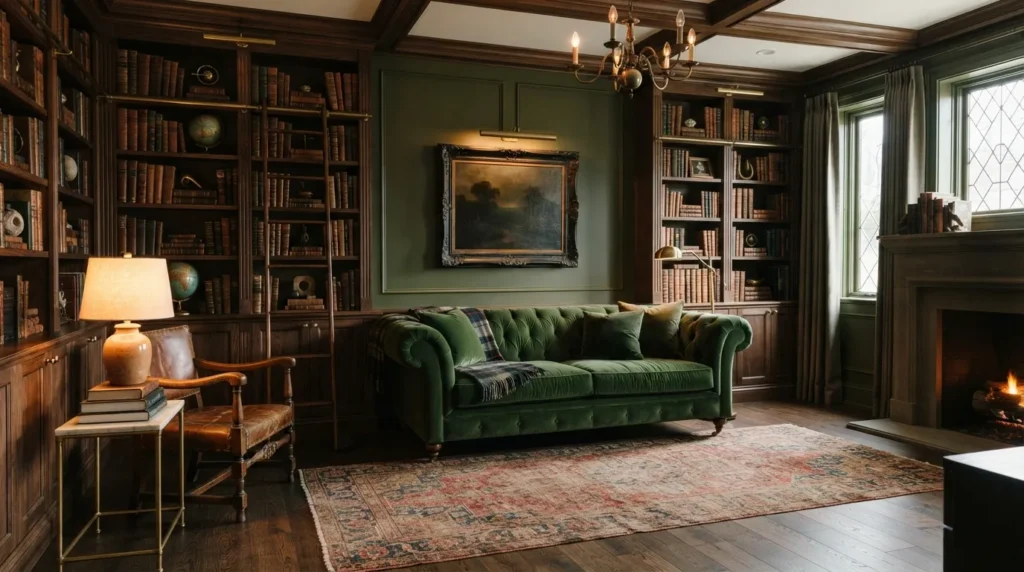
I’ve seen this idea transform spaces that initially felt completely devoid of personality, turning sterile drywall rooms into spaces that feel like they have existed for generations. A mistake many homeowners make when trying to create a timeless look is buying matching, mass-produced furniture sets from showroom floors. The warm heritage concept rejects the cookie-cutter look by celebrating deep, historically accurate paint formulations, heavy architectural trim work, and rich, solid hardwoods. This strategy works beautifully because the deep, pigmented color stories and heavy natural grains create an enveloping sense of security and timeless luxury across every square foot.
How To Style It
Begin by selecting a rich, historical hue like deep olive green, muted burgundy, or historical navy for your secondary spaces like the home office, powder room, or dining area. For the main living zones, apply a soft, warm ivory to trim work and crown moldings. Source genuine vintage Turkish runner rugs for your entryways and kitchen pathways to introduce complex pattern and color history. Incorporate heavy English roll-arm sofas upholstered in olive green velvet, install unlacquered brass cabinet latches that tarnish over time, and display dark oil-rubbed bronze picture lights above curated wall art.
3. Coastal Editorial Palette
Quick Benefits
- Brightens dark, narrow entry corridors
- Captures a permanent relaxed vacation feel
- Resists fading from intense afternoon sun
- Highlights casual, high-end family living
- Softens dramatic modern architectural lines
Why It Works
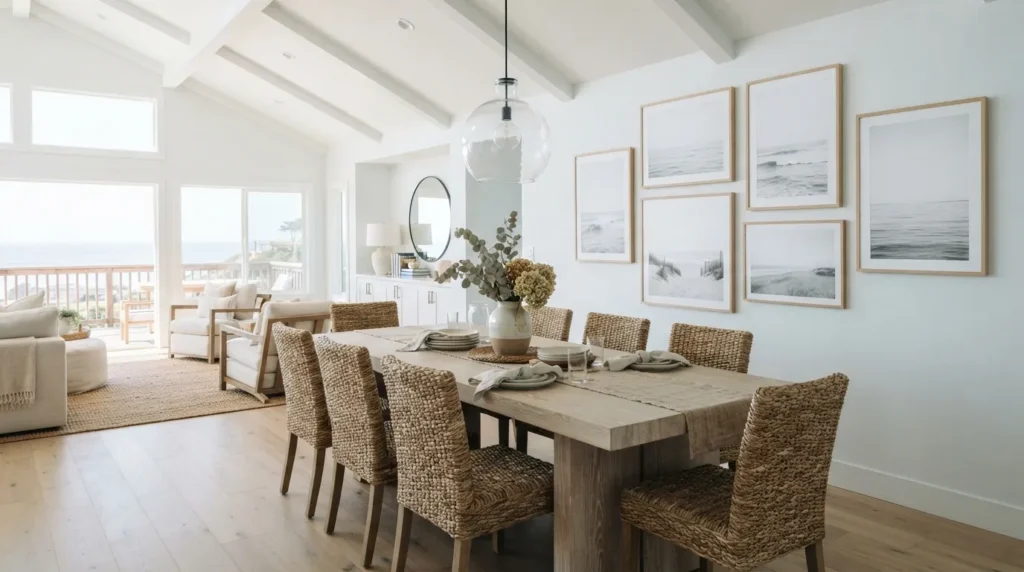
If you’re anything like me, you love the breezy, sun-drenched feeling of high-end coastal resorts, but you want to avoid the tacky, overly literal nautical decor trap. The coastal editorial palette avoids plastic seashells and anchors, opting instead for sophisticated textures inspired by seaside landscapes. That’s why many designers recommend focusing on weathered finishes, bleached wood grains, and soft, watery blues to build a sophisticated design map. This combination allows natural light to bounce effortlessly across rooms, making it an exceptional framework for layouts featuring massive windows and indoor-outdoor living transitions.
How To Style It
Lay down wide-plank white oak flooring with a low-sheen matte finish across the entire footprint of your main level. Paint your walls in a crisp, clean white that features subtle cool undertones to mirror the afternoon sea mist. In the dining area, choose woven seagrass or rattan dining chairs arranged around a bleached timber dining table. Decorate your living spaces with light slipcovered linen sofas, soft watery blue linen accent pillows, and oversized clear glass light fixtures. Hang framed minimalist beach photography featuring wide mat borders to keep the theme elevated and editorial.
4. Moody Minimalist Canvas
Quick Benefits
- Delivers high-impact luxury drama immediately
- Makes large, drafty rooms feel intimate
- Serves as an excellent backdrop for art
- Keeps masculine and feminine elements balanced
- Conceals TV screens against dark walls
Why It Works
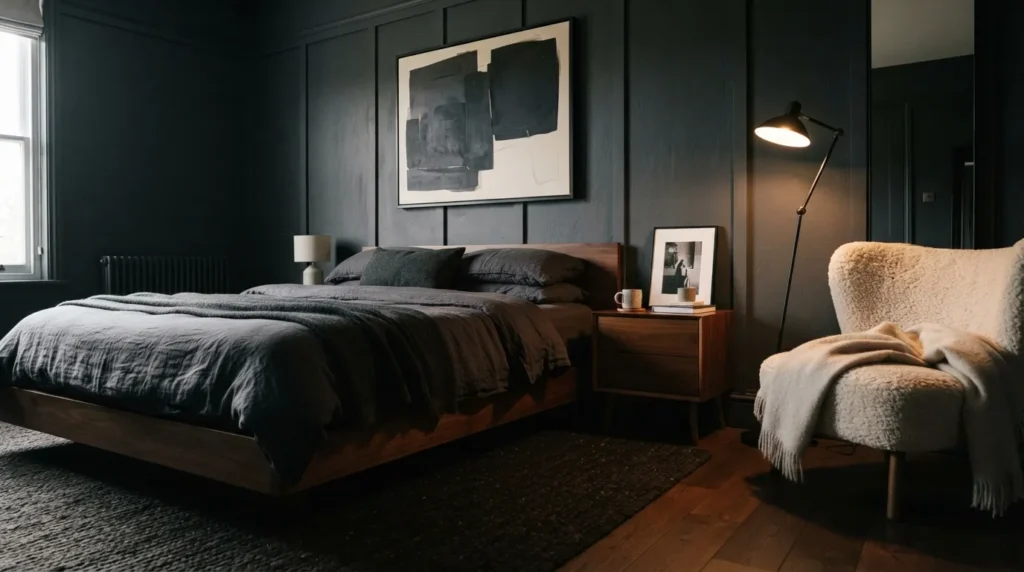
One thing that works especially well for creating an unforgettable home environment is embracing deep, dark values rather than fearing them. Many people assume that painting a space dark will make it feel like an absolute cave, but when executed across a cohesive whole-house strategy, dark colors actually cause the boundaries of a room to recede. A moody minimalist plan balances rich charcoal, deep espresso, and matte black with crisp architectural lighting and warm wood tones. This ensures that the deep palette looks intentionally sophisticated, modern, and high-fashion rather than gloomy or claustrophobic.
How To Style It
Paint your primary living room or primary bedroom walls in a deep, velvet-finish iron ore or dark charcoal gray, carrying the exact same color across your baseboards and interior doors for a seamless modern look. Contrast the dark walls by installing light white oak floors and placing large, cream-colored shearling accent chairs in the seating zones. Use matte black metal tracks for architectural lighting, and select rich walnut wood for your kitchen island and bathroom vanities. Introduce slim, brushed steel floor lamps and simple black leather accents to maintain a sleek, tailored profile.
5. Elevated European Farmhouse
Quick Benefits
- Highlights authentic, imperfect natural materials
- Accommodates active family and pet lifestyles
- Melds modern convenience with old-world charm
- Eliminates the need for perfect drywall finishing
- Ages gracefully over decades of daily use
Why It Works
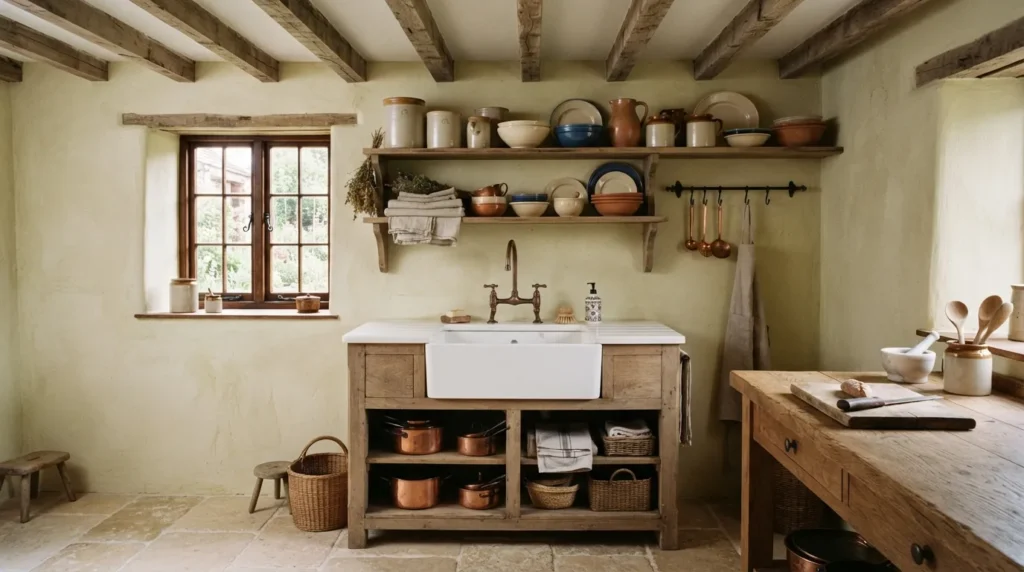
This style completely redefines the classic American farmhouse trend by stripping away the artificial distressed wood and word-art signage, replacing them with authentic European country textures. In my experience, focusing on genuine architectural history—like rough-sawn timber beams, hand-carved limestone, and real lime-wash paint—creates a deeply emotional connection to the home. The elevated European farmhouse map thrives on texture over pattern, allowing the natural imperfections of the building materials to take center stage, resulting in an elegant space that feels both rustic and incredibly high-end.
How To Style It
Apply a beautiful, textured lime-wash or Roman clay paint finish to your primary living walls to capture an authentic plaster look. Install tumbled limestone or irregular flagstone flooring across your entryway, mudroom, and kitchen spaces. Source exposed, reclaimed wood beams to accent your vaulted ceilings or frame your main transitions. Choose a deep, fireclay farmhouse apron-front sink for the kitchen, and pair it with aged copper bridge faucets. Style your rooms with slipcovered cotton canvas furniture, antique wooden dough bowls, and heavy wrought iron iron floor candlesticks.
6. Contemporary Industrial Blend
Quick Benefits
- Highlights soaring structural ceiling heights
- Celebrates structural building materials honestly
- Provides excellent durability for urban living
- Integrates high-tech smart appliances seamlessly
- Works beautifully in loft-style apartments
Why It Works
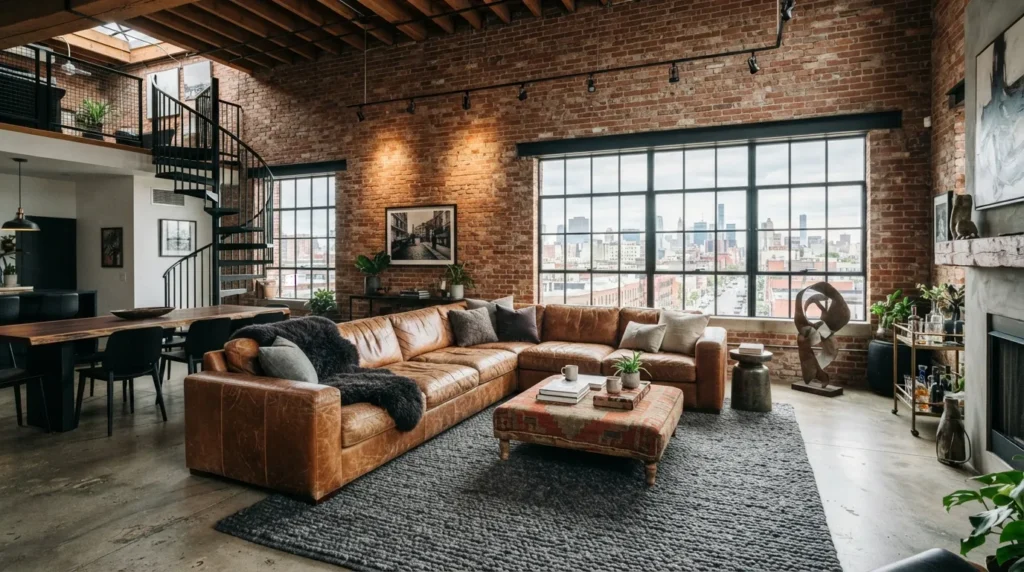
A mistake many homeowners make when trying to execute an industrial aesthetic is letting the space become too cold, harsh, and unwelcoming. A successful contemporary industrial map carefully balances raw, rugged elements like poured concrete and black steel with incredibly soft, luxurious materials like rich caramel leathers and plush wool rugs. This juxtaposition prevents the house from feeling like a commercial warehouse, resulting in a sophisticated urban home that feels intentionally warm, architectural, and filled with modern visual interest from the front door to the back bedrooms.
How To Style It
Leave a primary structural wall exposed as raw brick or smooth, micro-topped architectural concrete within your living area or kitchen backdrop. Install custom black steel-framed windows and internal glass double doors to partition spaces while maintaining clear lines of sight. Choose a large sectional sofa upholstered in premium, distressed caramel leather that will scratch and age beautifully over time. Mount industrial iron pipe shelving against your walls, use sleek track lighting systems overhead, and place large plush charcoal gray area rugs underneath furniture groupings to anchor the zones.
7. Earthy Botanical Haven
Quick Benefits
- Promotes a deep psychological sense of wellness
- Complements abundance of indoor houseplants
- Softens harsh, bright afternoon solar heat
- Connects indoor living areas to garden views
- Introduces refreshing, lively color naturally
Why It Works
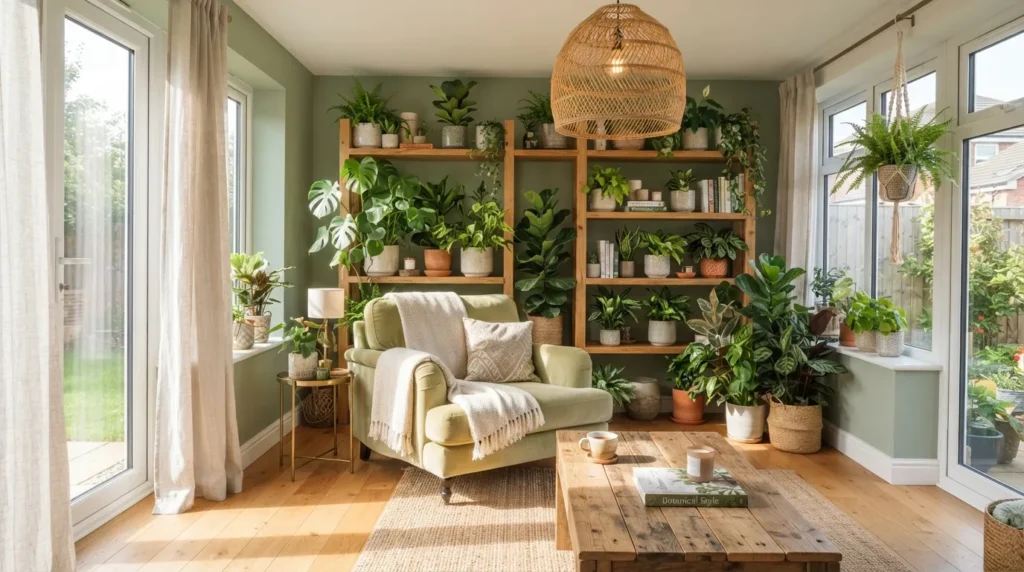
Bringing elements of nature into our daily living spaces has been proven to lower stress levels and increase happiness, making the earthy botanical map a fantastic option for busy households. By anchoring your home’s layout around a soft, natural green spectrum—ranging from pale sage to deep forest green—you create an interior environment that feels connected to the outside world. This design framework relies on woven plant fibers, organic pottery, and botanical prints to inject life into the home, ensuring every single room feels fresh, vibrant, and deeply relaxing.
How To Style It
Paint your bedrooms or formal dining room walls in a soothing, desaturated sage green that features earthy gray undertones. Use natural woven rattan or woven willow basket pendants as your primary statement light fixtures in the kitchen and dining areas. Incorporate light olive green velvet accent chairs into your living room layout alongside a solid reclaimed wood coffee table. Line your windows with breezy linen drapery panels, style handmade terracotta pots filled with trailing pothos plants on your open shelving, and hang antique botanical watercolor illustrations in simple oak frames.
8. Crisp Nordic Sanctuary
Quick Benefits
- Maximizes every drop of winter daylight
- Makes small apartments feel incredibly spacious
- Promotes a highly disciplined, organized lifestyle
- Complements budget-friendly Scandinavian furniture
- Focuses heavily on functional everyday comfort
Why It Works
The Scandinavian concept of hygge focuses entirely on creating a warm, cozy sanctuary that supports simple, everyday well-being. A crisp Nordic design map achieves this by keeping the structural shell incredibly bright, clean, and uncluttered, while packing the interior with ultra-plush, soft textiles. This style works exceptionally well because it prioritizes light distribution through the use of pale woods like ash and beech, paired with true white walls. The simplicity of the background allows the physical textures of wool, sheepskin, and linen to feel incredibly luxurious and comforting.
How To Style It
Sand down your existing wood floors and apply a pale, Scandinavian white-wash or clear matte finish to eliminate any yellow tones. Paint every wall and ceiling in a clean, bright minimalist white to capture maximum daylight reflection. Style your main living space with clean-lined furniture featuring light ash wood legs and light gray wool upholstery. Layer thick, genuine ivory sheepskin throws over your accent chairs, place chunky knit wool blankets at the foot of your beds, and use simple white ceramic tableware on a minimalist blonde wood dining table.
9. Vintage Eclectic Narrative
Quick Benefits
- Showcases your unique personal travel collections
- Allows you to mix completely different design eras
- Can be easily built over time using thrift finds
- Features unique, one-of-a-kind home styling
- Avoids the sterile look of showroom spaces
Why It Works
If you are tired of seeing the exact same mass-produced living rooms all over your social media feeds, a vintage eclectic strategy is your ticket to creative freedom. This approach rejects rigid design rules and instead focuses on building a highly personal visual story through the intentional curation of mixed furniture eras, collected art, and varied textiles. The secret to keeping this style cohesive across a whole house is maintaining a consistent scale and balancing your antique pieces with clean, modern backgrounds so the final result looks like a high-end designer gallery rather than a chaotic antique mall.
How To Style It
Keep your primary walls a clean, sophisticated backdrop like soft alabaster or pale warm gray to let your collected treasures shine. Pair a mid-century modern walnut sideboard with a traditional tufted Chesterfield leather sofa in your main living room. Hang an asymmetrical gallery wall featuring antique oil portraits in ornate gold frames right alongside modern abstract line drawings. Source unique brass floor lamps from the 1970s, mix in plush jewel-toned velvet cushions, and place handmade Moroccan Berber rugs on the floor to weave different historical elements together.
10. Soft Transitional Framework
Quick Benefits
- Bridges the gap between traditional and modern
- Holds a highly stable, excellent home resale value
- Looks incredibly sophisticated and formal
- Fits perfectly into classic suburban architecture
- Offers an easy design path for beginners
Why It Works
The soft transitional framework is arguably the most popular whole-house design approach in upscale American residential neighborhoods because it masterfully balances the comfort of traditional styling with the clean lines of modern design. Instead of forcing you to choose between antique details and contemporary minimalism, this layout allows them to coexist. By combining classic architectural millwork like crown molding and wainscoting with sleek, modern upholstered furniture shapes and tailored fabrics, you get a timeless home that feels formal yet comfortable.
How To Style It
Install classic two-piece crown molding and traditional picture-frame wall molding across your formal entryway and main living room walls. Paint the entire space in a sophisticated, rich greige paint that shifts beautifully from warm to cool depending on the afternoon light. Choose a large track-arm sofa upholstered in a tight linen blend, and pair it with sleek metal-and-glass nesting coffee tables. Use classic polished nickel hardware for your lighting fixtures and plumbing trims, select tailored pleated drapery panels for your windows, and install dark oak floors for a beautiful grounding contrast.
Featured Snippet Optimizations
What is a whole house mood board?
A whole house mood board is a comprehensive visual blueprint that maps out the color palettes, material selections, textures, flooring options, and hardware finishes for an entire home before decorating begins. Creating this master plan ensures that individual rooms flow together harmoniously rather than feeling disconnected. It acts as a design guide that helps homeowners make consistent choices across their entryways, kitchens, living rooms, and bedrooms, resulting in a cohesive lifestyle aesthetic.
How do you make your whole house decor look cohesive?
To make your whole house decor look cohesive, establish a continuous design narrative using a few repeating elements. Select a primary neutral paint color to run through all main hallways and open spaces. Choose one consistent flooring material, such as wide-plank white oak, for the entire main level. Finally, repeat a core hardware finish, like matte black or brushed brass, and a signature texture, such as natural linen or white oak wood, across every room to tie the overall layout together.
Related Articles
- Cozy Bedroom Ideas for a Peaceful Night
- Small Living Room Layouts That Maximize Space
- Modern Farmhouse Decor Ideas You Will Love
- Neutral Home Styling for a Sophisticated Look
- DIY Accent Wall Ideas to Transform Any Room
FAQ Section
Why should I create a whole house mood board before decorating?
Creating a master visual plan before purchasing furniture prevents you from designing rooms in total isolation, which often leads to a disjointed, chaotic house. It allows you to test how different colors, flooring choices, wood stains, and hardware pieces look right next to each other. By finalizing these details early, you establish a clear creative map that saves you thousands of dollars in mismatched furniture returns and incorrect paint choices.
Can each room have a different color scheme with a whole house plan?
Yes, every room does not need to be painted the exact same color to feel connected. A whole house strategy allows you to use different colors as long as they share the same underlying undertone or weight. For instance, you can use a pale warm cream for your main hallways, a soft sage green for the bedrooms, and a deep olive green for a home office, because they all share a natural, earthy character that flows beautifully together.
What finish should my interior door hardware be throughout the house?
To maintain a high-end, editorial look, it is highly recommended to keep all your structural interior door knobs and hinges completely consistent throughout the entire floor plan. Selecting one dominant metal finish—such as matte black, satin nickel, or unlacquered brass—for your doors creates a subtle, repetitive baseline that grounds the entire property, giving you the freedom to mix other accent metals within lighting and plumbing fixtures later.
How do I blend traditional architectural details with modern furniture?
Blending these two eras is the core foundation of the transitional design style. You can achieve this look beautifully by keeping your structural shell traditional—think classic two-piece crown moldings, historical baseboards, and elegant wainscoting—and filling the interior layout with contemporary furniture shapes. Choose sofas with clean, straight track arms, minimalist glass coffee tables, and simple modern lighting fixtures to keep the traditional millwork looking fresh and updated.
What flooring material is best for creating a seamless house layout?
Installing one continuous flooring material across the entire main level of your property is the absolute fastest way to create a spacious, cohesive environment. Hardwoods like wide-plank white oak or high-quality wood-look luxury vinyl planks are ideal because they can run smoothly from the entryway through the living spaces and into the kitchen without requiring clumsy threshold transition strips that break your visual line of sight.
Conclusion
Embarking on a journey to update your home’s interior styling is an incredibly exciting creative venture, but it requires a disciplined visual strategy to truly succeed. As we have explored throughout this guide, building a comprehensive Whole House Mood Board Interior blueprint allows you to step away from chaotic, impulsive shopping trips and transition into a thoughtful curation process. Whether you are drawn to the soothing, texture-rich surfaces of the organic modern blueprint, the rich historical weight of the warm heritage concept, or the clean lines of the soft transitional framework, the ultimate goal is to build a home that feels entirely harmonious.
You do not need to remodel your entire house simultaneously to experience the immense benefits of a master design plan. Start by finalizing your core neutral color path, selecting your primary metal hardware finish, and establishing a signature wood tone to carry across your floor plan. Refer back to your mood board blueprint every single time you source a new accent chair, light fixture, or window drapery panel. By sticking to a clear, intentional material language, you will gradually transform your house into an inspiring, editorial sanctuary that effortlessly supports your daily routine and welcomes you with beauty every time you step through the entrance door.