
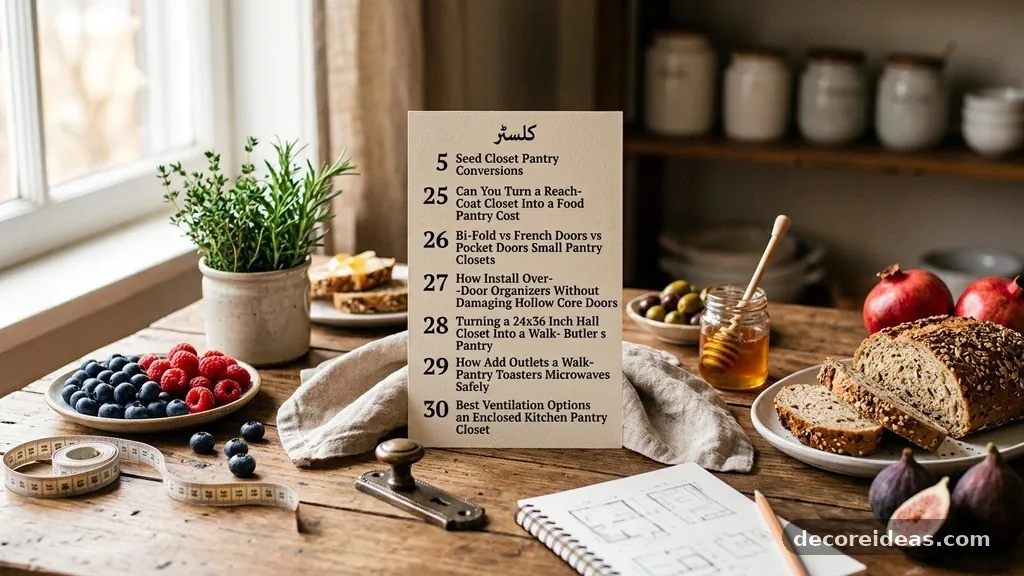
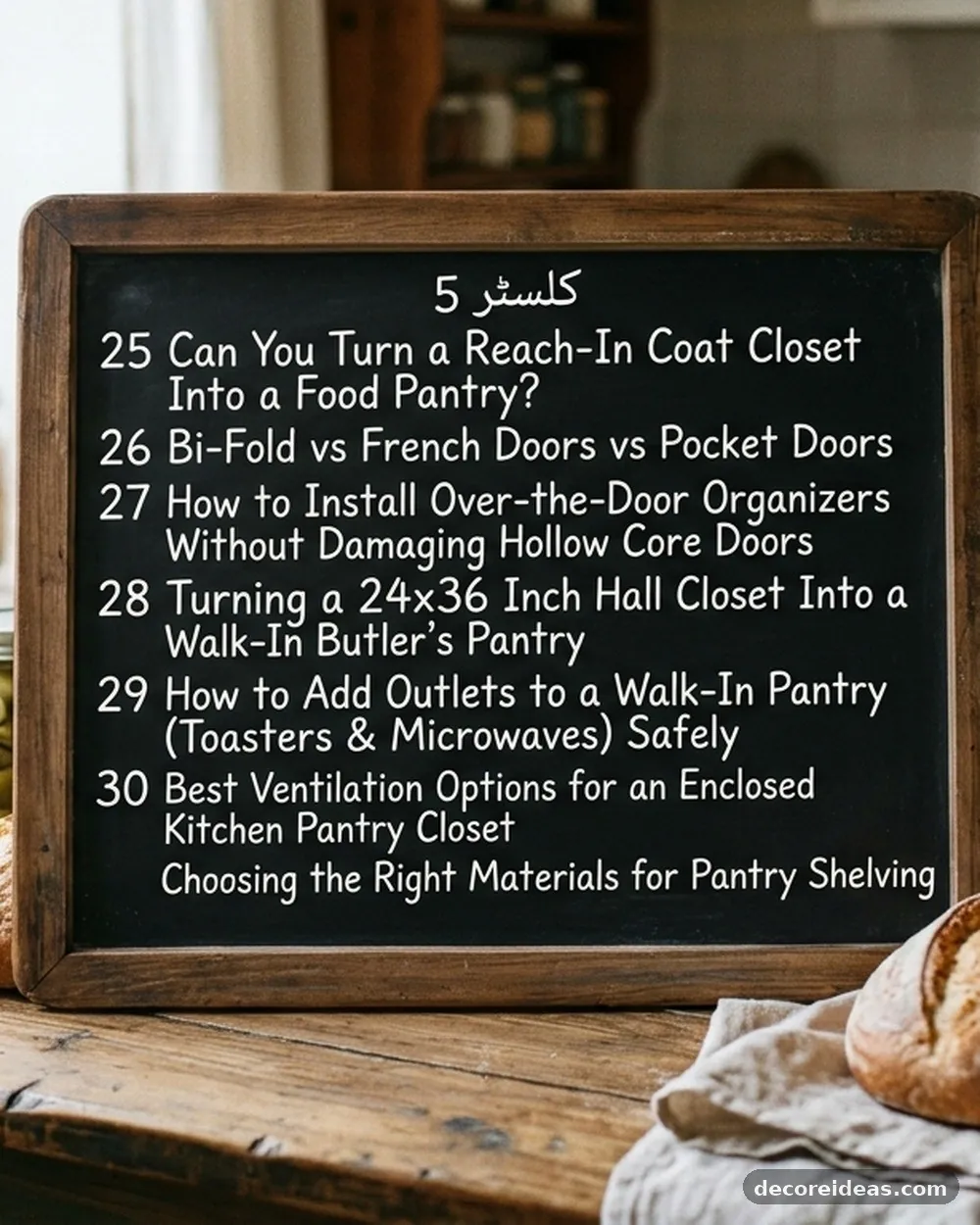
کلسٹر 5 (Seed: Closet to Pantry Conversions) 25. Can You Turn a Reach-In Coat Closet Into a Food Pantry? (Cost & Steps) 26. Bi-Fold vs French Doors vs Pocket Doors for Small Pantry Closets 27. How to Install Over-the-Door Organizers Without Damaging Hollow Core Doors 28. Turning a 24×36 Inch Hall Closet Into a Walk-In Butler’s Pantry 29. How to Add Outlets to a Walk-In Pantry for Toasters and Microwaves Safely 30. Best Ventilation Options for an Enclosed Kitchen Pantry Closet
Transforming an underutilized reach-in coat closet into a functional food pantry is a highly effective way to manage kitchen clutter. This process, often part of a broader کلسٹر 5 (Seed: Closet to Pantry Conversions) project, allows homeowners to maximize small space optimization without major structural renovations. By replacing hanging rods with adjustable shelving units, you can significantly increase your storage capacity for dry goods and kitchen appliances.
This article explores the logistics, costs, and design considerations involved in such a conversion, helping you determine if your home’s layout is suitable for this upgrade. Whether you need more vertical storage or a dedicated space for small appliances, these steps provide a clear path forward.
Can You Turn a Reach-In Coat Closet Into a Food Pantry?
Yes, converting a standard coat closet into a pantry is entirely feasible and often requires little more than basic carpentry skills. The primary challenge lies in depth, as most coat closets are roughly 24 inches deep, which is perfect for food storage. You will need to remove existing hanging hardware and patch the drywall before installing new shelving.
If you are handy, a DIY conversion can cost as little as $200 to $500 for materials like melamine boards or wire racks. Hiring a professional contractor for custom cabinetry or electrical work will push that price point closer to $1,500 or more.
The process begins by clearing the space and assessing the integrity of the walls. You must locate the wall studs to ensure your new shelving units can support the weight of heavy canned goods and appliances. Once the old rod and shelf are removed, repair any holes in the drywall using joint compound and sand the surface smooth.
Applying a fresh coat of semi-gloss interior paint is recommended, as it is easier to wipe clean than matte finishes in a kitchen environment. Finally, install your chosen storage system, ensuring you leave enough clearance between shelves for taller items.
Bi-Fold vs French Doors vs Pocket Doors for Small Pantry Closets
Choosing the right door for your pantry depends on the swing space available in your kitchen. Bi-fold doors are a classic choice for small pantry closets because they fold back on themselves, requiring minimal clearance. They are affordable and easy to install, but they can sometimes feel flimsy or obstruct access to the very edges of the pantry.
If you want a more aesthetic look, French doors provide a sophisticated, wide-open view of your shelves. These require enough space in the kitchen to swing outward, which may not work in tight, high-traffic corridors.
Pocket doors represent the gold standard for small space optimization, as they slide directly into the wall cavity. This eliminates the need for any swing space, allowing you to place furniture or appliances right up to the door frame. However, installing a pocket door is a significant project that involves opening up the wall and installing a track system.
If you cannot modify the wall, a simple curtain or a sliding barn door can serve as an effective, low-cost pantry door alternative. Always consider the airflow requirements of your pantry when selecting a door style.
How to Install Over-the-Door Organizers Without Damaging Hollow Core Doors
Many homeowners fear that adding over-the-door organizers will ruin their hollow core doors, which are common in modern residential construction. These doors are essentially thin veneers over a cardboard honeycomb structure, meaning traditional screws will pull out easily.
To avoid damage, use over-the-door hooks that feature a protective foam or felt backing to prevent scratching the finish. You should also opt for organizers that distribute weight evenly across the top of the door frame rather than relying on a single point of pressure.
If you need a more permanent solution, consider using heavy-duty adhesive strips designed for interior decor. These allow you to mount light baskets or spice racks without drilling into the door face. If the door requires a screw-in mount, use toggle bolts or hollow-wall anchors that expand behind the door skin, though this is risky with thin materials.
A safer approach is to attach a thin piece of plywood or a rigid shelf bracket to the door frame itself, creating a solid mounting surface that doesn’t touch the hollow door core. Always check the manufacturer’s weight limit before loading your organizer with heavy pantry items.
Turning a 24×36 Inch Hall Closet Into a Walk-In Butler’s Pantry
Converting a 24×36 inch hall closet into a functional butler’s pantry is an exercise in extreme efficiency. While it is too small to walk into in the traditional sense, you can design it so that the interior is accessible from both sides or uses pull-out drawers to bring items to you. The key is to treat the space like a vertical cabinet rather than a room.
Install floor-to-ceiling adjustable shelving to make the most of every square inch of vertical storage. Use clear acrylic bins to categorize your dry goods, which helps prevent the small space from feeling cluttered.
Because this size is quite compact, lighting is critical to ensure you can see what is in the back of the shelves. Consider battery-operated LED motion-sensor lights that illuminate the interior as soon as the door opens. You can also add a small countertop surface at waist height, effectively turning it into a staging area for coffee making or food prep.
This creates a “butler’s pantry” feel without requiring a massive architectural footprint. Remember to keep the most frequently used items at eye level to maintain the functionality of the workspace.
How to Add Outlets to a Walk-In Pantry for Toasters and Microwaves Safely
Adding an electrical outlet inside a closet is a common request, but it must be done according to strict safety codes. You must use a GFCI (Ground Fault Circuit Interrupter) outlet to protect against potential electrical shorts, especially in an area where you might store liquids or food items.
Because the outlet is inside an enclosed space, you need to ensure that any appliances plugged in are not left running when the door is closed. It is highly recommended to install a switch that kills power to the outlet whenever the door is shut.
Work with a licensed electrician to run a dedicated circuit if you plan on using high-wattage items like microwaves or air fryers. Overloading existing kitchen circuits can lead to tripped breakers or fire hazards. The National Electrical Code provides specific guidelines on how to safely install electrical equipment in storage spaces to prevent overheating.
Always ensure that the wiring is properly routed through wall studs and protected by conduit where necessary. Never attempt to run extension cords through a wall or leave a heat-generating appliance plugged in behind a closed door.
Best Ventilation Options for an Enclosed Kitchen Pantry Closet
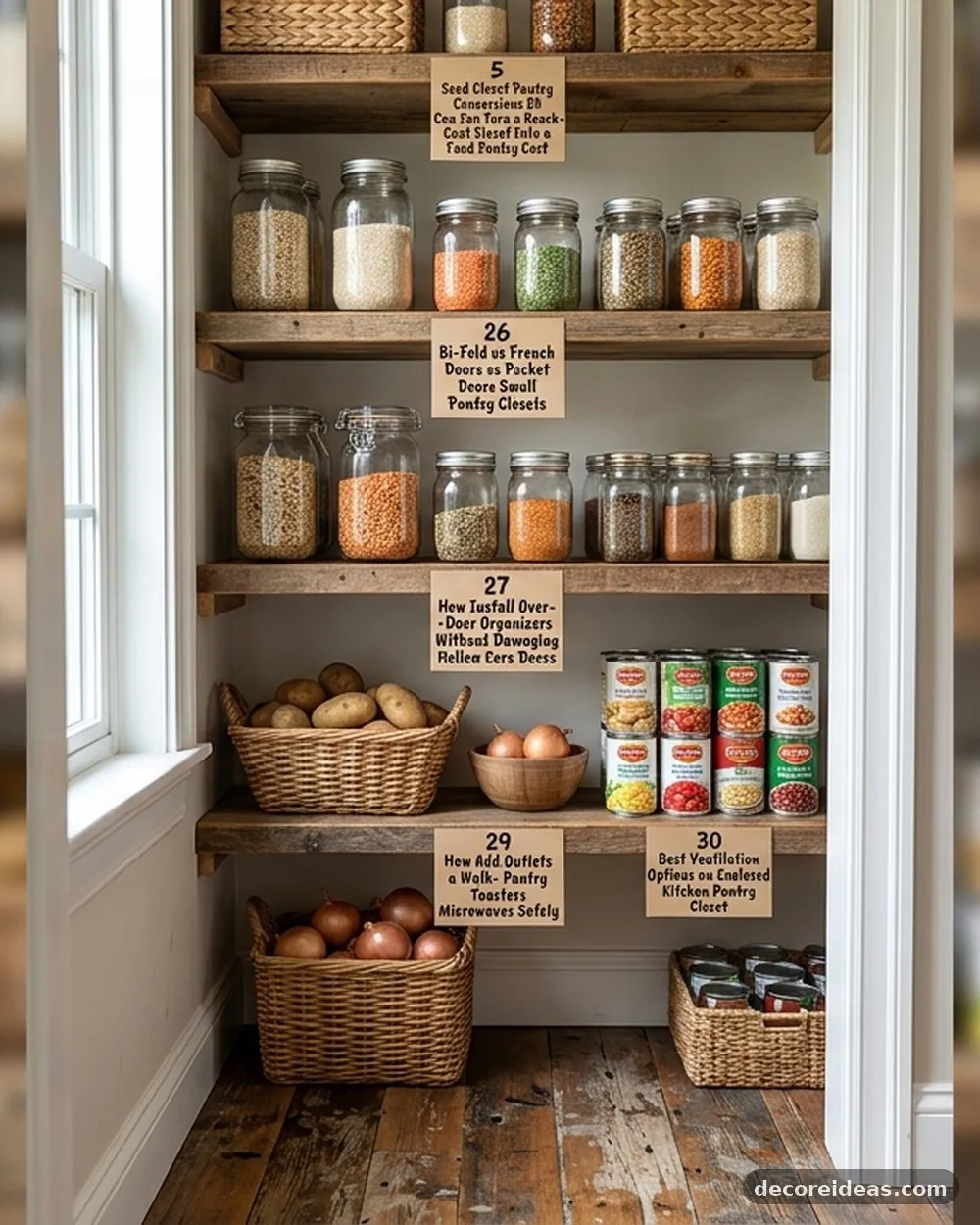
An enclosed pantry can quickly become a breeding ground for humidity and odors, especially if you store open bulk food items. Proper ventilation is essential for food safety and the longevity of your kitchen organization efforts.
If your closet is on an exterior wall, you can install a small soffit vent or a louvered panel in the door to allow for passive air exchange. This simple change allows air to circulate, preventing the trapped moisture that leads to mold growth.
For interior closets, consider using a small, quiet exhaust fan that pulls air out of the pantry and into the kitchen or an adjacent space. If you want a non-mechanical solution, simply choosing a louvered or slatted door design can provide enough airflow for most dry goods. You can also place moisture-absorbing products like silica gel canisters or charcoal bags inside the pantry to manage humidity levels.
Periodically checking the pantry for signs of condensation is a good habit, especially during humid summer months. Proper humidity control will keep your dry goods fresher for longer.
Pantry Conversion Cost Breakdown
The budget for a pantry conversion varies significantly based on whether you choose a DIY approach or professional installation. Below is a breakdown of estimated costs for a standard 24×36 inch closet conversion project.
| Item | Estimated DIY Cost | Professional Install Cost |
|---|---|---|
| Shelving Units | $100 – $300 | $500 – $1,000 |
| Electrical/GFCI | $50 – $100 | $300 – $600 |
| Paint & Supplies | $30 – $60 | $150 – $300 |
| Lighting Fixtures | $20 – $50 | $100 – $250 |
Choosing the Right Materials for Pantry Shelving
The materials you choose for your pantry will impact both the durability and the aesthetic of your new storage space. Wire racks are highly popular because they are inexpensive, adjustable, and promote air circulation. However, small items can tip over on wire shelving, and they can be difficult to clean if something spills.
Solid wood or melamine shelving provides a stable, flat surface that is much easier to wipe down. If you choose wood, ensure it is properly sealed with a non-toxic paint or polyurethane to prevent it from absorbing moisture or food odors.
Consider the load-bearing capacity of your shelves before you start loading heavy canned goods. Standard 3/4-inch plywood or melamine particle board is usually sufficient for most pantry needs if supported every 30 inches. If you are building custom cabinetry, use high-quality hardware for any drawers or pull-out units to ensure they don’t sag over time.
Always verify that your wall studs are correctly identified; anchoring your shelving into drywall alone is a recipe for failure. Investing in high-quality brackets will give you peace of mind that your storage system can handle the weight.
Maximizing Space with Pull-Out Drawers and Accessories
One of the most effective ways to upgrade a pantry is by installing pull-out drawers. These allow you to reach items stored in the back of deep closets without having to dig through everything in front.
You can purchase pre-made sliding shelf kits that fit standard closet dimensions, or you can build custom trays using drawer slides and plywood. Vertical storage is another secret weapon; use tall, narrow bins for baking sheets, cutting boards, and trays.
Don’t ignore the vertical space above the door or the floor area beneath the bottom shelf. Floor-to-ceiling shelving is the best way to ensure no space is wasted. You can also add stackable bins or lazy Susans to corners, which are often the most difficult areas to access in a reach-in closet.
Use clear labels on all your containers to make inventory management simple. By keeping items grouped by category, such as breakfast foods, snacks, or baking supplies, you save time and reduce food waste.
Common Mistakes to Avoid in Pantry Conversions
One of the most common mistakes is failing to account for the depth of your items when planning shelf spacing. If your shelves are too close together, you won’t be able to fit cereal boxes or tall condiment bottles, rendering the storage useless. Always measure your tallest items before you finalize the shelf heights.
Another mistake is ignoring the need for lighting; a dark pantry is an unorganized pantry. Even a simple stick-on LED light can make a world of difference in your daily kitchen routine.
Avoid the temptation to over-pack the pantry from day one. A well-organized space needs a little “breathing room” to be truly functional. If you pack every inch, you will inevitably end up pulling everything out just to find one small item.
Finally, do not overlook the importance of the door swing. If your door hits a kitchen island or a nearby appliance, it will be a constant source of frustration. Plan your door style based on the actual clearance in your kitchen layout, not just the size of the closet opening.
Frequently Asked Questions
Can I install heavy shelving in a closet with thin drywall?
You should never anchor heavy shelving directly into drywall. Always locate the wall studs and use long screws to secure your shelf brackets directly into the wooden framing. If the studs are not aligned with your desired shelf placement, install a backer board (a piece of 1×4 wood) horizontally across the studs first, then mount your brackets to that board.
What is the best way to handle pantry lighting without hardwiring?
Battery-powered or rechargeable LED motion-sensor lights are the best non-invasive solution. They require no electrical work and can be mounted with adhesive strips in minutes. Look for lights with high lumen output and a wide sensor range to ensure the entire closet is illuminated when you step in.
How do I stop my pantry from smelling like old food?
Good ventilation is the first line of defense, but you can also use natural odor absorbers. Baking soda, activated charcoal, or cedar blocks are excellent for neutralizing odors in enclosed spaces. Always ensure that dry goods are stored in airtight containers to prevent pests and odors from spreading.
How much weight can a standard pantry shelf hold?
The weight capacity depends on the material and the mounting method. A 3/4-inch melamine shelf supported every 30 inches can typically hold 40 to 50 pounds, but always check the manufacturer’s specifications for your specific bracket system. If you plan to store heavy appliances, ensure your brackets are rated for that specific load.
Do I need to paint the inside of my pantry closet?
While not strictly required, painting is highly recommended. A clean, light-colored paint makes the pantry feel larger and significantly easier to clean. Use a high-quality semi-gloss or satin paint, as these finishes are moisture-resistant and allow you to wipe away spills and dust with a damp cloth.
Conclusion
Converting a reach-in closet into a pantry is one of the most rewarding home improvements you can undertake. It transforms a dead space into a central hub for your kitchen organization, saving you time and stress during meal preparation. By carefully planning your shelving, choosing the right door, and prioritizing proper ventilation and lighting, you can create a custom storage solution that feels like it was part of the original design.
This project is central to the goals of any effective کلسٹر 5 (Seed: Closet to Pantry Conversions) initiative, proving that even the smallest homes can benefit from smart, intentional design. Start by measuring your space today and visualize how a few simple changes can streamline your daily life.