
Top 10 Home Front Makeovers: Do Yard Ideas
Introduction
The front of your home is the first thing people notice, and small changes can make it feel brighter, cleaner, and much more welcoming. You do not always need a full exterior renovation to create a beautiful curb appeal upgrade. Sometimes, the right door color, a cleaner walkway, fresh planting beds, updated lighting, or a styled porch can completely change the way your home looks from the street.
These Home Front Makeovers are designed for real USA homes, from suburban houses and ranch-style homes to small cottages, townhomes, and modern front entries. Each idea is practical, visually strong, and easy to imagine on Pinterest. You will find simple yard upgrades that improve beauty, function, and first impressions without making the space feel crowded or overdone.
1. Painted Door
- Adds instant personality to the front entry.
- Works with brick, siding, stucco, and modern exteriors.
- Use colors like black, navy, sage, red, or warm wood tones.
- Pair with updated hardware for a finished look.
- Helps the whole front yard feel more intentional.
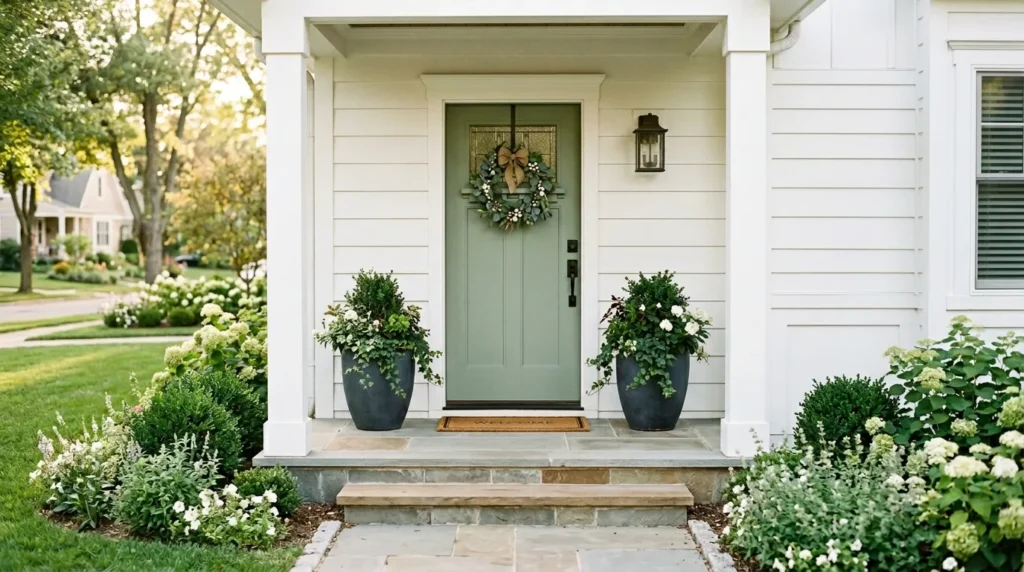
A painted front door can change the entire mood of a home. It creates a focal point before anyone notices the lawn, flowers, or porch decor. Choose a color that works with your exterior instead of fighting it. Black feels classic, navy looks polished, sage green feels soft, and deep red brings traditional charm. In my experience, the door looks best when the hardware, house numbers, and porch light are updated at the same time, because those small details make the color feel planned.
The transformation is simple but highly visible from the street. A fresh door color can make an older home feel cared for and make a plain exterior feel more styled. Before painting, clean the door, sand rough spots, use exterior primer if needed, and choose paint made for outdoor weather. Add a clean doormat, one planter, and a simple wreath to finish the entry. This idea works well for homeowners who want a high-impact upgrade without changing the entire front yard layout.
2. Clean Walkway
- Creates a clear path to the front door.
- Makes the entry feel safer and more welcoming.
- Works with concrete, brick, stone, gravel, or pavers.
- Add low plants or lighting along the edges.
- Helps guide the eye toward the home entrance.
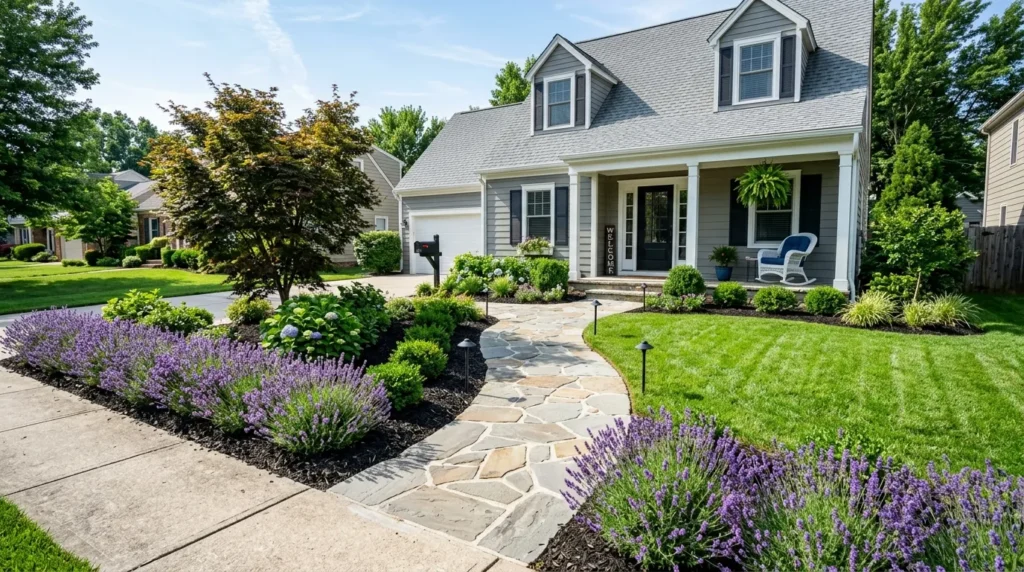
A clean walkway makes the front yard feel organized immediately. The path to the door should feel natural, safe, and easy to follow, whether it starts at the driveway, sidewalk, or curb. Concrete pavers, brick, flagstone, gravel, or stepping stones can all work depending on the home style. That’s why many designers recommend improving the walkway before adding extra decor. If the path looks messy or cracked, the whole front entrance can feel neglected, even when the plants are healthy.
This upgrade improves both beauty and function. A wider path feels more welcoming, especially when guests are walking side by side. A curved walkway can soften a square yard, while a straight path feels classic and formal. Add low plants like lavender, liriope, boxwood, or ornamental grass near the edge for softness. Warm path lights can help at night, but keep spacing simple. The result is a front yard that feels easier to use, more polished, and more connected to the house.
3. Layered Beds
- Adds depth around the home foundation.
- Uses tall, medium, and low plants together.
- Softens siding, brick, porch edges, and windows.
- Works well with mulch, stone borders, and clean edging.
- Makes the yard look fuller without feeling messy.
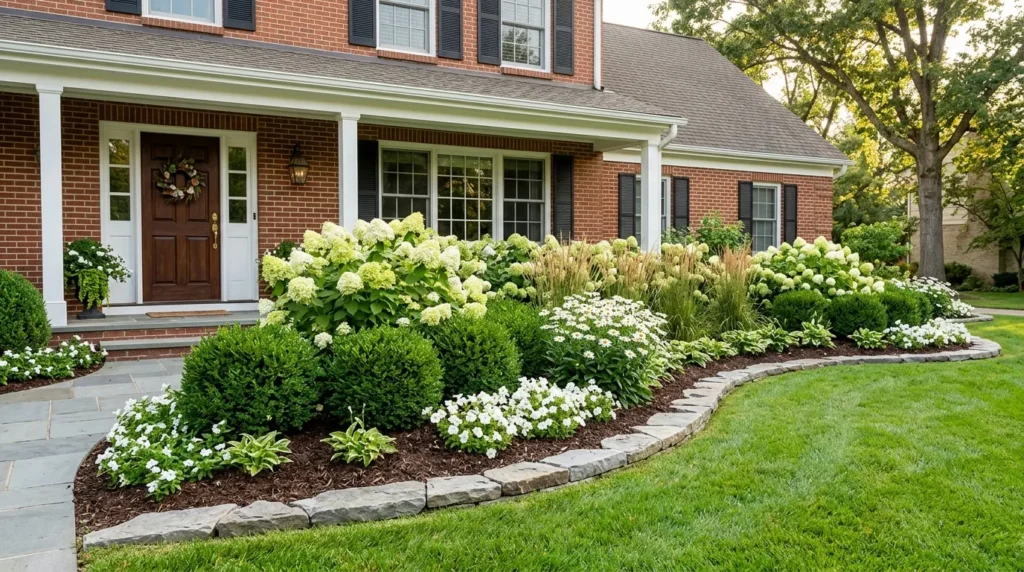
Layered garden beds make a front yard look more complete. Instead of planting one flat row of shrubs, build soft layers with taller plants in the back, medium plants in the middle, and low flowers or groundcover near the front. This creates depth and makes the home feel settled into the landscape. I’ve noticed that layered beds work especially well around porches, bay windows, and long blank walls because they break up hard exterior lines with natural texture.
The key is repeating plants instead of buying too many random varieties. Use three to five plant types and repeat them across the bed for a calmer, more professional look. Hydrangeas, boxwood, salvia, hostas, ornamental grasses, dwarf evergreens, and native perennials can all work depending on your climate and sunlight. Add mulch to reduce weeds and keep moisture in the soil. Once the beds are shaped and planted well, the whole front yard feels softer, fuller, and easier to enjoy from the street.
4. Porch Planters
- Adds color and height near the entrance.
- Works for large porches, small stoops, and steps.
- Can be changed with each season.
- Use ceramic, concrete, resin, wood, or metal pots.
- Makes the front door look styled and welcoming.
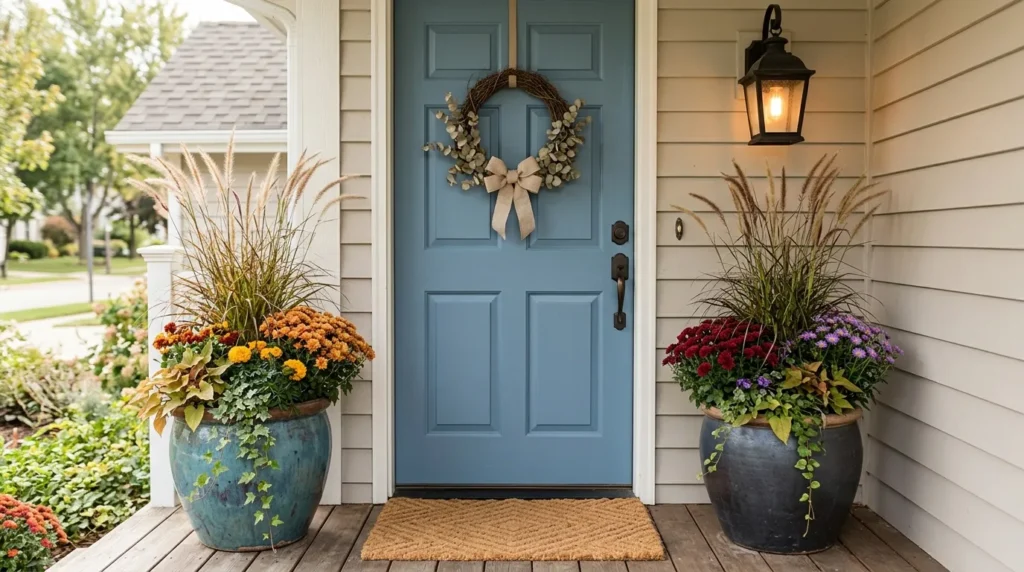
Porch planters are one of the easiest ways to make an entry look fresh. They bring color, texture, and height exactly where the eye naturally goes first. Use matching planters on both sides of the door for a balanced look, or one large planter if the porch is narrow. Fill each pot with a tall plant, fuller middle plants, and trailing greenery. In my experience, planters look more expensive when their color connects with the door, shutters, trim, or exterior lights.
This idea is practical because it can change with the season. In spring, try pansies, tulips, or fresh greenery. In summer, use petunias, begonias, coleus, or sweet potato vine. In fall, add mums, ornamental kale, and pumpkins. In winter, use evergreen cuttings, pinecones, and simple lanterns. Good drainage matters, so choose pots with holes and quality soil. Even if the yard itself is simple, styled porch planters create a finished look that feels warm, personal, and Pinterest-ready.
5. Modern Lighting
- Improves safety around paths, steps, and porches.
- Adds curb appeal after sunset.
- Works with wall sconces, path lights, uplights, and lanterns.
- Use warm white bulbs for a softer look.
- Highlights the best features without making the yard too bright.
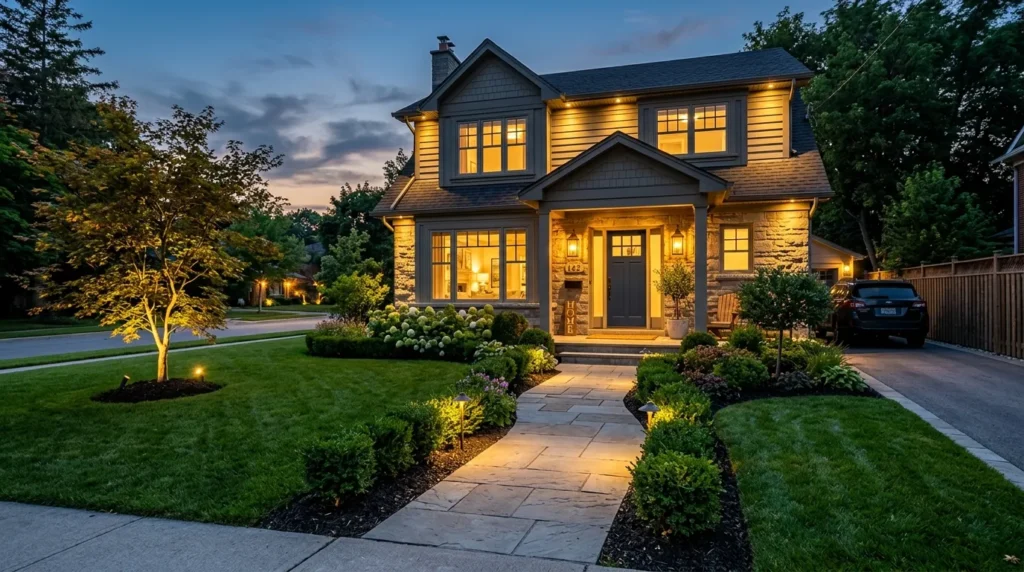
Modern lighting can make a home look polished after dark. The goal is not to flood the yard with harsh brightness. The goal is to place warm light where it improves safety, shape, and mood. Add sconces near the front door, path lights along the walkway, and soft uplighting near one tree or architectural feature. I’ve seen this work well in many homes because lighting makes the exterior feel cared for even when the landscaping is simple.
The best lighting plan focuses on useful areas first. Light the porch, steps, house number, walkway, and driveway edge if needed. Choose fixtures that match the home style, such as black metal for modern homes, bronze for traditional exteriors, or simple lantern shapes for farmhouse looks. Avoid mixing too many styles because that can make the entry feel cluttered. With thoughtful placement, your front yard becomes safer for guests, prettier at night, and more welcoming from the street during evening hours.
6. Mailbox Garden
- Turns a plain curb area into a charming detail.
- Works with flowers, mulch, grasses, or small shrubs.
- Adds curb appeal without changing the whole yard.
- Keep plants low enough for mail access.
- Use edging to keep the shape clean.
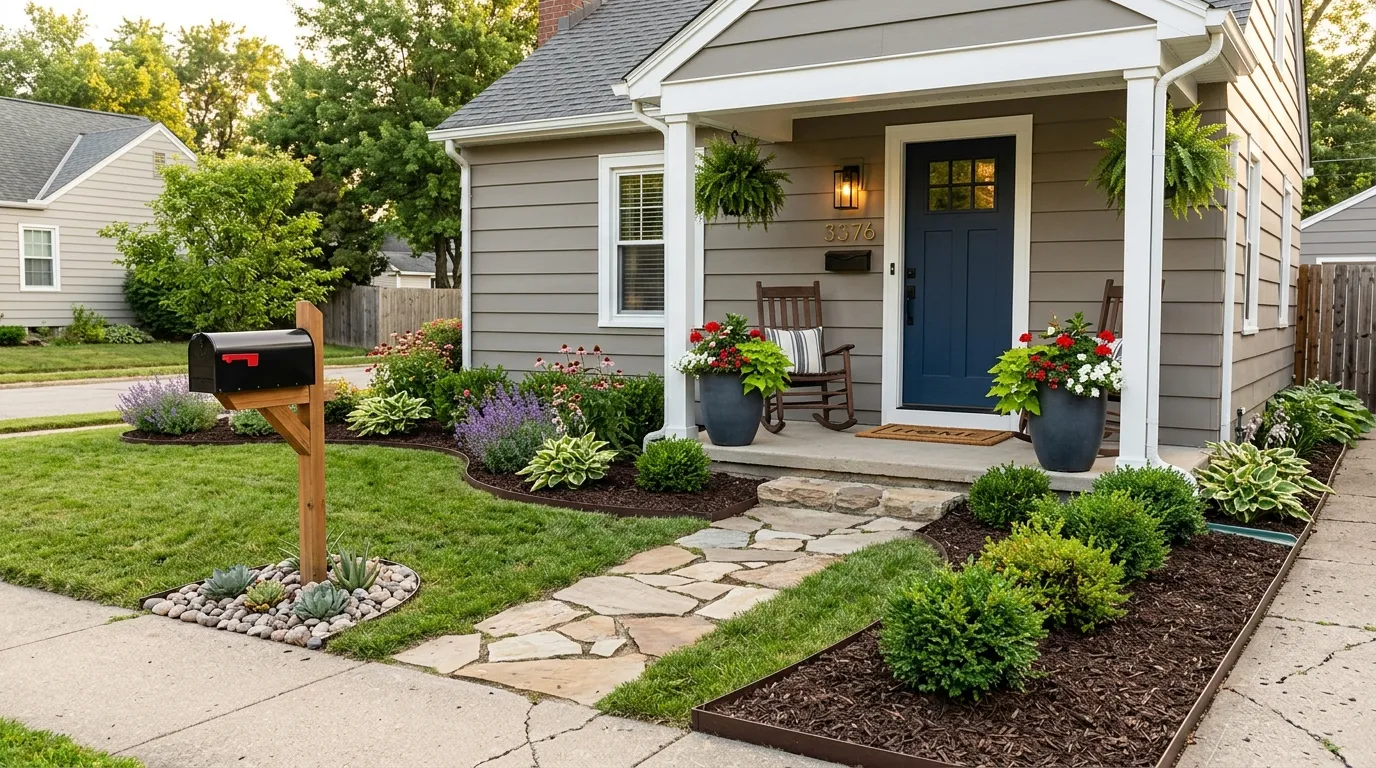
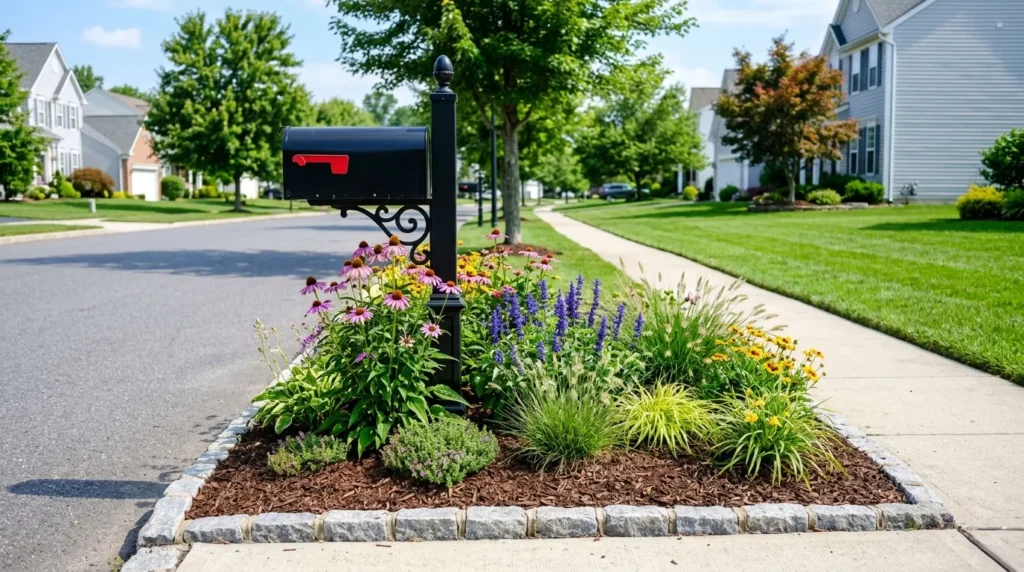
A mailbox garden adds beauty where many homeowners forget to look. Since the mailbox sits close to the street, it affects the first impression of the entire property. A small planting bed around it can make the curb view feel more finished without a major project. Use compact flowers, small grasses, mulch, and a simple border. The most important rule is keeping the plants low and neat so the mailbox stays easy to reach and clearly visible from the road.
This idea works well because it creates a small moment of charm. Choose tough plants that can handle heat, reflected sun, and occasional dry soil. Coneflowers, daylilies, salvia, creeping phlox, sedum, and dwarf ornamental grasses can work in many regions, but always match plants to your local climate. Add brick, stone, or metal edging to stop grass from creeping into the bed. Once finished, the mailbox area feels intentional, cheerful, and connected to the rest of your front yard style.
7. Fresh Edging
- Gives planting beds a clean outline.
- Separates lawn, mulch, gravel, and flower areas.
- Works with metal, brick, stone, concrete, or plastic edging.
- Makes mowing and trimming easier.
- Helps the whole yard look neater.
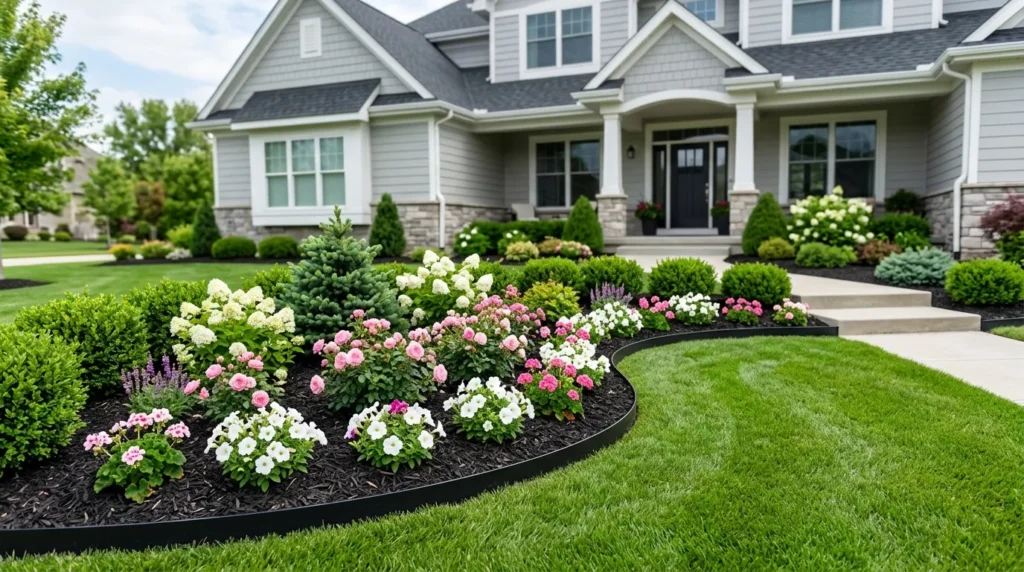
Fresh edging can make an older front yard look newly maintained. When lawn, mulch, and flower beds blend together, the yard can look messy even if the plants are healthy. A clean border gives each area a clear shape. Use metal edging for a modern style, brick for traditional homes, stone for a natural look, or concrete curbing for a more permanent finish. In my experience, edging is one of the most underrated upgrades because it improves the yard without needing many new plants.
The transformation comes from visual control. A sharp bed line makes mulch look cleaner, flowers look more intentional, and grass look freshly trimmed. For curved beds, use flexible edging that follows the shape smoothly. For straight beds, long metal strips or rectangular pavers create a crisp look. Add fresh mulch after installing the border so the bed feels complete. This upgrade is especially helpful for Home Front Makeovers because it gives the whole exterior a tidy, cared-for appearance with very little decoration.
8. Window Boxes
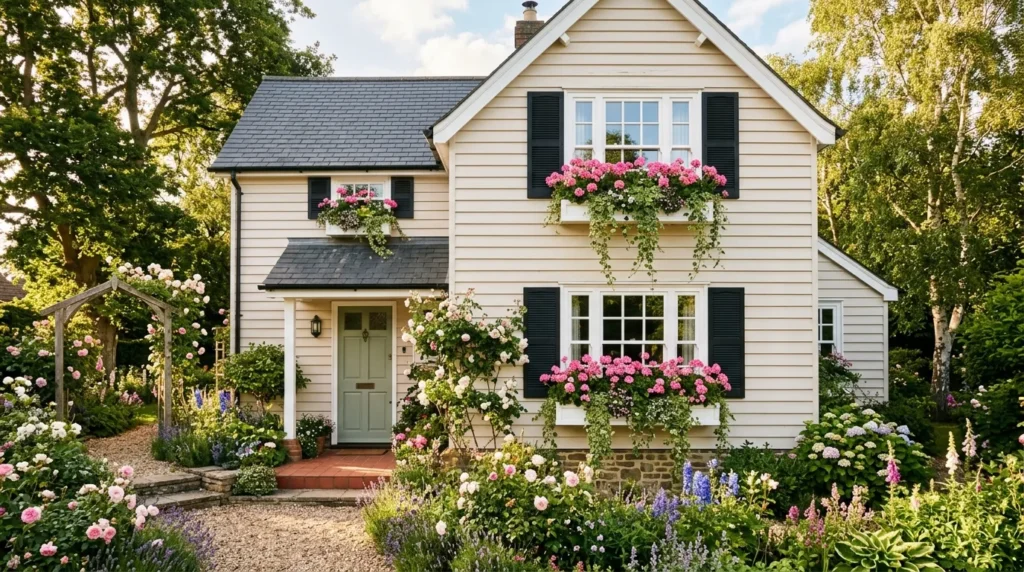
- Adds color directly to the home exterior.
- Works well for cottages, ranch homes, and traditional houses.
- Softens plain siding, brick, and window areas.
- Can be refreshed seasonally.
- Use wood, metal, PVC, or composite boxes.
Window boxes make the house itself feel connected to the garden. They add flowers and greenery at eye level, which is helpful when the front yard is small or the planting beds are limited. Choose boxes that match the home’s style. Painted wood feels charming, black metal looks classic, and white composite gives a clean finish. Make sure they are installed securely and have good drainage. The planting should feel full but not so overgrown that it blocks the window.
The visual impact is cheerful and immediate. In spring and summer, use geraniums, petunias, ivy, bacopa, begonias, or sweet potato vine. In fall, try mums, ornamental kale, and trailing greenery. In winter, evergreen clippings and berries can keep the look alive. Keep the colors connected to the front door, shutters, or porch decor for a polished effect. Window boxes are especially useful for homes with flat facades because they add dimension, softness, and seasonal beauty without changing the yard structure.
9. Rock Accents
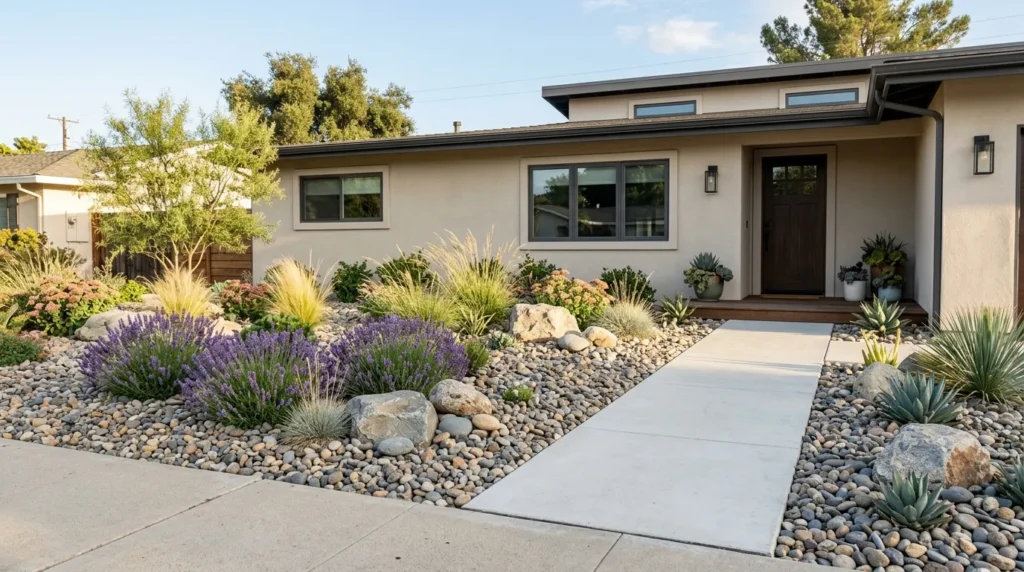
- Adds texture and structure to the front yard.
- Works well in low-water or low-maintenance landscapes.
- Use river rock, pea gravel, boulders, or crushed stone.
- Pair with grasses, shrubs, succulents, or native plants.
- Keep stone colors limited for a cleaner look.
Rock accents bring texture to the front yard without adding constant maintenance. They work especially well in dry climates, sloped areas, or spots where mulch washes away. Use river rock near drainage areas, pea gravel around pathways, or larger boulders as natural focal points. The trick is using stone with intention. Random rocks can look messy, while carefully placed accents create structure. That’s why many designers recommend choosing one or two stone colors so the yard feels calm and cohesive.
This idea pairs beautifully with drought-tolerant plants, ornamental grasses, lavender, yucca, agave, sedum, or native shrubs. Rock can also help define beds, reduce muddy patches, and create contrast against green plants. Avoid placing heat-reflecting stone around delicate plants that dislike hot roots. If you use large boulders, bury part of each one so it looks natural instead of dropped on top of the soil. When done well, rock accents make the front yard feel modern, grounded, and easier to maintain.
10. Seasonal Entry
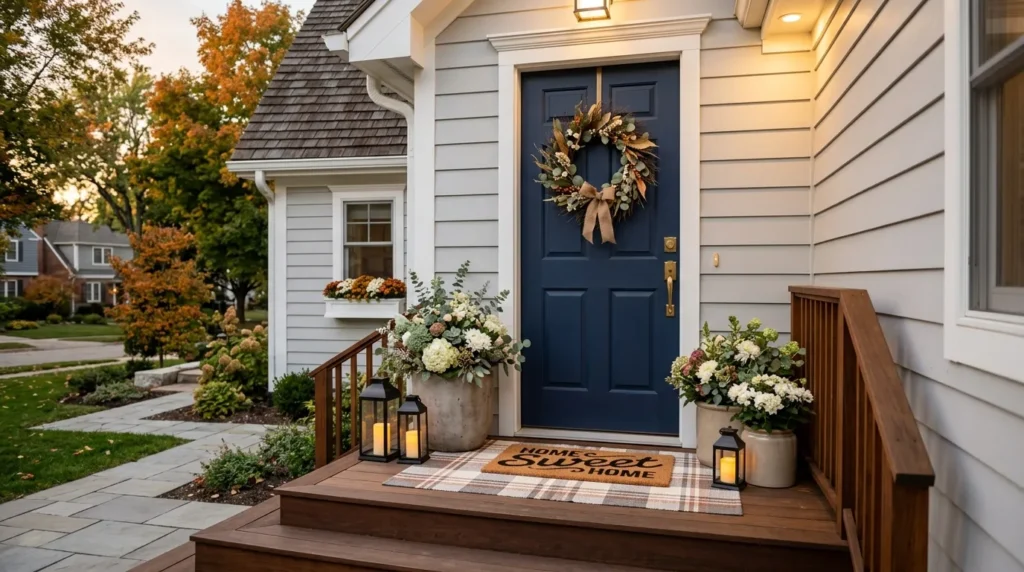
- Keeps the home entrance feeling fresh all year.
- Uses wreaths, planters, doormats, lanterns, and simple accents.
- Works for spring, summer, fall, and winter.
- Adds personality without permanent changes.
- Looks best with a controlled color palette.
A seasonal entry keeps the front of the home feeling updated without major work. The front door area is easy to refresh because small changes show quickly. Use a wreath, layered doormat, porch planters, lanterns, or a simple bench to reflect the season. The secret is restraint. Too many decorations can make the entry feel crowded. Choose a few pieces in colors that work with your door, siding, and porch materials so the look feels styled instead of random.
This idea is perfect for homeowners who love change but want the exterior to stay tasteful. Spring can bring soft flowers and greenery, summer can use bright planters, fall can include pumpkins and mums, and winter can feature evergreens and warm lights. Reuse basics like lanterns, neutral planters, and doormats, then swap smaller accents as needed. The final result feels welcoming for guests, holidays, deliveries, and everyday life. It makes the entry look cared for without requiring a full yard redesign.