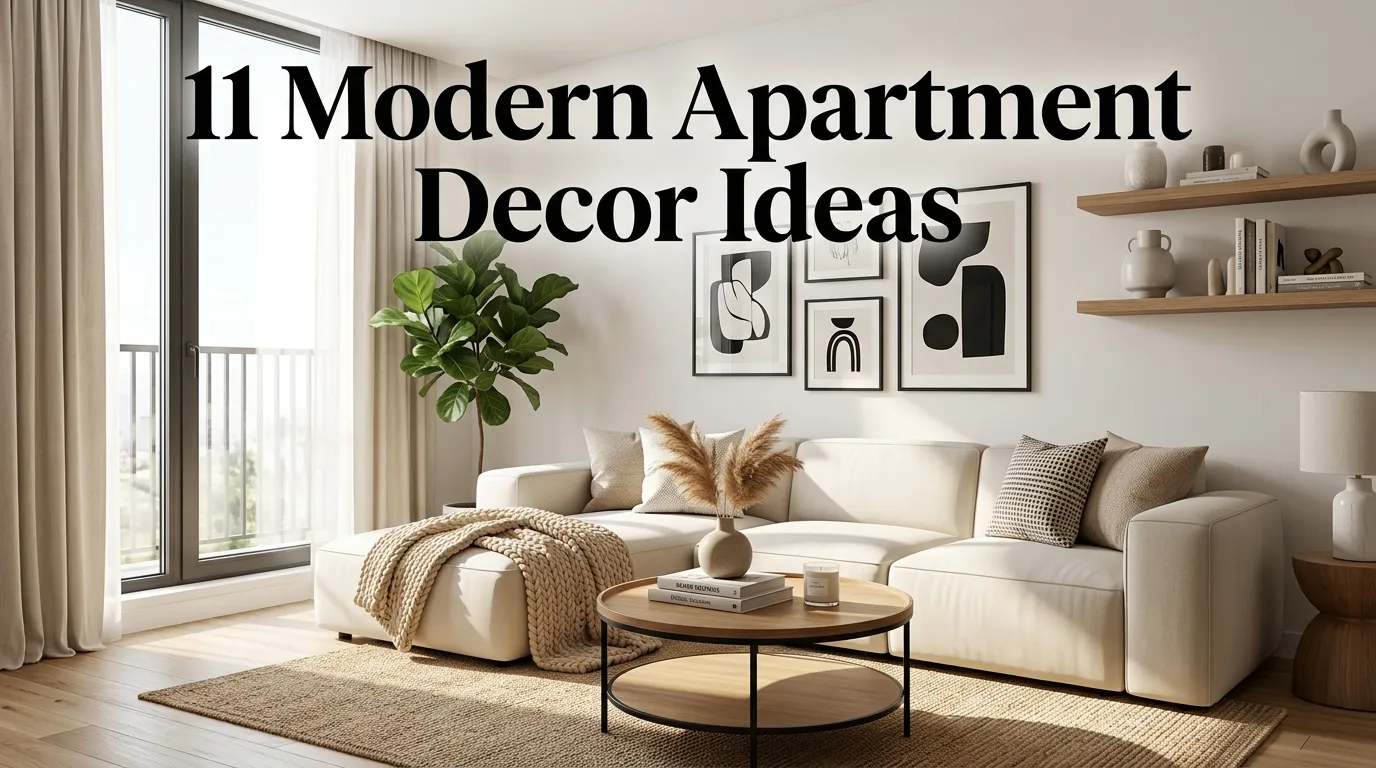
11 Modern Apartment Decor Ideas
11 Modern Apartment Decor Ideas
Introduction
A beautiful apartment does not need to be huge to feel stylish, comfortable, and well-designed. The right decor choices can make a rental living room, studio layout, small bedroom, or open-plan space feel more polished without making it look crowded. A Modern Apartment style is really about balance: clean lines, smart storage, soft textures, warm lighting, and furniture that fits the room instead of fighting it.
For USA renters and apartment dwellers, this matters because many apartments come with basic walls, standard flooring, limited storage, and awkward layouts. You may not be able to renovate, paint freely, or change fixtures, but you can still create a space that feels personal, elevated, and Pinterest-worthy. Small changes like a better rug, taller curtains, layered lighting, hidden storage, or a styled wall can completely shift the mood.
These ideas are practical for everyday living and beautiful enough for inspiration boards. Each one focuses on layout, materials, textures, visual flow, and simple styling choices that help your apartment feel fresh, modern, and easy to enjoy.
1. Neutral Base
- Use soft whites, warm beige, taupe, gray, cream, and natural wood tones.
- Keep larger furniture pieces simple so the apartment feels open and flexible.
- Add contrast with black frames, dark wood, bronze, or matte metal details.
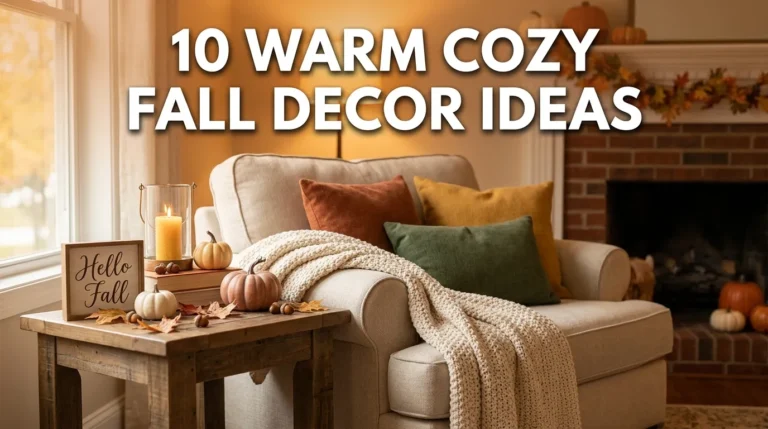
- Use texture through rugs, pillows, throws, curtains, and woven baskets.
- Repeat the same color family across rooms for a more connected look.
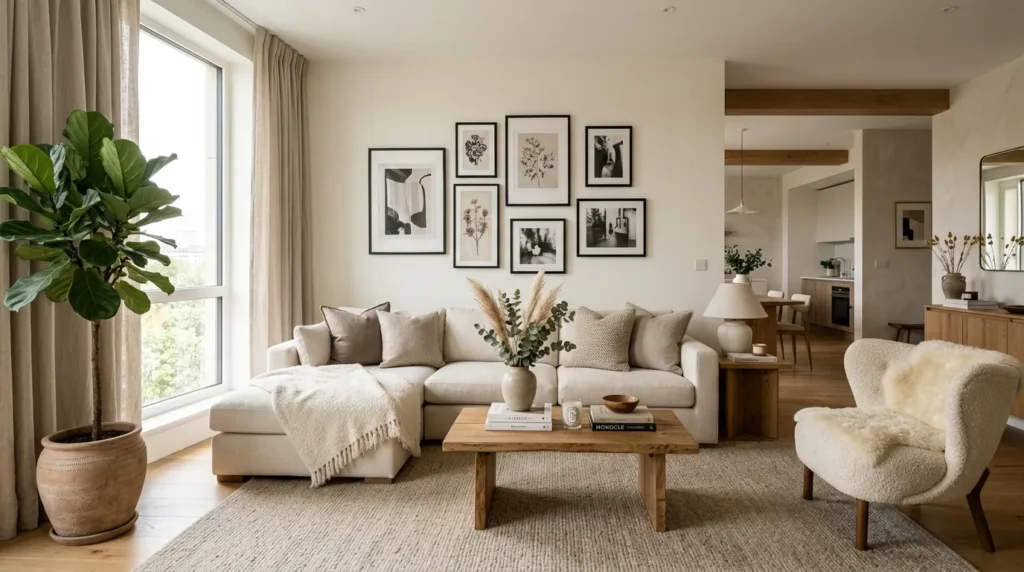
A neutral base makes an apartment feel calmer before you add anything else. This idea works because small spaces can quickly feel busy when too many colors compete at once. Warm neutrals help walls, furniture, and decor blend together, which makes the room feel larger and more intentional. In my experience, neutral does not have to mean boring. Cream fabric, oak furniture, beige rugs, linen curtains, and black accents can create a layered look that feels clean, cozy, and grown-up without overwhelming the space.
The transformation comes from using texture instead of relying on loud color. Add a boucle pillow, woven basket, ceramic lamp, chunky knit throw, or soft wool-look rug to create depth. Keep the sofa, bed, and major furniture pieces in flexible tones so you can change seasonal decor easily. This approach is perfect for renters because it works with basic white walls and standard apartment finishes. A neutral base also photographs beautifully, making the room look brighter, softer, and more polished in everyday life.
2. Slim Furniture
- Choose sofas, consoles, desks, and tables with narrow profiles and raised legs.
- Use furniture that fits the room scale instead of oversized statement pieces.
- Pick open-leg designs so the floor remains visible and the space feels lighter.
- Use nesting tables or small side tables when a full coffee table feels too large.
- Measure walkways carefully before buying large apartment furniture.
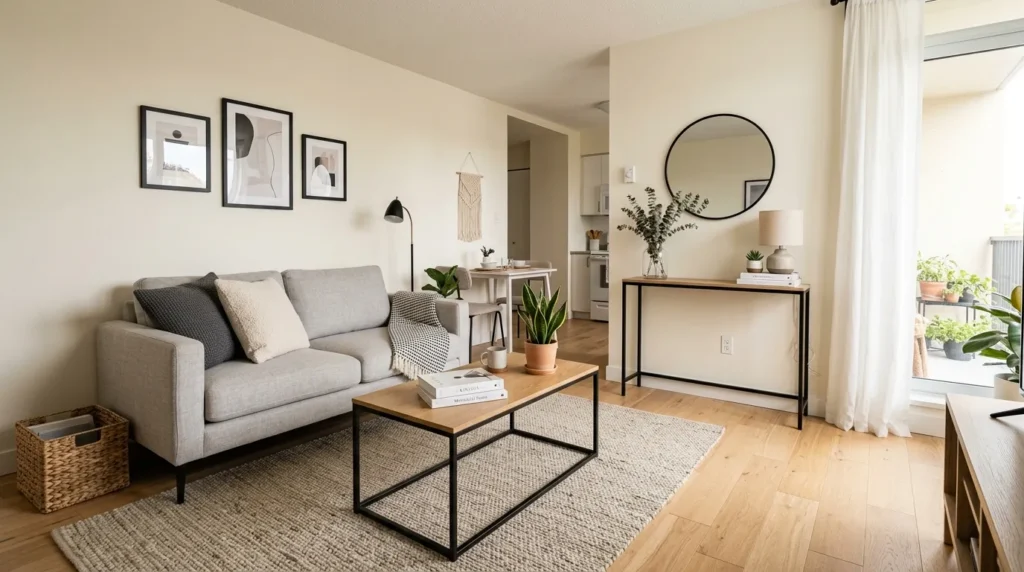
Slim furniture helps a small apartment feel open without losing comfort. The biggest mistake people make is buying furniture that looked perfect in a showroom but feels too heavy at home. Pieces with raised legs, narrow arms, and clean lines allow more floor to show, which makes the room feel less crowded. A compact sofa, thin console, light coffee table, and open shelving can still feel stylish while supporting real daily use. The goal is comfort that respects the size of the room.
The final layout should feel easy to move through. Leave space between the sofa, coffee table, media unit, and entry path so the room does not feel blocked. If your living area is tiny, try a loveseat, armless chair, or nesting tables instead of bulky furniture. For dining corners, a round table often feels softer than a sharp rectangle. This idea works especially well in studios and city apartments because it creates breathing room while keeping the design clean, useful, and visually balanced.
3. Layered Lighting
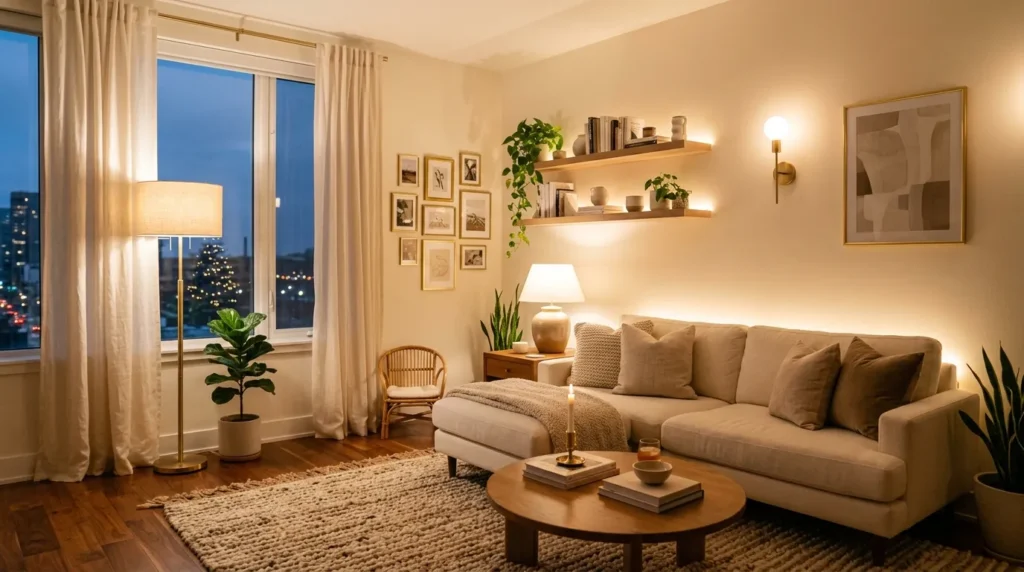
- Add table lamps, floor lamps, sconces, LED candles, or picture lights.
- Use warm white bulbs for a softer and more flattering glow.
- Place lights at different heights to create depth in small rooms.
- Avoid relying only on harsh overhead apartment lighting.
- Use smart bulbs or dimmers to adjust the mood from day to night.
Layered lighting can make even basic apartment decor feel expensive. Many rentals come with ceiling lights that are too bright, too cold, or placed in awkward spots. When you add lamps at different heights, the room instantly feels warmer and more intentional. A floor lamp beside the sofa, a table lamp near the bed, and a small accent light on a shelf can create a soft evening atmosphere. I’ve noticed lighting often changes the mood faster than any decor purchase.
The best part is that lighting upgrades are renter-friendly and easy to move later. Choose linen shades for softness, brass bases for warmth, black lamps for contrast, or ceramic shapes for texture. Use warm bulbs instead of cool blue lighting, especially in living rooms and bedrooms. If outlets are limited, battery lamps or plug-in sconces can still create a polished effect. Good lighting helps your apartment feel cozy after work, flattering during gatherings, and calm during quiet nights at home.
4. Statement Rug
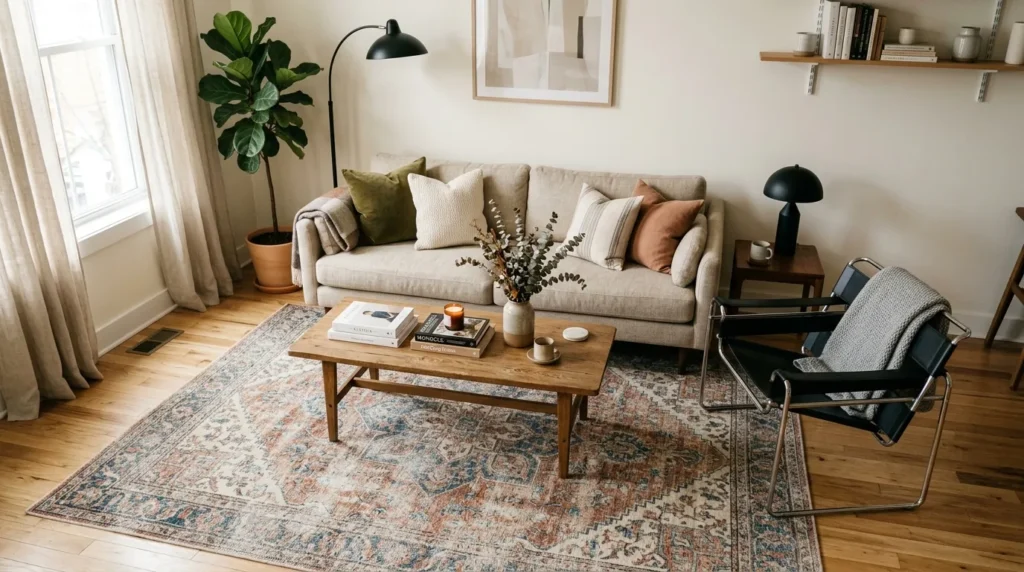
- Use a rug to define the living area, bedroom zone, or dining corner.
- Choose a size large enough to sit under the front legs of major furniture.
- Try muted patterns, vintage-inspired designs, geometric lines, or soft textures.
- Use washable rugs if you have pets, kids, or high-traffic areas.
- Match rug tones with pillows, curtains, and artwork for a cohesive look.
A statement rug can anchor a room and make apartment furniture feel connected. Without a rug, a small living area may look like separate pieces floating on the floor. The right rug creates a zone, adds softness, and gives the room a finished feeling. This is especially helpful in open layouts where the living room, dining area, and workspace share one space. A rug visually says, “this is the sitting area,” even without walls or dividers.
The transformation depends on size and pattern. A rug that is too small can make the room feel awkward, while a properly scaled rug makes furniture look more intentional. Muted vintage patterns hide daily wear, soft neutrals create calm, and subtle geometric designs add modern structure. Use a rug pad to prevent slipping and make the rug feel more comfortable underfoot. This idea works beautifully for renters because it covers basic flooring, adds personality, and can move with you later.
5. Floating Shelves
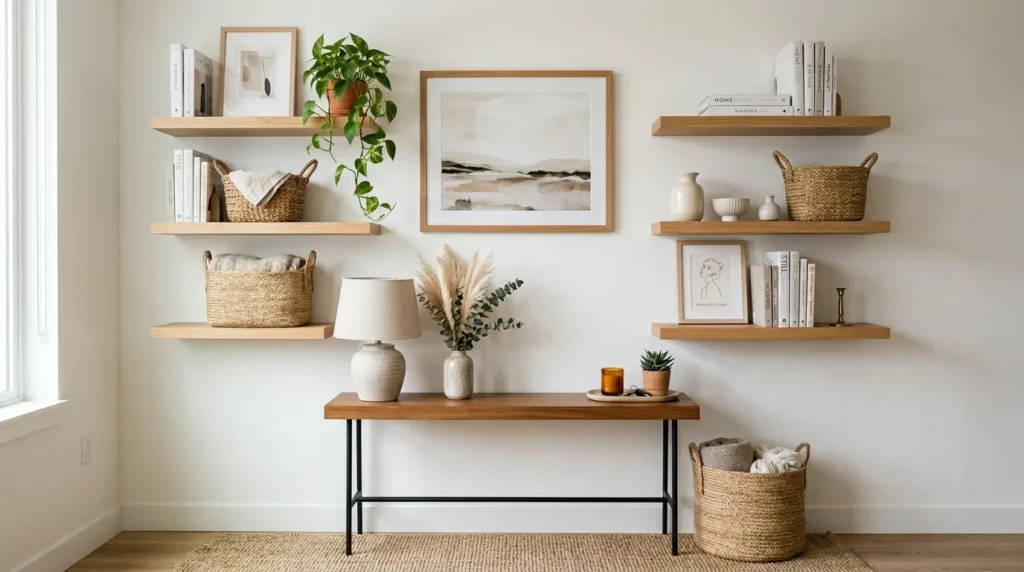
- Install renter-friendly shelves or use freestanding shelf units where drilling is not allowed.
- Style shelves with books, baskets, plants, framed art, and small sculptural objects.
- Keep colors and materials consistent so the shelves do not feel cluttered.
- Leave empty space between items for a cleaner modern look.
- Use baskets or boxes to hide chargers, papers, remotes, and small clutter.
Floating shelves add storage and style without taking up floor space. They work especially well in apartments because walls are often underused while closets are limited. A few shelves above a sofa, desk, console, or dining nook can create a custom look without requiring built-ins. The key is styling them carefully. Too many tiny objects can feel messy, but a balanced mix of books, art, baskets, plants, and ceramics creates a clean display that feels personal and polished.
The finished shelves should look useful, not crowded. Place heavier items lower, keep similar colors grouped, and use closed baskets for things you do not want visible. If you cannot drill, try a tall leaning shelf or narrow bookcase for a similar effect. Shelves also make small apartments feel taller because they draw the eye upward. This idea is practical for living rooms, work corners, bedrooms, and entryways where you need storage but still want the decor to feel styled.
6. Mirror Moment
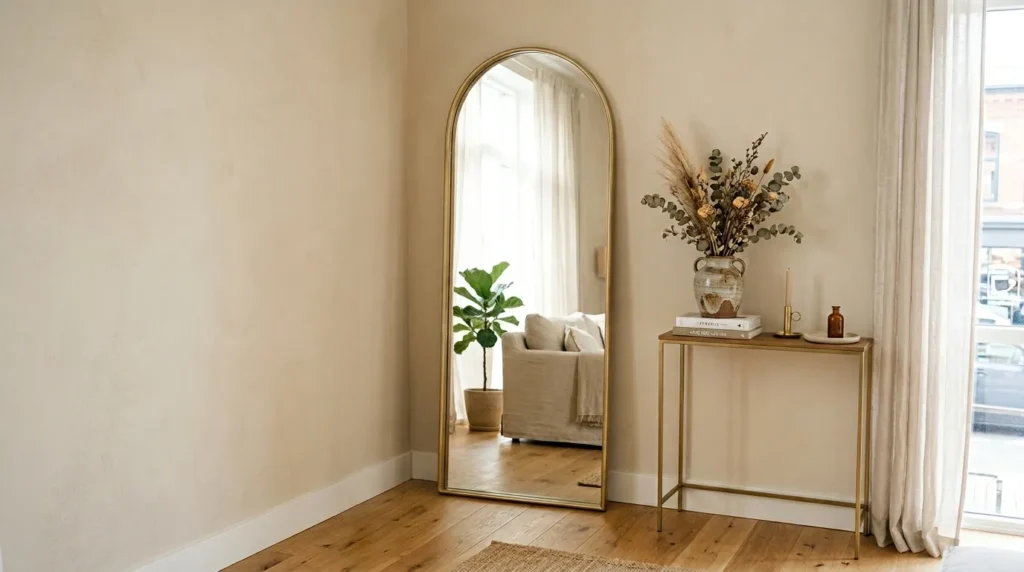
- Place a large mirror near a window to reflect natural light.
- Use arched, round, black-framed, brass, or frameless mirror styles.
- Lean a tall mirror against the wall if wall mounting is not allowed.
- Check what the mirror reflects before choosing the final placement.
- Use mirrors in entryways, bedrooms, dining corners, and living rooms.
A mirror can make a compact apartment feel brighter and more open instantly. This idea works because mirrors reflect light and create the feeling of depth, which is valuable in narrow rooms or low-light apartments. A tall leaning mirror can make a bedroom corner feel elegant, while a round mirror above a console can make an entry feel finished. That’s why many designers recommend mirrors for small homes before adding more furniture or extra decor.
The final effect depends on placement. Aim the mirror toward a window, lamp, artwork, or clean seating area so it reflects something beautiful. Avoid pointing it at clutter, open closets, trash bins, or busy shelves. A brass frame adds warmth, black feels modern, and frameless styles look simple and sleek. This is one of the easiest rental-friendly upgrades because a leaning mirror requires no major installation. It adds light, style, and visual space without changing the apartment permanently.
7. Hidden Storage
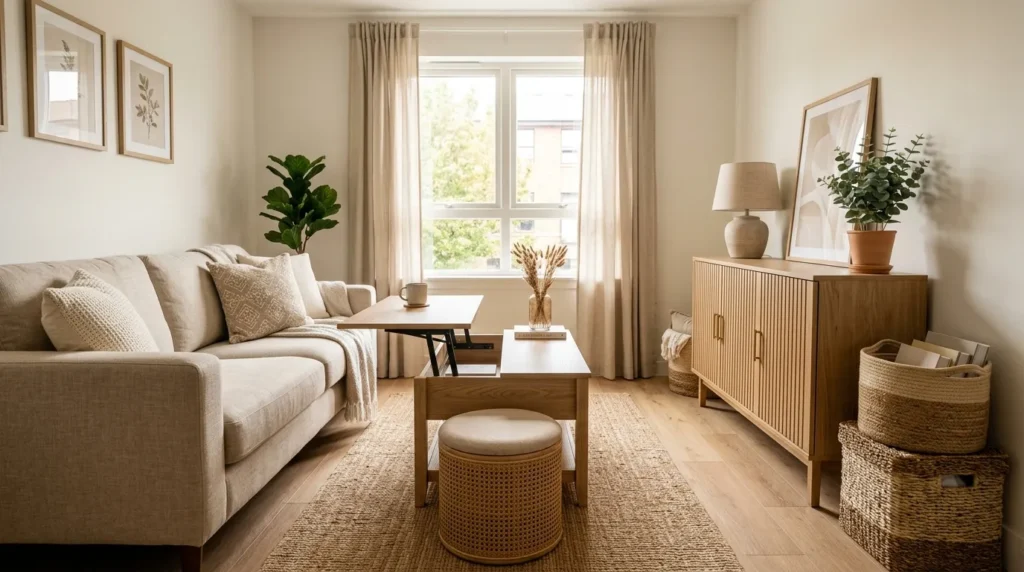
- Choose ottomans, beds, benches, cabinets, and coffee tables with hidden compartments.
- Use closed storage for blankets, shoes, chargers, paperwork, and extra supplies.
- Keep visible surfaces clear so the apartment feels calmer.
- Add drawer organizers, storage bins, and labels where needed.
- Choose storage pieces that look like furniture, not temporary clutter fixes.
Hidden storage is what keeps a stylish apartment livable. A room can have beautiful furniture and still feel messy if daily items have nowhere to go. Storage ottomans, lift-top coffee tables, under-bed drawers, closed cabinets, and entry benches help hide the things you actually use every day. This matters in apartments because storage is often limited and every visible pile feels larger in a smaller room. In my experience, closed storage is the secret behind spaces that look effortlessly clean.
The transformation happens when cleanup becomes easy. Blankets go inside the ottoman, remotes stay in a drawer, shoes slide into an entry cabinet, and paperwork has one hidden box instead of spreading across the table. Choose furniture that matches your decor style so storage feels intentional. A fluted cabinet, woven bench, or upholstered storage piece can look beautiful while doing real work. This idea makes the apartment easier to maintain, especially during busy weeks when clutter usually builds quickly.
8. Curtain Height
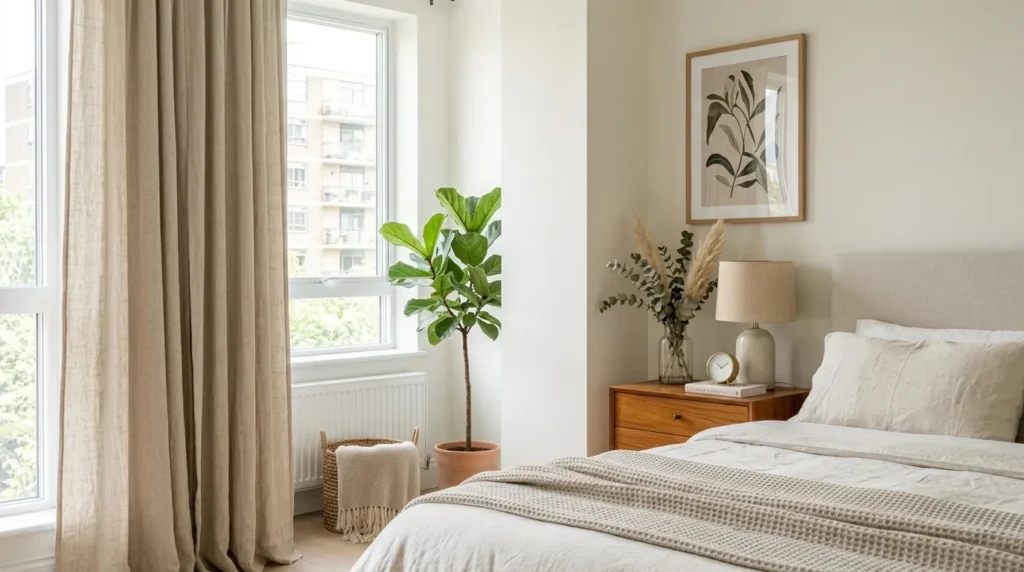
- Hang curtains close to the ceiling to make windows appear taller.
- Choose floor-length panels for a polished and more custom look.
- Extend the rod wider than the window so more light enters when open.
- Use linen, cotton, velvet, or light-filtering fabric depending on your room mood.
- Choose neutral curtain colors if you want the space to feel larger.
Tall curtains can change the proportions of an apartment dramatically. When curtain rods sit too low or panels stop short, the room can feel unfinished and smaller than it really is. Hanging the rod near the ceiling draws the eye upward and makes the walls appear taller. Floor-length panels also soften hard apartment lines, especially around basic windows and sliding doors. This upgrade is simple, but it can make a rental feel much more custom and thoughtfully decorated.
The finished look should feel soft and tailored. Use linen panels for an airy living room, velvet for a richer bedroom mood, or light-filtering curtains if you want privacy without blocking daylight. Extend the rod beyond the window frame so curtains do not cover too much glass when open. This lets in more light and makes the window feel wider. Tall curtains are perfect for small apartments because they add height, softness, and elegance without taking up valuable floor space.
9. Accent Wall
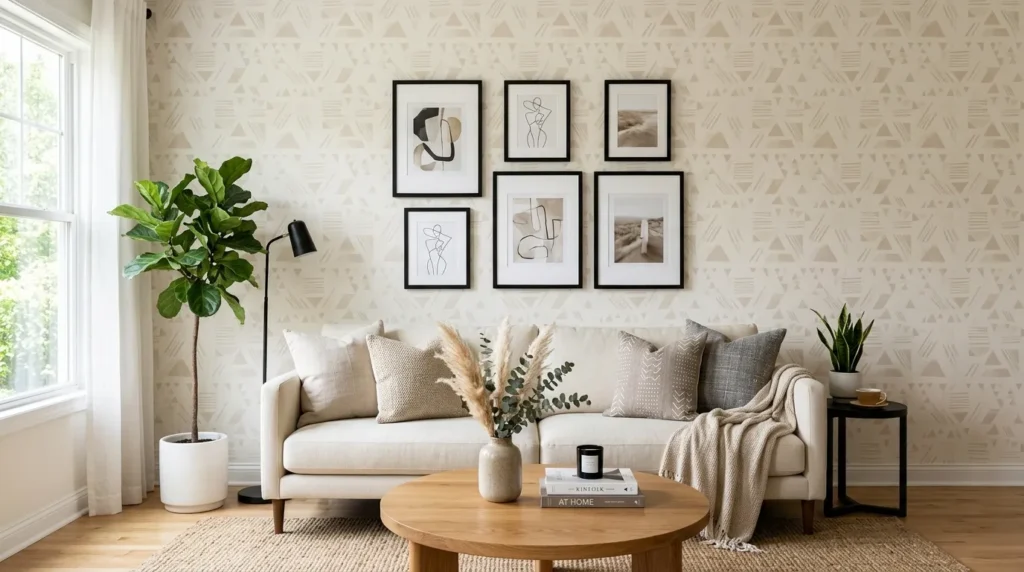
- Use peel-and-stick wallpaper, removable molding, large art, or painted panels.
- Choose one wall instead of adding strong patterns everywhere.
- Place the accent behind a sofa, bed, desk, or dining nook.
- Keep the rest of the room simple so the wall remains the focal point.
- Use renter-friendly materials if you cannot paint or make permanent changes.
An accent wall gives an apartment personality without overwhelming the whole room. This idea works because one strong wall can create focus, depth, and style in a space that might otherwise feel plain. Peel-and-stick wallpaper is great for renters, while removable molding can add a more custom look. Large artwork or a painted panel can also create the same effect with less commitment. The best accent walls support the furniture below them instead of fighting the room layout.
The transformation feels polished when the wall connects to the rest of the decor. If you choose a dark green wall, repeat green in a pillow or plant. If you use warm beige wallpaper, connect it with wood tones or woven textures. Avoid adding an accent wall behind every piece of furniture because that can make the apartment feel busy. One thoughtful wall is enough to give the room character. This idea works well in bedrooms, living rooms, dining corners, and work areas.
10. Multiuse Zones
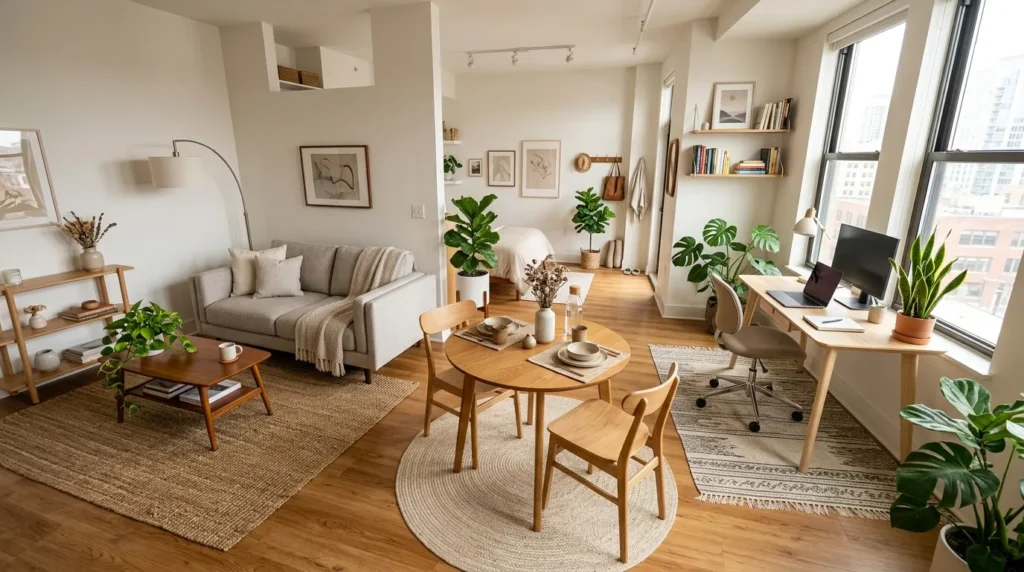
- Divide one room into living, dining, sleeping, or work areas with smart furniture placement.
- Use rugs, shelves, curtains, or lighting to separate zones visually.
- Choose furniture that can serve more than one purpose.
- Keep pathways open so the apartment does not feel crowded.
- Repeat colors across zones so the whole space feels connected.
Multiuse zones make small apartments feel organized instead of chaotic. Many renters use one room for relaxing, eating, working, and sometimes sleeping, so visual separation becomes important. A rug can define the living area, a shelf can create a work boundary, and a small dining table can sit near a window without feeling random. The goal is not to build walls. The goal is to help each area feel clear while still keeping the apartment open and easy to move through.
The finished layout should support real routines. Place the desk where light is good, keep the dining area close to the kitchen, and make the seating area feel cozy but not blocked. Use repeating colors, such as black accents, warm wood, or cream textiles, so each zone belongs to the same apartment. This idea works beautifully for studios and open-plan rentals because it creates order without major renovation. A clear layout makes daily life feel smoother, cleaner, and more intentional.
11. Styled Entry
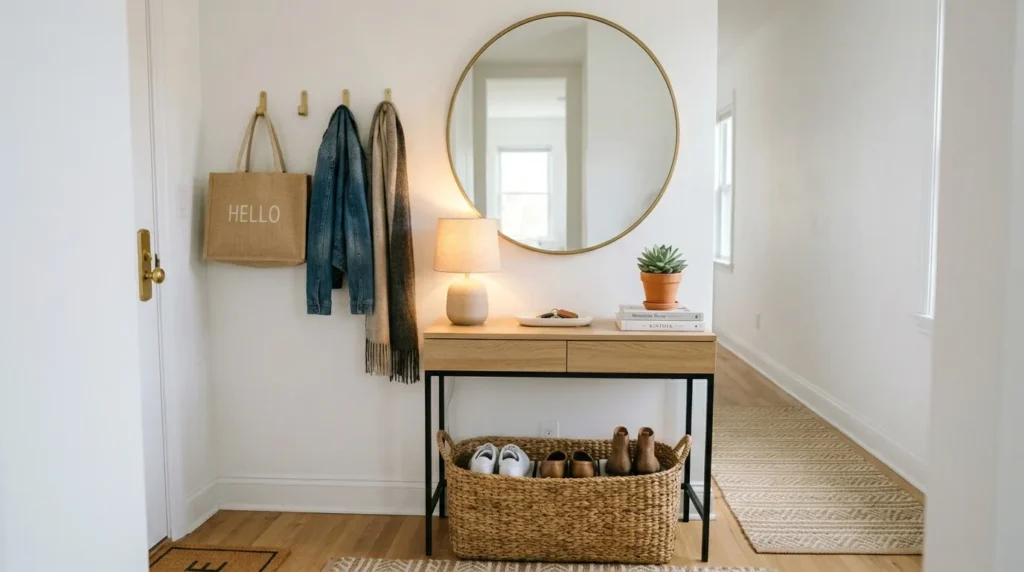
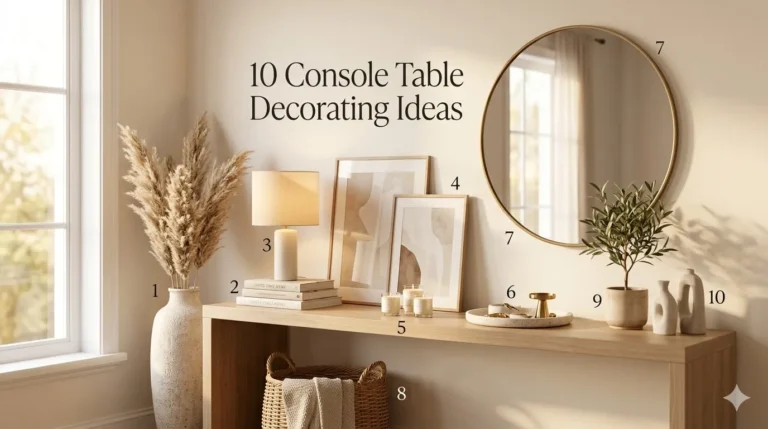
- Add a slim console, wall hooks, mirror, tray, or small bench near the door.
- Use baskets for shoes, bags, umbrellas, pet leashes, or daily items.
- Keep the entry surface simple with keys, mail, and one decorative accent.
- Choose narrow furniture if the apartment door opens into a hallway.
- Add lighting or a mirror to make the entry feel brighter and more welcoming.
A styled entry makes the whole apartment feel more intentional from the first step. Even if your front door opens directly into the living room, a small landing zone can create order. A slim console, mirror, hook rail, shoe basket, or small bench gives everyday items a place to go. This prevents keys, mail, shoes, and bags from spreading into the rest of the apartment. A good entry setup is both decorative and practical, which is exactly what compact homes need.
The finished entry should feel clean, welcoming, and easy to reset. Add a small tray for keys, a basket for shoes, and one lamp or wall light if outlets allow. A mirror helps brighten the area and gives you one last check before leaving. Keep seasonal clutter under control by storing rarely used items elsewhere. This final detail can make a Modern Apartment feel more polished because it creates a clear beginning to the home, even in a very small layout.