
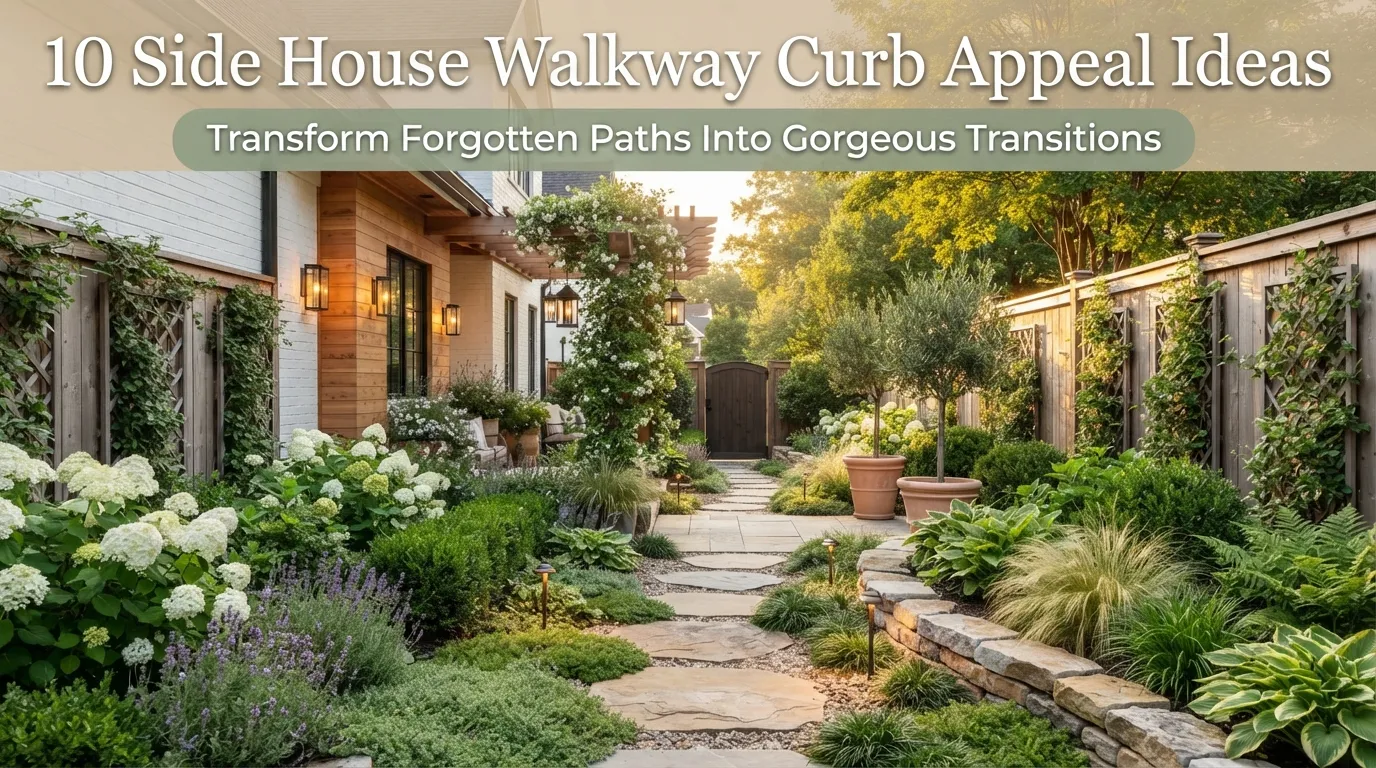
10 Side House Walkway Curb Appeal Ideas: How to Transform Forgotten Paths Into Gorgeous Transitions
If you are anything like me, you probably spent weeks planning your front porch styling or perfecting your backyard patio layout, only to completely ignore that awkward, narrow strip of land running down the side of your home. It is a classic design blind spot. For many households, the side yard becomes a forgotten graveyard for recycling bins, rusted lawn tools, broken flowerpots, and patchy weeds that struggle to survive in the shadows. But leaving this area neglected is a massive missed opportunity for your exterior styling. A beautifully executed transition path not only boosts your property value, but it also creates a warm, welcoming journey that connects your front yard to your private backyard retreat.
Throughout my fifteen years as a digital publisher and landscape enthusiast, I have noticed that a mistake many homeowners make is treating this utility zone like an unfixable dead end. They look at the tricky grading, the lack of consistent sunlight, or the tight squeeze between the exterior wall and the property line, and they simply give up. However, improving your side house walkway curb appeal is one of the most satisfying DIY weekend projects you can take on. With a strategic combination of structural hardscaping, smart shade-loving perennial plants, and low-voltage accent lighting, you can turn a muddy, uninviting shortcut into a visually stunning asset that begs to be pinned and shared.
The secret to mastering this exterior zone lies in balancing real-world durability with a cohesive design aesthetic that mimics the interior personality of your house. In this comprehensive blueprint, we will explore exactly how to establish functional flow, choose resilient construction materials, and maximize every square inch of vertical and horizontal property space. Whether your property features a classic modern farmhouse, an urban craftsman cottage, or a sprawling suburban lot, these expert design choices will help you create a highly polished, inviting exterior path.
Table of Contents
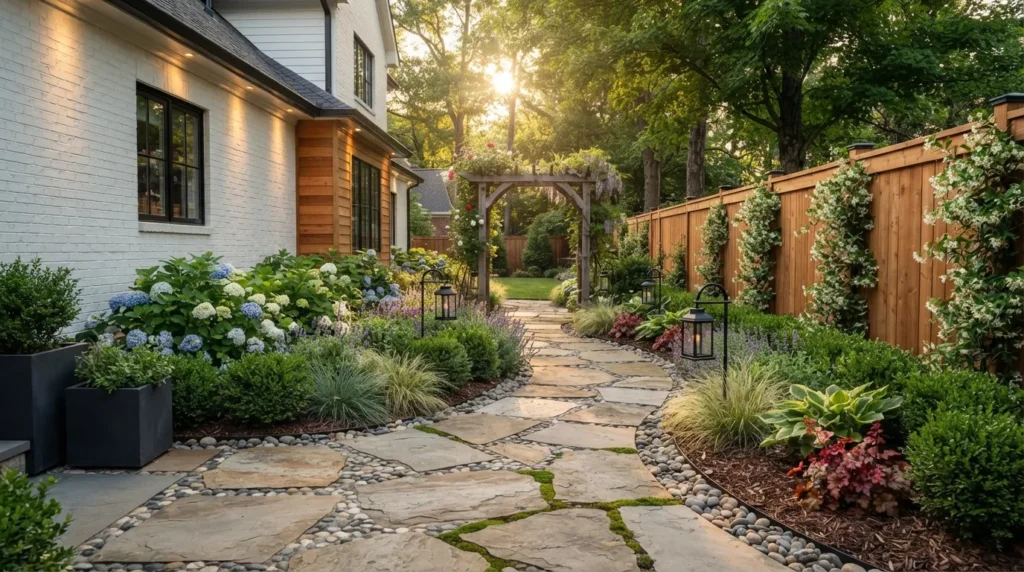
- Flagstone Path Layouts Discover how natural, irregular stone flags establish a relaxed, organic flow through narrow garden passages.
- Crushed Pea Gravel Learn how budget-friendly gravel surfaces provide crisp crunch sounds and excellent water drainage.
- Modern Concrete Pavers Explore the transformative power of oversized geometric cast pavers for clean, contemporary architectural lines.
- Low Voltage Sconces Find out how intentional downlighting and path fixtures ensure evening safety while highlighting garden textures.
- Shade Loving Perennials Master the art of layering lush, resilient foliage plants that thrive in limited-sunlight side passages.
- Vertical Cedar Trellises See how climbing vines and wooden wall structures mask blank siding with rich architectural warmth.
- Crisp Metal Edging Discover how flexible steel borders keep stones completely contained while defining perfectly manicured garden beds.
- Stepping Stone Harmony Learn how combining smooth river rocks with large flat steps softens transitions and eliminates mud.
- Hidden Utility Screens Explore how custom wooden panels discretely hide ugly HVAC units and trash cans out of sight.
- Low Growing Groundcovers See how fragrant, vibrant creeping herbs blanket empty gaps between pavers with soft living texture.
1. Flagstone Path Layouts
Quick Benefits
- Offers an authentic organic aesthetic
- Survives extreme seasonal weather changes
- Adapts beautifully to uneven landscape grades
- Allows natural lawn drainage through gaps
- Requires minimal long-term concrete maintenance
Why It Works
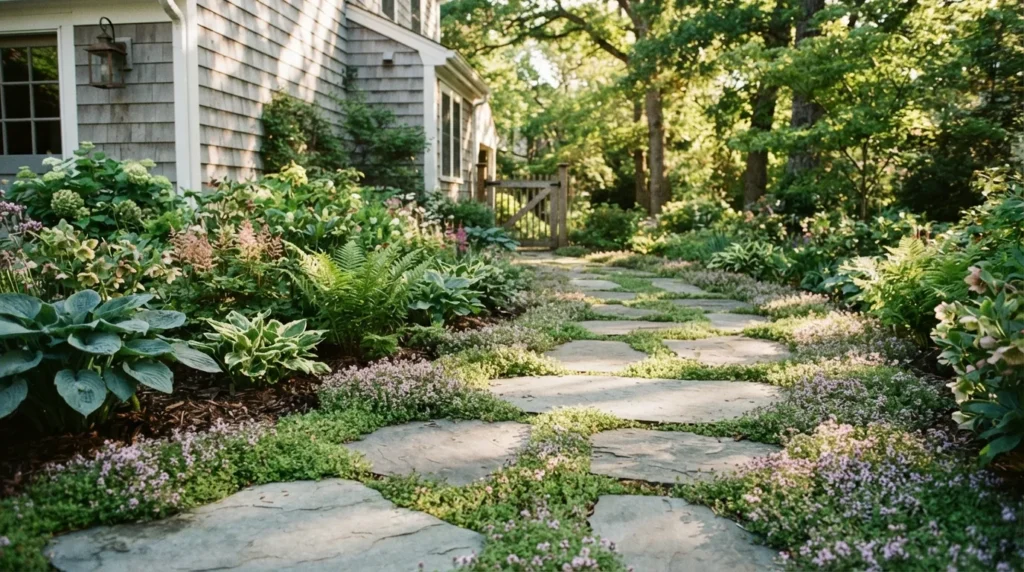
One simple trick I always suggest to instantly soften the harsh, rigid angles of a long exterior wall is to introduce free-form, organic elements to the ground plane. When a walkway is perfectly straight and boxed in by a structural foundation, it can end up feeling more like a narrow alleyway than an inviting garden feature. Flagstone path layouts break up that monotony perfectly. The irregular, hand-cut shapes of natural stone encourage the human eye to wander naturally through the space, making a tight side corridor feel significantly wider, more adventurous, and thoughtfully integrated into the surrounding landscape environment.
How To Style It
To style this look effectively, select generous pieces of native flagstone—such as Pennsylvania bluestone or Oklahoma sandstones—that are at least two inches thick to prevent shifting underfoot. Lay them in a relaxed, winding pattern with three-inch gaps between each stone piece. Fill those interstitial spaces with fine dark gray granite screenings or a low-growing living groundcover like creeping thyme to lock the flagstones securely into place. Frame the outer edges of the path with a soft mixture of variegated hostas and deep purple heuchera to draw a beautiful contrast against the natural silver-blue or tan hues of the stone surfaces.
2. Crushed Pea Gravel
Quick Benefits
- Prevents sitting puddles with rapid drainage
- Installs quickly as an accessible DIY project
- Emits a distinct home-security crunch sound
- Conforms fluidly to any winding boundary
- Offers an inexpensive alternative to poured concrete
Why It Works
In my experience, managing excessive water runoff and drainage issues is the biggest hurdle homeowners face when designing a narrow side yard passage. Poured concrete can trap moisture against your house foundation, leading to expensive interior water issues down the road. Crushed pea gravel works beautifully because it acts as a highly porous, functional sieve that allows heavy rainfall to filter straight down into the subgrade instantly. Beyond the technical benefits, the loose, rounded stones introduce a relaxed European country house vibe that brings high-end texture and subtle motion into an otherwise stagnant zone.
How To Style It
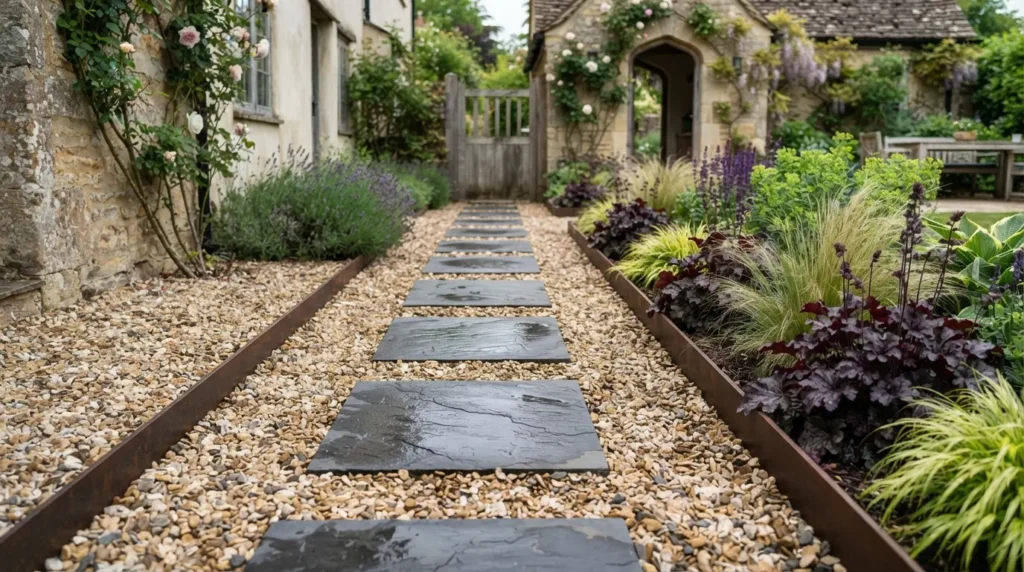
Begin by digging the area down roughly three to four inches, laying a premium commercial-grade woven landscape fabric across the subgrade to prevent persistent weed growth. Pour a two-inch foundational base of crushed limestone gravel, compacting it thoroughly, before topping it with a two-inch finish layer of multi-toned gray or tan pea gravel. Install a deeply set commercial steel or thick composite border to keep the small pebbles completely contained within the path. To elevate the final look, place a few large, flat slate tiles directly into the gravel at comfortable walking intervals to serve as solid, stable stepping points.
3. Modern Concrete Pavers
Quick Benefits
- Delivers a sleek minimalist aesthetic
- Increases visual scale with grand sizing
- Resists staining from dropped organic debris
- Provides a perfectly level walking surface
- Enhances the resale value of modern homes
Why It Works
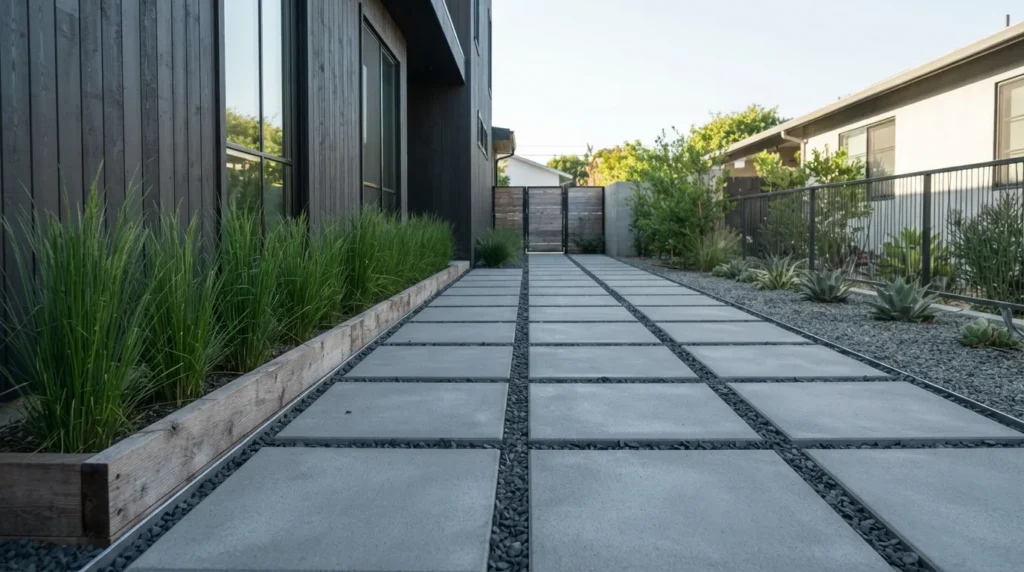
A mistake many homeowners make when styling a modern or mid-century property is using busy, overly traditional brick patterns or rustic fieldstone details that clash with the clean architecture of the house. Modern concrete pavers are designed to honor those clean lines. Oversized, rectangular cast-concrete blocks create a highly structured grid system that feels crisp, intentional, and clean. The large surface area of the pavers minimizes joints, creating a smooth visual rhythm that leads the eye effortlessly toward your backyard, transforming a secondary space into a beautiful architectural runway.
How To Style It
Choose large 24×24-inch or 12×36-inch architectural pavers finished in a light cool gray or deep charcoal tone. Lay them in an elegant linear stack or an offset running bond pattern, leaving a deliberate two-inch gap between each block. Fill the precise channels between the pavers with clean, contrasting white quartz pocket gravel or a stark black basalt chip to emphasize the geometric layout. Keep the surrounding landscape plantings incredibly architectural—think structured ornamental grasses like feather reed grass or linear horsetail rush planted in narrow, perfectly straight timber raised beds running along your house siding.
4. Low Voltage Sconces
Quick Benefits
- Ensures safe navigation during late evenings
- Highlights beautiful brick and siding textures
- Deters potential intruders from hidden entries
- Extends outdoor visual appeal into the night
- Operates safely with minimal electrical draw
Why It Works
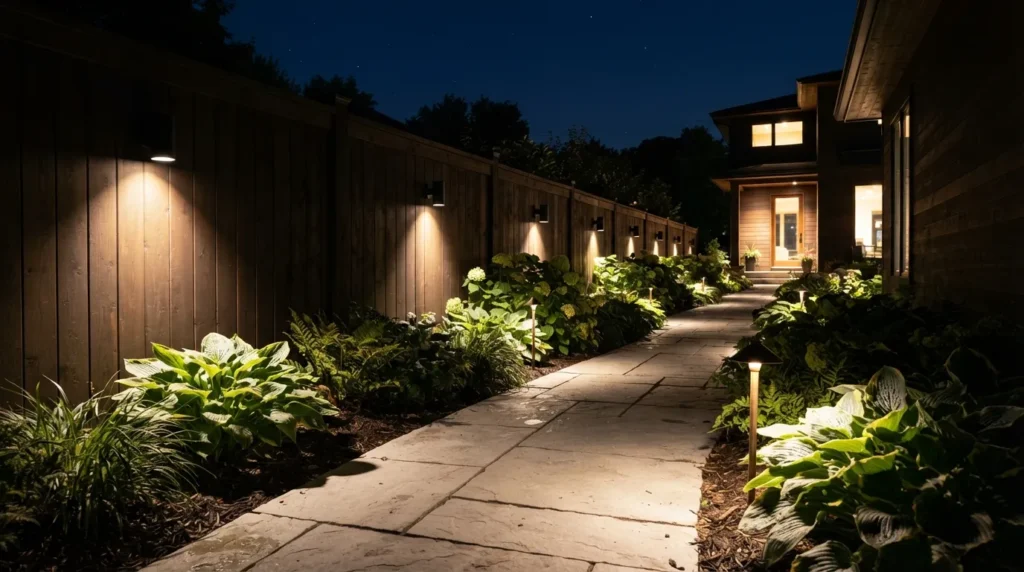
I’ve seen this idea transform spaces that felt outright spooky after dark into safe, enchanting night scapes that elevate the whole property. Side pathways are notoriously dark because they are shadowed by tall roofs and privacy fences, making them prime tripping hazards at night. Installing low-voltage landscape lighting is an absolute necessity for real-world functionality. Instead of using cheap solar stakes that cast a weak, unreliable glow, high-quality low-voltage hardwired fixtures offer brilliant, controlled illumination that skims down walls and highlights path textures beautifully.
How To Style It
Mount sleek, down-firing metal sconces directly to your home’s exterior siding or along the fence posts at a consistent height of roughly five feet, spacing them six to eight feet apart. Choose fixtures with a warm 2700K LED bulb color temperature to avoid a harsh, industrial look. Supplement these wall fixtures with tiny, hooded brass path lights hidden among your low-growing garden shrubs to cast a soft, overlapping glow down onto the stones. This multi-layered approach guides steps clearly while highlighting the movement of your garden plants.
5. Shade Loving Perennials
Quick Benefits
- Returns beautifully year after year
- Suppresses persistent weed growth naturally
- Softens hard, industrial structural elements
- Introduces changing seasonal colors and blooms
- Thrives in low-sunlight home microclimates
Why It Works
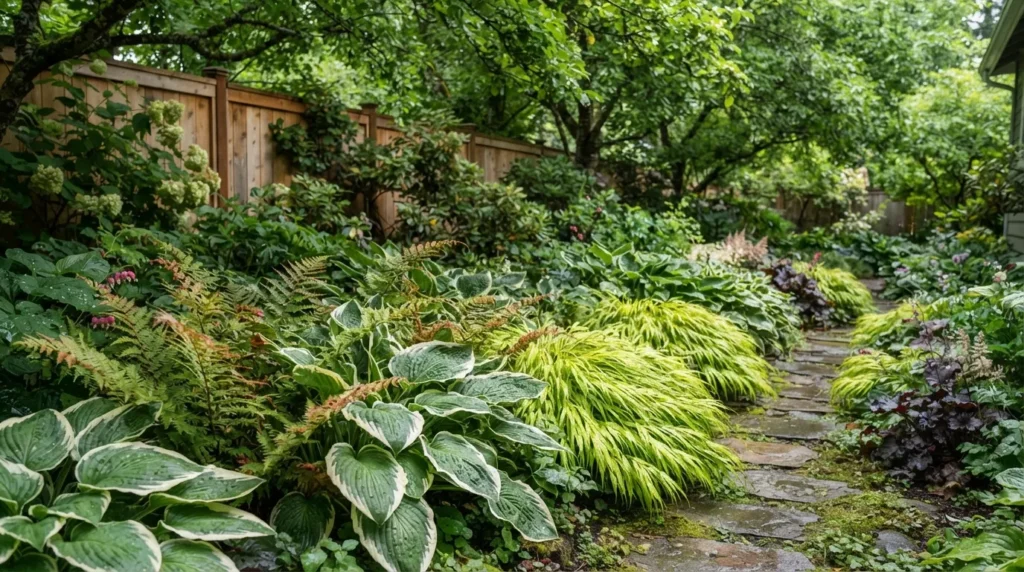
That’s why many designers recommend leaning into the specific microclimates of your yard rather than trying to force full-sun plants into deep shade. Side yards are frequently starved for sunlight, meaning traditional turf grass or bright annual flowers will quickly become leggy and die, leaving behind an unattractive patch of mud. Shade-loving perennials are structurally adapted to thrive in these conditions. By layering various species that feature rich, contrasting leaf patterns, deep variegation, and varying heights, you can build a lush woodland paradise that feels fresh and alive all summer long.
How To Style It
Establish a classic three-tier plant hierarchy along your side house walkway curb appeal path. For the tallest background layer closest to the fence line, plant elegant oakleaf hydrangeas or structural Japanese forest grass to introduce movement. In the middle tier, arrange a thick grouping of classic hostas—like the massive blue-leafed ‘Empress Wu’ or the bright chartreuse ‘Sum and Substance’—interspersed with delicate, lacy bleeding hearts. For the lowest border layer right next to your stepping stones, plant sweet woodruff or hardy ginger to soften the hardscape boundaries perfectly.
6. Vertical Cedar Trellises
Quick Benefits
- Masks ugly utility pipes and meters
- Draws the eye upward to maximize height
- Introduces natural cedar scent and warmth
- Supports healthy upward growth for climbers
- Softens tall, boring expanses of siding
Why It Works
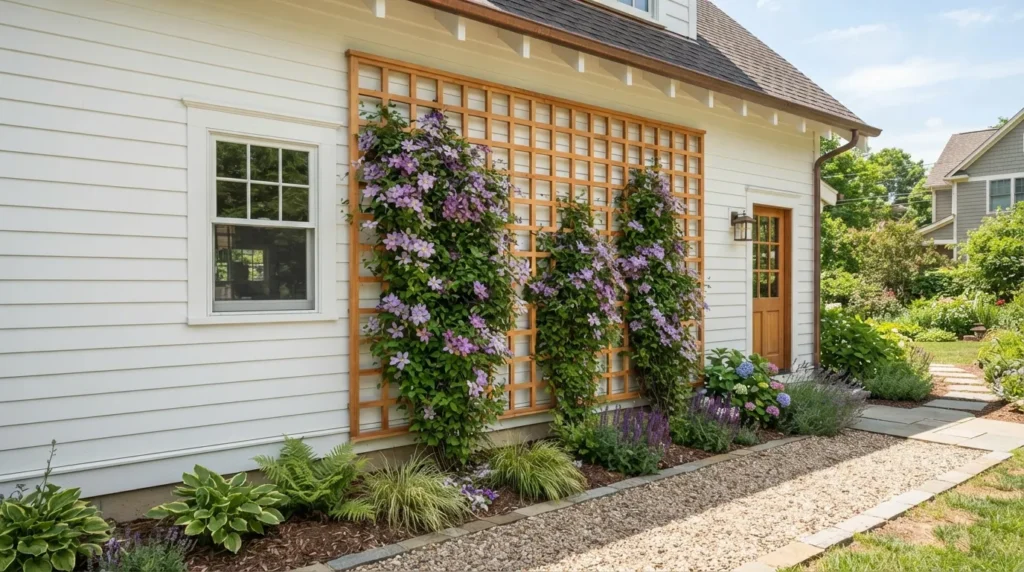
When you are walking down a narrow side yard path, you are trapped between two tall vertical surfaces—your home’s siding and your neighbor’s privacy fence. If those walls are left completely bare, the space can quickly feel claustrophobic, like walking through a deep, industrial trench. Vertical cedar trellises break up that spatial tension beautifully by adding an elegant architectural layer to the vertical plane. The rich, warm honey-brown tones of cedar wood contrast against cool siding, while providing structural support for climbing vines to inject living greenery onto the walls.
How To Style It
Construct or purchase two large rectangular cedar trellises with a clean, modern grid design rather than old-fashioned diamond latticework. Secure them to your home’s foundation or mount them directly to sturdy fence posts using rust-resistant stainless steel spacers to allow air circulation behind the wood. Plant hardy, non-invasive climbing varieties at the base, such as native clematis or climbing hydrangeas. As the vines weave upward over the seasons, prune them carefully to frame the path nicely without blocking the walkway clearance.
7. Crisp Metal Edging
Quick Benefits
- Prevents stone migration into garden soil
- Maintains perfectly manicured pathway lines
- Stops aggressive turf grass from invading
- Cleanly separates different landscape textures
- Installs easily around tight, fluid curves
Why It Works
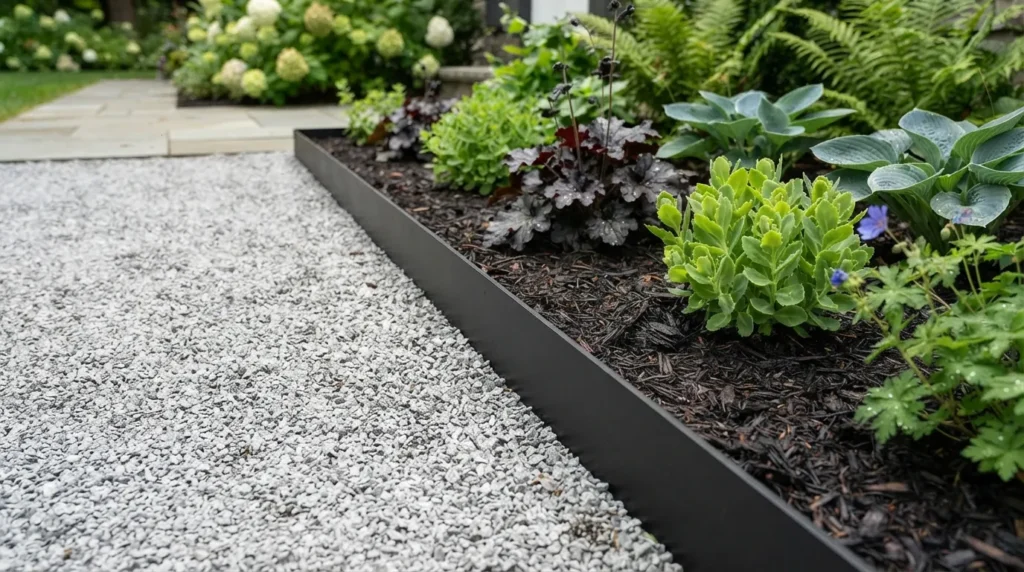
The difference between a amateur DIY job and a truly high-end, professional landscape installation comes down to how cleanly your materials are separated. Without a structural boundary, loose gravel, mulched beds, and lawn edges will slowly bleed into each other over a few seasons, creating a messy, unkempt appearance. Crisp metal edging acts like an absolute anchor for your layout. It provides a razor-thin, nearly invisible barrier that keeps loose stones exactly where they belong, ensuring your design lines remain sharp, tidy, and effortlessly clean for decades.
How To Style It
Select a professional-grade four-inch-deep heavy-gauge steel edging finished in a dark oil-rubbed bronze, matte black, or naturally weathered powder coat. Drive the metal strips deep into the soil along the entire perimeter of your path, leaving only a subtle half-inch lip visible above the final gravel or paver surface. Secure the overlapping joints with heavy-duty metal stakes driven deep into the subgrade. Use this clean line to separate a dark hardwood mulch garden bed on one side from a light gray crushed stone path on the other, establishing an upscale look.
8. Stepping Stone Harmony
Quick Benefits
- Creates a highly tactile, engaging journey
- Adapts beautifully to tricky, sloped ground
- Lowers overall hardscape construction costs
- Slows walking pacing to appreciate gardens
- Reduces muddy footprints inside the house
Why It Works
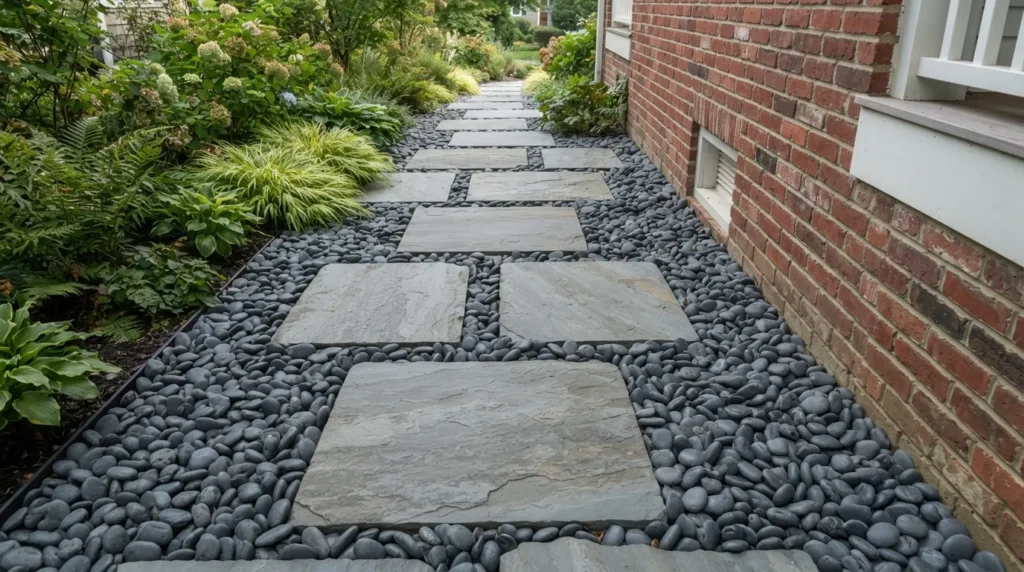
If you’re anything like me, you love a home exterior that tells a beautiful visual story. A solid, continuous line of cold concrete feels sterile and institutional, but combining different natural hardscape materials creates a wonderful sense of balance. Stepping stone harmony pairs large, comfortable flagstones or pre-cast concrete rounds with a soft, uniform field of small river rocks or dark wood chips. This mixed-material strategy creates a beautiful textural contrast beneath your feet, turning a boring utility path into a highly engaging walk through your garden.
How To Style It
Lay out a series of oversized, smooth-surface bluestone tiles along the center of your path, spacing them precisely twenty-four inches from center to center to match the natural stride of an adult. Once the large stones are leveled onto a tamped sand base, fill the wide surrounding areas with multi-toned one-inch smooth Mexican beach pebbles or Delaware river rocks. The contrast between the broad, flat stepping surfaces and the deep shadows of the small, rounded pebbles creates a highly tactile, custom look that will instantly catch eyes on social media.
9. Hidden Utility Screens
Quick Benefits
- Conceals noisy, ugly outdoor HVAC units
- Keeps ugly trash recycling bins organized
- Improves overall street-view curb appeal
- Protects expensive mechanical systems from debris
- Increases functional backyard privacy boundaries
Why It Works
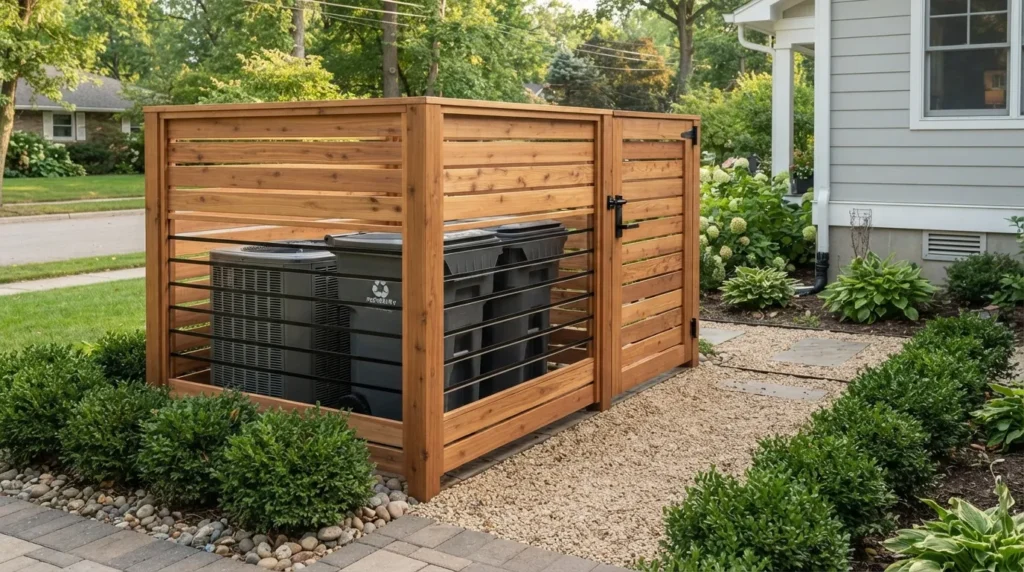
Let’s be completely honest: nothing ruins your hard-earned side house walkway curb appeal faster than a pair of bright blue recycling bins, a rusted garden hose reel, and a loud, boxy metal air conditioning unit sitting in plain view. These utility elements are necessary for a modern household, but they shouldn’t dictate the aesthetic quality of your landscaping. Custom hidden utility screens serve as a decorative shield that organizes these unsightly zones. By blocking the view from the street while maintaining proper airflow, you can hide the clutter out of sight.
How To Style It
Build a beautiful louvered or horizontal slat screen enclosure using rot-resistant western red cedar or premium composite deck boards that match your backyard fence styling. Ensure the screen sits at least two feet away from your HVAC compressor unit to maintain adequate manufacturer-recommended airflow and allow easy access for maintenance technicians. Install a smooth-swinging latch gate to easily roll your heavy trash bins out to the driveway on collection days, painting the structural frame to blend in with your siding.
10. Low Growing Groundcovers
Quick Benefits
- Replaces patchy, dying lawn sections completely
- Releases beautiful herbal scents when stepped on
- Requires absolutely zero weekend lawn mowing
- Stabilizes loose topsoil against erosion issues
- Creates a soft, living carpet aesthetic
Why It Works
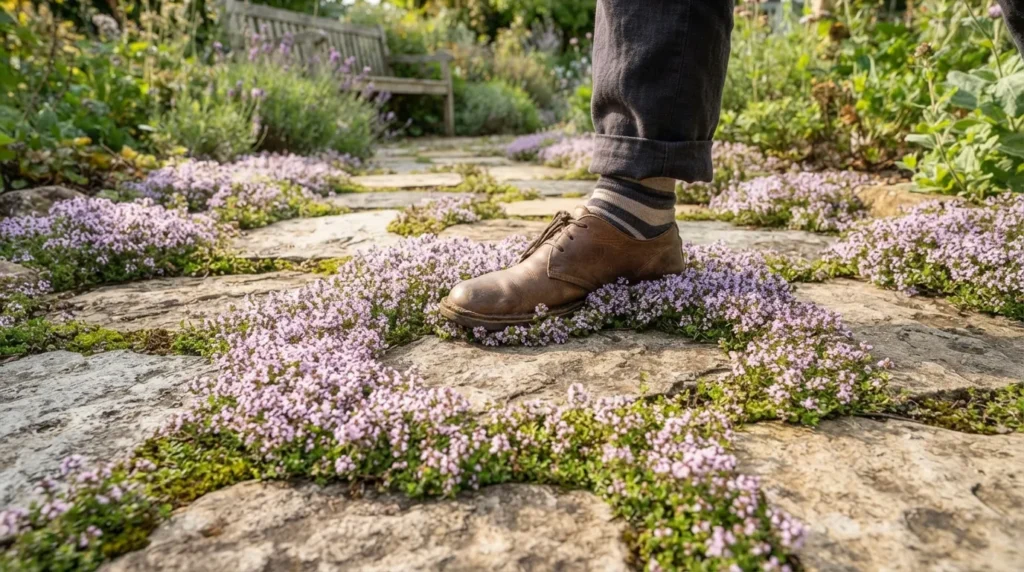
One simple trick I always suggest to eliminate the chore of string-trimming weeds along narrow path joints is to fill those gaps with purposeful, low-growing living groundcovers. When you leave bare dirt or regular sand between your stepping stones, wild weed seeds will inevitably find a home there and multiply. Planting dense, low-growing perennial groundcovers fills those gaps completely, choking out unwanted weeds before they can start. These resilient plants can handle light foot traffic, cushioning your path and making the stones look like they have been part of the natural landscape for generations.
How To Style It
Plant starter plugs of ‘Elfin’ creeping thyme or durable green moss stonecrop into the sand channels between your large flagstones, spacing them roughly six inches apart. Water them consistently for the first month until their root systems lock firmly into the subgrade. Over a single growing season, these plugs will knit together into a dense, solid living green carpet that blooms with tiny, delicate purple flowers in early summer. When walked on, the crushed thyme leaves release a wonderful herbal fragrance that fills the air.
Featured Snippet Optimizations
How do you maximize side house walkway curb appeal?
To maximize side house walkway curb appeal effectively, combine a distinct, defined hardscape path with rich layers of shade-loving plants and proper outdoor lighting. Start by replacing muddy turf grass with oversized concrete pavers or natural flagstones set into a base of contained pea gravel to prevent standing water. Install low-voltage down-firing metal sconces along the fence line or home foundation to ensure nighttime safety. Finally, hide ugly utility elements like trash bins and AC units behind custom wooden screens to keep the view clean and intentional.
What is the cheapest way to make a side yard walkway?
The most cost-effective way to build a beautiful side yard walkway is by installing a crushed pea gravel and stepping stone path. Dig out the path area to a depth of three inches, lay down an affordable roll of woven landscape fabric to stop weeds, and secure the borders with flexible composite or metal edging. Fill the path with a bulk delivery of local pea gravel, and bed a few wide, flat natural fieldstones or basic pre-cast concrete step blocks into the gravel at comfortable walking intervals to complete a stable, low-cost DIY design.
Related Articles
- Small Living Room Layouts for Maximum Space
- Modern Farmhouse Decor Ideas for Extior Spaces
- Neutral Home Styling for a Cohesive Yard
- DIY Accent Wall Ideas to Boost Curb Appeal
- Cozy Front Porch Styling for a Welcoming Entry
FAQ Section
How wide should a side house walkway path be?
For a comfortable and functional walking path, a side yard walkway should be a minimum of thirty-six inches wide. This dimension allows a single adult to walk easily without brushing against wet plant leaves, thorny bushes, or the home’s exterior siding. If you frequently need to roll large trash recycling bins, heavy wheelbarrows, or lawn mowers back and forth between the front and back yards, extending the path width to forty-eight inches is highly recommended to ensure easy clearance.
What plants grow best in dark, narrow side yards?
Side yards are unique microclimates that generally experience deep or partial shade throughout the day. The plants that thrive best in these conditions are shade-loving perennials valued for their resilient foliage and structural textures. Key varieties include large-leafed hostas, delicate astilbes, lacy autumn ferns, Japanese forest grass, coral bells, and sweet woodruff. Always check your USDA hardiness zone before buying plants to ensure long-term seasonal survival.
How do you fix drainage problems along a side yard walkway?
To fix drainage issues, you must grade the soil to slope away from your home’s foundation at a minimum drop of one inch for every ten feet. Use highly porous hardscape materials like crushed pea gravel, river rocks, or open stepping stone layouts that let rainfall filter straight down into the subgrade rather than pooling on top. For severe water issues, consider installing a hidden French drain system—a perforated pipe buried in a gravel trench—beneath your walkway to channel heavy water runoff safely to the street.
Can I install a side yard walkway if my ground is sloped?
Yes, a sloped side yard is a perfect candidate for a beautiful, tiered stepping stone or flagstone path. For gentle slopes, installing a series of natural flat flagstones layered like shallow steps works beautifully to stabilize the grade. For steeper slopes, you will want to build structural timber or stone retaining steps filled with compacted gravel to create flat, level landing zones. This controls soil erosion while providing a safe, comfortable walking surface down the hill.
How do you stop weeds from growing between your path stones?
The most effective way to prevent weeds is by laying down a high-quality, commercial-grade woven landscape fabric directly over your cleared subgrade soil before adding your sand, gravel, or pavers. For the joints between pavers, use specialized polymeric locking sand, which hardens when misted with water to create an impenetrable barrier. Alternatively, filling flagstone gaps with dense, competitive living groundcovers like creeping thyme will naturally choke out rogue weed seeds.
Conclusion
Transforming an overlooked, muddy side yard into a gorgeous, highly functional transition path is one of the smartest ways to elevate your property’s overall presentation. As we have explored throughout this guide, maximizing your side house walkway curb appeal doesn’t require a complicated layout or an astronomical landscaping budget. By replacing struggling grass with a clean, well-defined hardscape path—whether you love the rustic charm of irregular flagstones or the crisp lines of modern concrete pavers—you can effortlessly master the art of small-space exterior design.
The key to long-term success is treating this utility corridor with the same styling care you would give to your main entryway or backyard patio. Focus on choosing durable, porous materials that handle water drainage effortlessly, and don’t skip the structural details like crisp metal edging and hidden utility screens to keep the entire space looking highly manicured and organized. Start with one or two manageable ideas from this guide—like laying down a simple gravel path or installing low-voltage wall sconces—and gradually build an exterior feature that connects your outdoor living zones with comfort and style.
Pinterest Image Descriptions
1. Flagstone Path Layouts
Image Description: A beautiful, winding side yard path featuring large, irregular natural blue flagstones set into a dense carpet of vibrant green creeping thyme. The stone path meanders gracefully alongside a light gray wood-sided home foundation, framed by lush hostas and delicate ferns in a dark mulch garden bed. Warm, soft afternoon sunlight filters through overhead trees, casting gentle shadows across the stones. The mood is peaceful, enchanted, and organic, captured from a low, inviting three-quarter camera angle.
2. Crushed Pea Gravel
Image Description: A crisp, European-inspired side walkway featuring a clean bed of multi-toned tan and gray crushed pea gravel. Flat, square slate stepping stones are embedded into the loose pebbles at comfortable walking intervals. Deep bronze metal edging keeps the gravel separated from a manicured garden border filled with dark purple coral bells and ornamental grasses. The lighting is bright and airy, highlighting the clean textures of the stones and leaves, shot from an eye-level perspective.
3. Modern Concrete Pavers
Image Description: An ultra-modern minimalist side path showcasing large 24×24-inch cool gray geometric concrete pavers arranged in a precise linear grid. The uniform channels between the blocks are filled with deep charcoal basalt stone chips, creating sharp contrast. Along the modern dark charcoal house siding, structured feather reed grass grows out of a narrow, raw cedar raised garden bed. The atmosphere is highly architectural, clean, and upscale, captured from a symmetrical, front-facing eye-level angle.
4. Low Voltage Sconces
Image Description: A dramatic evening view of a side house walkway illuminated by premium low-voltage landscape lighting. Modern matte black down-firing sconces mounted along a dark wooden privacy fence cast warm, glowing pools of light onto a light gray paver path. Tiny hooded brass path lights peek through low garden shrubs, highlighting the soft texture of hosta leaves under the night sky. The mood is safe, cozy, and luxurious, shot from a professional low-angle perspective.
5. Shade Loving Perennials
Image Description: A lush, woodland-style side garden featuring a thick, layered planting scheme of shade-loving perennials alongside a natural stone path. Large variegated hostas with bright creamy edges blend with delicate autumn ferns and chartreuse Japanese forest grass, completely blanketing the soil. The background features a clean, natural cedar privacy fence under deep, filtered tree shade. The setting feels cool, fresh, and alive, captured in a tight, high-resolution lifestyle frame focusing on foliage textures.
6. Vertical Cedar Trellises
Image Description: A tall expanses of a white craftsman home’s exterior siding decorated with a large rectangular cedar wood trellis featuring a modern grid design. Vibrant green clematis vines with delicate purple flowers weave upward over the warm honey-toned wood. Below the trellis, a clean gravel path runs neatly along the foundation wall. The lighting is warm and sunny, highlighting the beautiful architectural contrast between the wood, white siding, and living vines, shot from a wide angle.
7. Crisp Metal Edging
Image Description: A professional landscape detail shot highlighting a razor-thin, matte black heavy-gauge steel edging strip. The crisp metal border establishes a perfect line separating a uniform light gray crushed granite walkway from a dark, freshly mulched garden bed packed with vibrant green perennials. The ground is impeccably tidy and manicured, emphasizing high-end residential workmanship. The lighting is clear and balanced, captured from a crisp close-up macro design perspective.
8. Stepping Stone Harmony
Image Description: A highly tactile mixed-material side walkway featuring oversized, flat bluestone stepping tiles surrounded by a uniform field of smooth, rounded dark gray Mexican beach pebbles. The deep shadows between the small stones contrast beautifully with the broad, smooth gray surfaces of the walking tiles. The path runs smoothly alongside a traditional red brick home foundation under soft, diffused morning light. The mood is serene, upscale, and highly engaging, shot from a direct overhead angle.
9. Hidden Utility Screens
Image Description: A practical outdoor storage solution featuring a custom-built horizontal slat utility screen made of premium western red cedar wood. The elegant screen completely hides a pair of tall recycling bins and an air conditioning unit from the street view, while a smooth latch gate allows for easy access. A neat pea gravel path leads seamlessly up to the enclosure, bordered by low ornamental boxwood shrubs. The look is clean and organized, shot from a professional real estate perspective.
10. Low Growing Groundcovers
Image Description: A close-up lifestyle shot of a flagstone path where the wide joints are completely packed with a dense, solid living carpet of ‘Elfin’ creeping thyme. Tiny, delicate light purple flowers bloom across the green groundcover, cushioning the borders of the flat stepping stones. A single leather garden shoe steps lightly onto the path, demonstrating the path’s real-life durability and usability. The scene is bright and fragrant, captured from a low three-quarter perspective.