

10 Drainage Around House Smart Fix Ideas: How to Protect Your Foundation with Beautiful Landscape Design
There is a distinct, sinking feeling that comes with watching a sudden downpour turn your beautifully manicured backyard into a muddy, sluggish swamp. If you are anything like me, you pour your heart and soul into making your home exterior a welcoming, gorgeous escape. Yet, a mistake many homeowners make is entirely ignoring what happens below the grass line until water actively threatens their basement or crawlspace. It is incredibly easy to overlook grading issues and roof runoff when the weather is warm and dry, but poor water management can quietly crack foundations, rot structural sill plates, and destroy expensive perimeter plantings. Many people assume that fixing these structural worries requires tearing up the lawn with heavy industrial machinery and installing ugly, clinical concrete trenches that completely ruin their home curb appeal.
Over my fifteen years of publishing home lifestyle and property optimization content, I have noticed that the most brilliant properties treat water management not as a hidden structural chore, but as an opportunity to add rich architectural layering to the landscape. One thing that works especially well is blending highly functional hydraulic engineering with high-end, visual hardscaping techniques. You do not have to compromise on your exterior styling goals to keep your subfloor perfectly dry and secure. By intentionally using tumbled river stones, custom subterranean channels, hidden collection basins, and water-loving botanical specimens, you can easily divert heavy rainfall while simultaneously elevating your home aesthetic value.
The real secret lies in executing a plan where every single element serves a clear functional purpose while looking like an intentional, highly curated choice. In this comprehensive masterclass guide, we are looking at real-world applications for a drainage around house smart fix that balance structural safety with the rich, highly shareable imagery that drives massive engagement on modern visual discovery platforms. Whether you are battling a steep slope, an urban concrete courtyard, or a soggy backyard lawn, these proven strategies will help you achieve complete peace of mind.
Table of Contents

- Dry Creek Beds Discover how sculpted stone pathways turn destructive stormwater runoff into a gorgeous, rustic landscape feature.
- French Drain Channels Learn how perforated sub-surface pipe systems capture rising groundwater before it contacts foundation walls.
- Rain Garden Catchments Explore how specialized deeply rooted native plantings naturally absorb, filter, and dissipate excess lawn pooling.
- Catch Basin Grates Find out how strategically buried collection boxes quickly swallow massive rushes of surface sheet water.
- Decorative Splash Blocks See how hand-cast stone and artistic metal downspout pads redirect heavy gutter bursts beautifully.
- Permeable Paver Paths Master the art of installing modern interlocking stone walkways that filter water straight into the earth.
- Under-Deck Ceiling Trusses Discover how hidden aluminum gutter networks keep under-deck walkouts completely dry and usable all year long.
- Retaining Wall Weeps Learn how integrated drainage pipes and gravel backfills stop heavy hydraulic pressure behind stone structures.
- Underground Downspout Extensions See how smooth solid PVC lines carry roof runoff far away from your foundation line silently.
- Swale Turf Contouring Explore the simple power of gently sloped earthen depressions to naturally guide water away without structural clutter.
1. Dry Creek Beds

Quick Benefits
- Slows down fast-moving surface water
- Prevents severe topsoil erosion issues
- Adds beautiful rustic texture instantly
- Requires absolutely zero electrical power
- Blends perfectly with cottage gardens
Why It Works
One simple trick I always suggest to immediately handle aggressive sheet wash across a sloping lawn is to build a dedicated path of least resistance for the water to follow. When heavy rain hits packed clay soil, it cuts its own messy channels, carrying away your expensive mulch and grass seed. A sculpted dry creek bed uses a deliberate layer of durable geotextile fabric topped with varying sizes of smoothed stones to catch that water, slow its destructive velocity, and guide it harmlessly to a safe discharge zone. In my experience, this mechanical breaking action keeps your yard completely intact while giving the impression of a natural, peaceful mountain stream crossing your property.
How To Style It
To style a dry creek bed beautifully, avoid laying the stones in a rigid, perfectly straight line, which immediately looks artificial and cheap. Instead, dig out a gentle, winding S-curve pattern that mimics an authentic geological formation. Mix large, heavy anchor boulders along the bends with medium-sized round river rocks along the banks, and fill the center channel with fine, small pea gravel. Plant structural, moisture-loving ornamental grasses like blue arrows rush or variegated sweet flag right along the stone perimeter, and tuck in a few creeping sedum varieties between the rock crevices to soften the hard edges and establish a high-end, timeless garden look.
2. French Drain Channels

Quick Benefits
- Lowers high water table levels
- Relieves hydrostatic pressure on concrete
- Remains completely hidden beneath turf
- Prevents long-term basement mold growth
- Maximizes usable level lawn space
Why It Works
I’ve seen this idea transform spaces that initially suffered from perpetual, spongy wet patches that made mowing the lawn a complete nightmare. When groundwater rises beneath your lawn, it naturally searches for any structural weakness in your basement walls. A French drain acts as a hidden, subterranean relief system. By digging a deep trench, lining it with protective filter fabric, inserting a perforated rigid pipe, and backfilling it entirely with clean, coarse aggregate, you create an open void. Water naturally falls into this easy void, enters the pipe holes, and flows safely away from your home by natural gravity.
How To Style It
Because a true French drain is completely sub-surface, your primary styling opportunity lies in how you finish the top layer. Instead of simply covering the trench back up with basic grass sod, turn it into a gorgeous modern border feature. Finish the top two inches of the channel width with pure white quartzite chips or deep charcoal basalt rocks that frame your home foundation wall. Run this sleek stone border directly alongside a modern concrete walkway or a manicured boxwood hedge, creating a crisp, geometric line that looks like a high-end designer landscape detail while quietly doing all the heavy lifting out of sight.
3. Rain Garden Catchments

Quick Benefits
- Absorbs water thirty percent faster than turf
- Filters out harmful lawn chemicals naturally
- Attracts beautiful native birds and butterflies
- Eliminates standing water mosquito breeding grounds
- Lowers municipal storm system burdens
Why It Works
A mistake many homeowners make is attempting to completely eliminate every single drop of water from their land via expensive pipes, rather than working hand-in-hand with mother nature. A rain garden is a smart, shallow earthen depression specifically designed to collect, hold, and naturally filter water for a brief period after a storm. By replacing heavy, compacted clay soil with a highly permeable mixture of coarse sand, organic compost, and topsoil, you create a powerful natural sponge. This sponge allows the pooled water to soak deeply into the underlying aquifer within twenty-four hours, preventing long-term standing water issues.
How To Style It
Design your rain garden catchment zone in a natural, oval shape at a low point in your lawn, keeping it at least ten feet away from your foundation wall. Layer the area with deep, moisture-loving perennial native wildflowers such as purple coneflower, blue flag iris, and swamp milkweed to create a stunning, color-blocked cottage garden vibe. Surround the perimeter with a thick, heavy layer of double-shredded hardwood mulch that won’t float away during heavy rains. Add a small, arched decorative wooden bridge over the entrance to create a whimsical, highly shareable focal point that looks beautiful in any season.
4. Catch Basin Grates
Quick Benefits
- Swallows massive volumes of water instantly
- Catches debris before pipes get clogged
- Low-profile design sits flush with ground
- Ideal for driveways and patio edges
- Extremely durable heavy-duty construction
Why It Works
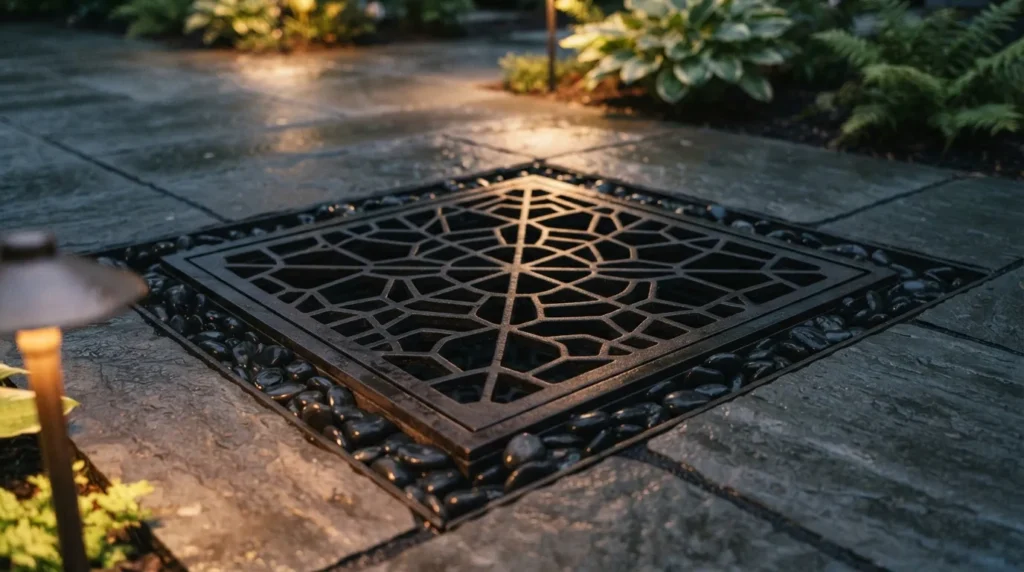
When you are dealing with large expanses of non-porous hardscaping like a wide asphalt driveway, a large slate patio, or a concrete pool deck, water cannot soak into the ground. During a sudden summer storm, this sheet water rushes fast toward your house, easily overwhelming standard lawn slopes. A catch basin is a strategically buried collection box topped with a heavy-duty grate. It intercepts this fast-moving surface rush instantly, letting the water fall into a deep sediment pool where leaves and twigs settle out, while the clean water rises and escapes out through connected horizontal smooth-bore PVC pipelines.
How To Style It
Instead of settling for the standard, ugly industrial green plastic grates available at big-box hardware stores, upgrade to luxury architectural metal options. Select beautiful, heavy cast-iron or solid brushed brass grates featuring modern geometric cutouts, sophisticated basket-weave designs, or sleek linear slots. Install the basin completely flush with your premium flagstone patio or brick driveway border. Surround the immediate exterior edge with a neat border of dark Belgian blocks or polished black river pebbles to seamlessly integrate the utility grate into your high-end outdoor entertaining design.
5. Decorative Splash Blocks
Quick Benefits
- Prevents deep foundation soil gouging
- Disperses high-velocity gutter water safely
- Installs in less than five minutes
- Protects nearby delicate plant roots
- Adds a touch of artistic charm
Why It Works
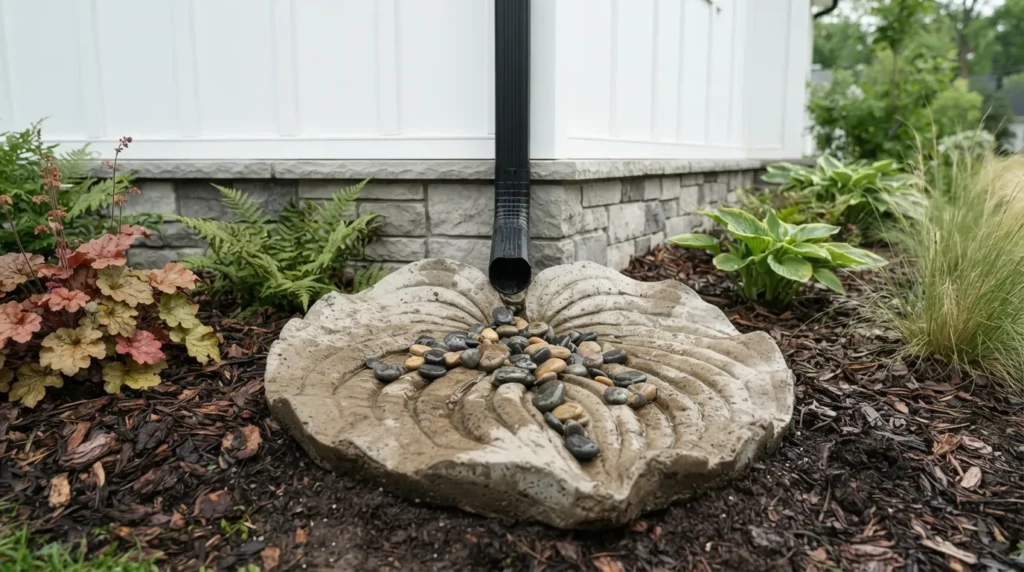
If you’re anything like me, you find the sound of falling rain deeply therapeutic, but there is nothing relaxing about watching a torrent of roof water blast out of a downspout and gouge a deep, muddy hole right next to your foundation. Without proper dispersion, this high-pressure water pool will quickly seep straight down your foundation wall, leading to basement leaks and shifting concrete plates. A decorative splash block acts as a durable, hard shield that catches the heavy vertical drop of water, instantly breaks its physical kinetic energy, and channels it flatly away over a wider surface area.
How To Style It
Move away from those lightweight, cheap green plastic flip-up extensions that constantly blow away in a strong wind. Instead, invest in substantial, hand-cast architectural concrete splash blocks sculpted in classic leaf motifs, minimal stone troughs, or elegant stepped Japanese pagoda designs. For a timeless modern farmhouse look, use an authentic carved granite piece or a thick, heavy copper basin filled with smooth Mexican beach pebbles. Position the block precisely beneath the downspout nozzle, ensuring it slopes gently outward into a well-mulched garden bed or directly onto a rock border.
6. Permeable Paver Paths

Quick Benefits
- Zero surface water accumulation on paths
- Reduces dangerous winter ice patch formations
- Extremely long lasting and crack resistant
- Eliminates the need for slope drains
- Provides an elegant, upscale walkway look
Why It Works
Traditional solid concrete or asphalt walkways act exactly like a roof, forcing every single drop of rain to slide off the sides, which frequently creates mud pools right along your garden borders. Permeable paver pathways are engineered with wide, specially designed joints filled with fine, clean aggregate stone rather than solid mortar or regular sand. Beneath the pavers sits a deep, multi-tiered bed of open-graded crushed rock. This structural matrix allows rainfall to pass straight down through the cracks, filtering it immediately back into the subsoil below without ever letting puddles build up on the walking surface.
How To Style It
Choose high-end herringbone or modern linear interlocking concrete pavers in a timeless palette of soft pewter gray, warm charcoal, or classic cream limestone. Fill the wide permeable joints with a contrasting deep granite chipping to make the geometric pattern pop. Frame the walkway borders with crisp, hidden aluminum edging to maintain clean, sharp structural lines. Style the path so it winds elegantly between mature hydrangeas and low-voltage landscape lighting fixtures, creating a modern, clean, and highly sophisticated entrance that stays completely puddle-free even during the worst storms.
7. Under-Deck Ceiling Trusses

Quick Benefits
- Doubles your usable outdoor living space
- Keeps under-deck patios completely dry
- Protects structural wood joists from rot
- Allows clean integration of ceiling fans
- Conceals ugly structural framing overhead
Why It Works
Elevated wood decks are wonderful for summer barbecues, but the space directly beneath them often becomes a dark, muddy, and completely unusable wasteland because rainwater leaks straight down through the gaps between the upper deck boards. An under-deck ceiling truss system utilizes custom-shaped aluminum or vinyl troughs fastened between the structural joists below the deck flooring. These interlocking panels catch every drop of trickling water, direct it along a subtle internal slope toward an outer hidden eavestrough, and discharge it safely through a downspout far away from your lower home foundation wall.
How To Style It
Transform the dry space beneath your deck into a luxury outdoor living room. Install high-end, matte white or rich wood-grain finished tongue-and-groove under-deck ceiling panels that hide the functional drainage troughs completely out of sight. Integrate water-resistant recessed LED pot lights and a stylish matte black outdoor ceiling fan into the new paneling structure. Arrange comfortable outdoor wicker sectional furniture, a chic concrete fire table, and a plush all-weather rug on the concrete pad below, creating a cozy, beautifully protected patio space that looks like an interior room brought outdoors.
8. Retaining Wall Weeps
Quick Benefits
- Prevents catastrophic structural wall failure
- Relieves immense hidden soil pressure
- Stops water from seeping out seams
- Extends the lifespan of stone walls
- Maintains beautiful, clean masonry looks
Why It Works
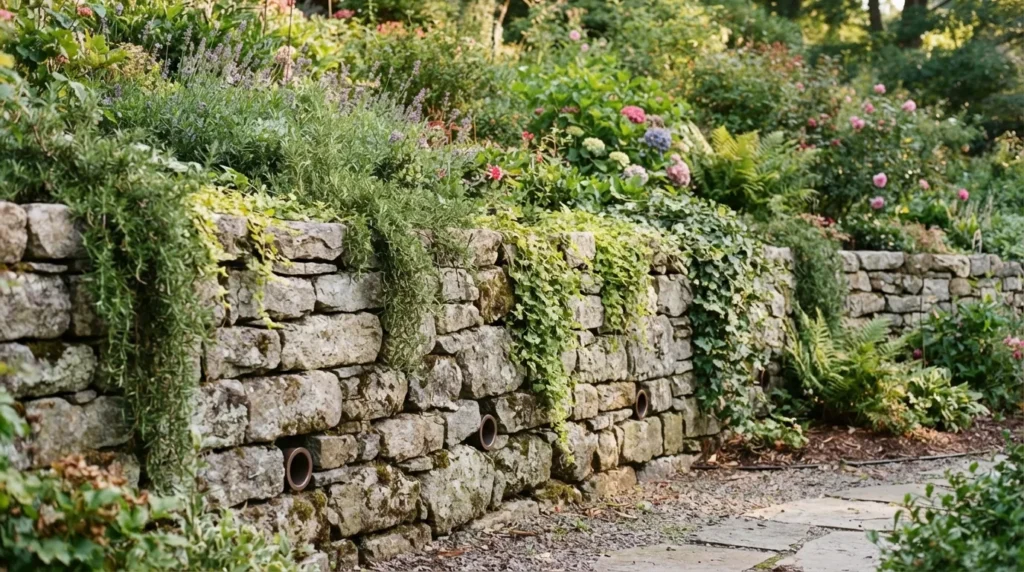
A mistake many homeowners make when building DIY raised garden beds or stone retaining structures is forgetting that wet soil weighs significantly more than dry dirt. When heavy rain soaks an embankment, the water pools directly behind the solid wall, creating immense hydrostatic pressure that will eventually cause the stones to bow, crack, and collapse outward. Integrating a continuous perforated drain pipe wrapped in aggregate directly behind the base of the wall, combined with open vertical weep holes through the face of the stone, allows this trapped water to escape rapidly, neutralizing the pressure completely.
How To Style It
When building a modern stacked stone or dry-pour concrete retaining wall, use sleek, short pieces of matte black or dark bronze pipe for the weep holes so they blend seamlessly into the dark shadow lines between the stone courses. Conceal the drainage outlets further by planting trailing rosemary, English ivy, or creeping jenny along the top ledge of the wall, letting the green foliage drape down over the face of the masonry. This creates an incredibly romantic, old-world European garden wall effect while ensuring the functional weep holes remain perfectly clear to breathe.
9. Underground Downspout Extensions
Quick Benefits
- Clears away dangerous lawn trip hazards
- Makes mowing the grass effortless
- Moves roof water far past foundations
- Eliminates messy exterior plastic tubes
- Creates a completely seamless lawn look
Why It Works
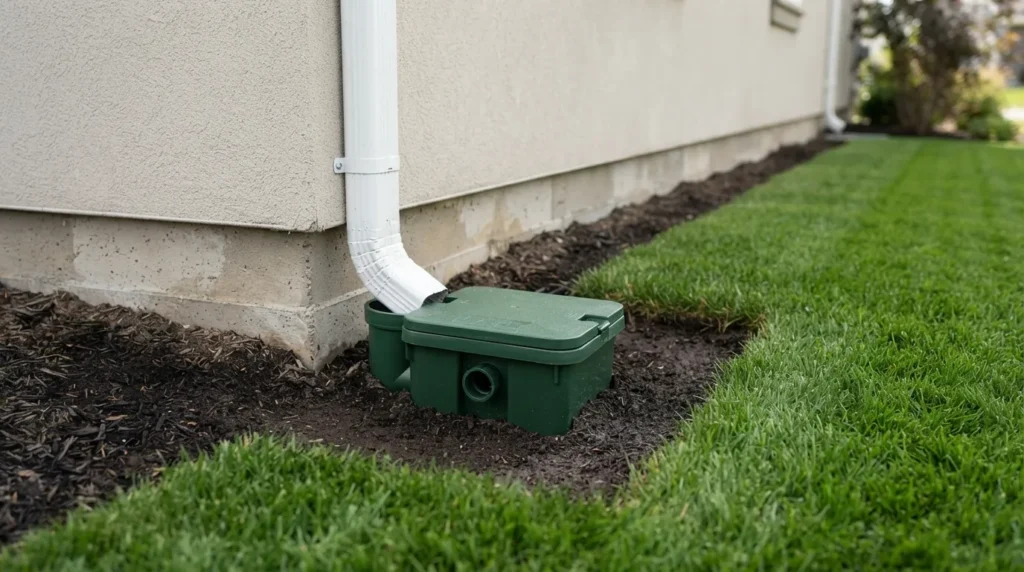
Your home roof collects thousands of gallons of water during a typical storm, and dumping all that concentrated volume right at the corners of your house via standard short downspout elbows is a recipe for foundation disaster. Extending those lines above ground with flexible plastic tubes looks incredibly messy and gets in the way of your lawnmower. By connecting your downspouts directly into rigid, solid PVC pipes that slope down into the ground, you can carry that high-volume runoff fifty feet or more away to a safe day-light exit or a dedicated pop-up emitter valve, keeping your foundation perfectly bone-dry.
How To Style It
At the base of your home wall where the vertical aluminum downspout meets the ground, use a sleek, color-matched cleanout transition box that catches roof debris while looking neat and tidy. At the far end of the lawn where the underground line finally reaches the surface, install a low-profile green pop-up emitter valve that sits completely flush with the grass level so your lawnmower can slide right over it. Alternatively, discharge the pipe hidden inside the bank of a dry creek bed or tucked behind a cluster of structural landscape boulders and low ferns for an organic finish.
10. Swale Turf Contouring

Quick Benefits
- Uses natural gravity to move water
- Requires absolutely zero plumbing pipes
- Highly budget-friendly landscaping fix
- Blends invisibly into wide open lawns
- Highly effective for large country lots
Why It Works
You do not always need to purchase extensive plastic plumbing parts or gravel loads to fix an annoying pooling issue in your yard. Natural topography contouring via a calculated swale is one of the oldest and most reliable tools in drainage history. A swale is a wide, incredibly shallow ditch that features gently sloping sides. Because the slope is so gradual, it doesn’t look like a trench; it appears as a natural roll in the land. This engineered contour gathers surface sheet water from high zones and guides it along a slow, turf-stabilized slope away from your house structure.
How To Style It
To integrate a swale seamlessly into your property design, keep the slope ratio very wide—aim for a gentle side slope of 3:1 or flatter. Re-seed the contoured swale area with a dense, deep-rooting turf grass blend that can handle occasional high-velocity moisture flows without washing away. Frame the upper crests of the swale with beautiful groupings of drought-tolerant ornamental trees like river birches or red maples that love subsurface moisture, creating a layered, undulating landscape design that looks entirely natural while keeping your home foundation safe and dry.
Featured Snippet Optimizations
How do you fix poor drainage around a house foundation?
To properly fix poor drainage around a house foundation, you must implement a multi-tiered strategy focused on directing water away from the concrete. First, re-grade the soil immediately surrounding your foundation wall to ensure a gentle outward slope of at least six inches over the first six feet. Second, connect all vertical roof downspouts into solid underground PVC pipe extensions that discharge runoff at least ten feet away from the structure. Finally, install a subterranean French drain channel lined with filter fabric and gravel along low-lying zones to collect and safely redirect rising groundwater before it can seep into your basement or crawlspace.
How much should land slope away from a house for proper drainage?
For correct residential drainage, the ground should feature a minimum outward slope of five to ten percent for the first ten feet extending away from the foundation wall. This means the soil level should drop exactly six inches in height over a six-foot distance from the house, or a full twelve inches across a ten-foot run. Maintaining this consistent downward grade ensures that surface rainwater and roof runoff are driven away by natural gravity, preventing water from pooling against the foundation where it could cause hydrostatic pressure and structural leaks.
Related Articles
- Cozy Farmhouse Exterior Curb Appeal Ideas
- Small Backyard Layouts That Maximize Space
- Modern Outdoor Entertaining Space Design Tips
- Neutral Home Landscaping for a Relaxing Yard
- DIY Accent Retaining Wall Projects for Beginners
FAQ Section
Will a French drain completely solve a wet basement issue?
A French drain is an incredibly powerful tool for intercepting and managing high groundwater tables and sub-surface hydrostatic pressure around your home footprint. However, if water is entering your basement through active cracks in the concrete walls or up through the center floor slab due to a rising aquifer, you may need to pair the exterior French drain with an internal perimeter drain tile system and a high-quality sump pump basin to achieve total dryness.
What is the difference between a swale and a dry creek bed?
The primary difference lies in the surface materials used and the overall aesthetic goal. A swale is a wide, shallow earthen channel covered completely in standard lawn turf grass, designed to look like a natural, gentle dip in the yard that you can easily mow over. A dry creek bed is an engineered channel filled with varying sizes of decorative river rocks, gravel, and anchor boulders, serving as a distinct stone landscape feature while managing faster-moving water flows.
How deep should a French drain trench be dug?
To ensure complete structural protection, an exterior French drain trench should typically be dug between eighteen and twenty-four inches deep, and roughly twelve inches wide. The channel must be positioned deep enough to capture water before it reaches the level of your internal basement floor slab or crawlspace dirt line. It is absolutely critical to maintain a consistent downward slope of at least one inch for every eight feet of horizontal run toward your final discharge location.
Can I run my downspouts straight into a French drain pipe?
No, you should never connect high-volume roof downspouts directly into a perforated French drain pipe system. French drains are explicitly engineered to let groundwater seep in through the tiny pipe holes to drain the surrounding soil. If you inject thousands of gallons of fast roof water into that same perforated line, the water will force its way out of the holes, completely flooding the trench and pumping massive amounts of water straight next to your foundation. Always keep downspout lines solid and separate.
Do pop-up drainage emitters freeze and clog up in the winter?
Pop-up emitters can occasionally experience ice buildup during extreme winter weather if the discharge pipe holds stagnant water. To completely prevent this issue, ensure the underground PVC line features a small, drilled weep hole surrounded by a pocket of clean pea gravel at its lowest sub-surface point. This allows any residual water inside the pipe to drain out completely between storms, leaving the pipe empty so it won’t freeze solid when the temperature drops.
Conclusion
Securing your home foundation from the destructive forces of pooling water does not mean you have to sacrifice the beauty of your outdoor living spaces. As we have explored throughout this guide, the most effective water management systems are those that blend seamless engineering with intentional, creative landscaping design. Whether you choose to sculpt a winding dry creek bed lined with lush ornamental grasses, install a sleek hidden French drain channel bordered by crisp modern stone, or establish a vibrant native rain garden catchment to support local ecology, you are actively turning a structural necessity into a major asset for your property.
The ultimate takeaway to keep in mind is that water will always follow the path of least resistance. Instead of fighting against gravity, use smart fixes like smooth underground downspout extensions, contoured swales, and permeable paver paths to gracefully guide runoff exactly where you want it to go. Do not wait for the next severe storm warning to protect your largest financial investment. Start with one or two key upgrades this weekend—like clearing out your grading or adding substantial decorative splash blocks beneath your gutter exits—and gradually build a resilient, beautiful landscape that keeps your home safe, dry, and structurally sound for decades to come.