10 DIY Mud Kitchen Ideas
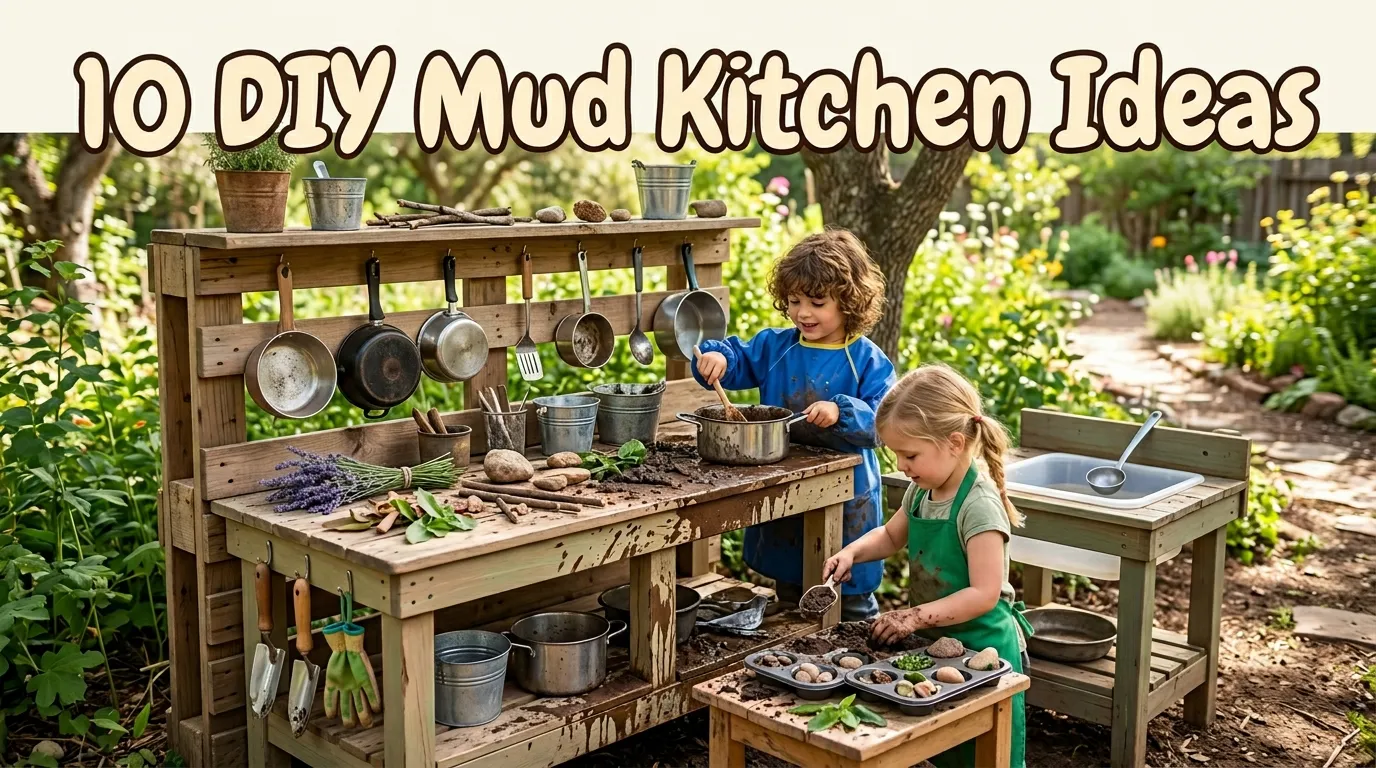
Outdoor play has become more important than ever for kids in the USA, especially as families look for creative ways to reduce screen time and encourage hands-on learning. One of the most engaging and imaginative outdoor setups for children is a mud kitchen. It allows kids to explore textures, pretend cooking, and enjoy sensory play using natural materials like dirt, water, leaves, and stones.
A well-designed backyard setup doesn’t need to be expensive or complicated. In fact, many parents are now building creative play kitchens using recycled wood, old furniture, and simple DIY materials. In my experience, children become more engaged when they feel like they have a “real cooking space,” even if it’s outdoors and made from repurposed items. It encourages creativity, teamwork, and imaginative storytelling in a very natural way.
This guide explores practical, budget-friendly ideas that can transform any backyard into a fun learning space. Each concept is designed to be simple, safe, and highly engaging while also helping parents create a durable outdoor play zone without overspending.
1. Wood Pallet Base
Bullet Points
- Budget-friendly structure foundation
- Easy to build and customize
- Strong and durable outdoor frame
- Eco-friendly recycled material use
- Perfect for beginner DIY projects
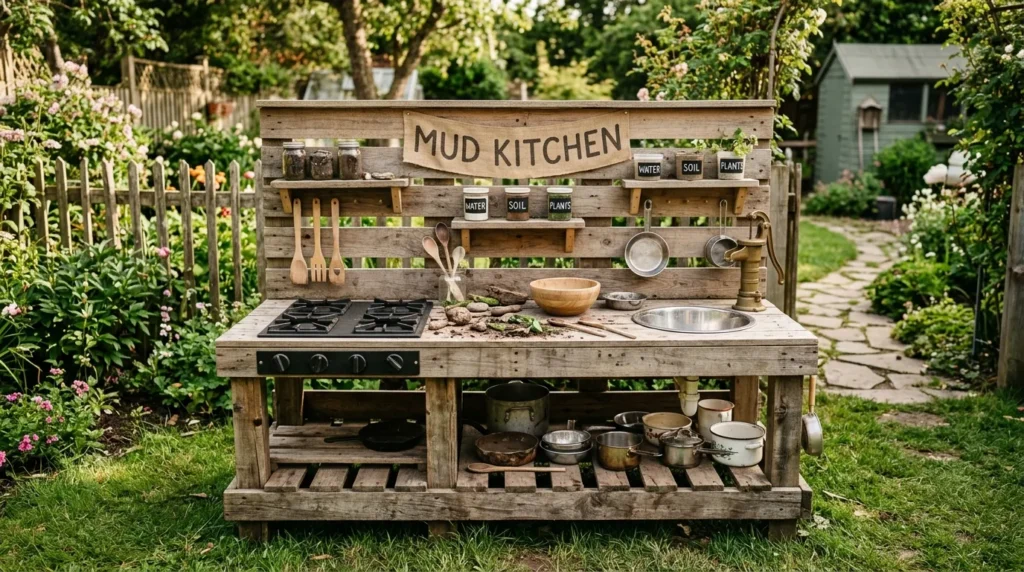
A wooden pallet base is one of the easiest and most affordable ways to start building an outdoor play kitchen for kids. Old shipping pallets can be transformed into a sturdy frame that acts as the foundation for counters, shelves, and play surfaces. I’ve noticed this approach works especially well for families who want a rustic and natural-looking setup without spending much money. The raw wood texture blends beautifully into backyard environments and creates a realistic “outdoor kitchen” feel that children naturally enjoy interacting with during imaginative play sessions.
The construction process is simple and flexible, making it ideal for beginners. Pallets can be stacked, sanded, and reinforced to form different heights and work zones. In my experience, sealing the wood properly is important for safety and weather resistance. Many parents also paint the structure in bright, playful colors to make it more engaging for kids. I’ve seen this work well in many homes where a basic pallet structure turned into a long-lasting outdoor play station that encouraged creativity, sensory exploration, and active learning throughout different seasons.
2. Repurposed Sink Station
Bullet Points
- Adds realistic kitchen experience
- Encourages water-based play
- Reuses old household items
- Easy drainage setup possible
- Boosts sensory development
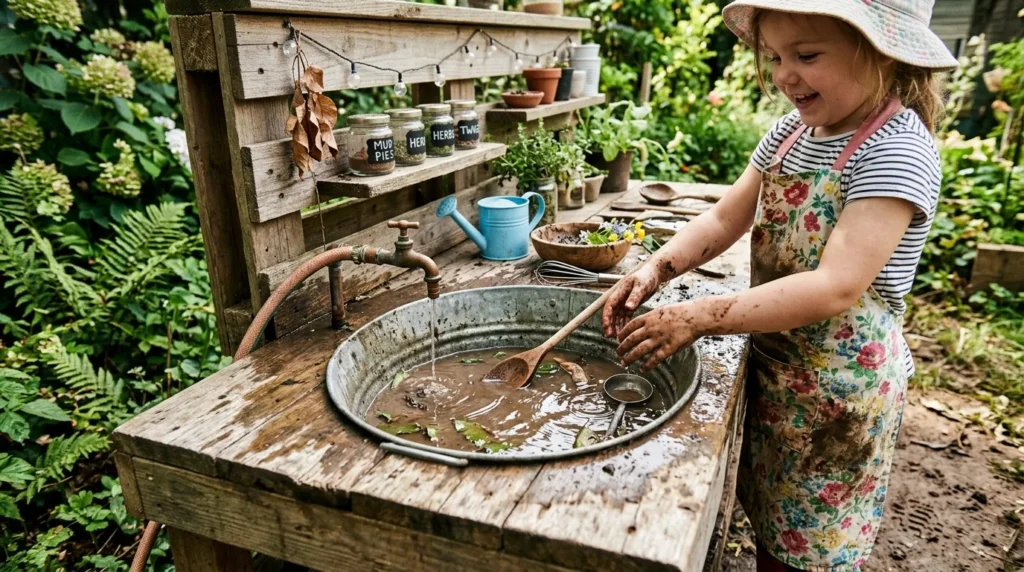
A repurposed sink is one of the most exciting features you can add to an outdoor play kitchen because it brings realism into the experience. Old plastic basins, metal bowls, or even unused kitchen sinks can be installed into a wooden counter to create a functional-looking washing area. I’ve noticed that children are naturally drawn to water play, and combining it with mud or sand makes the activity even more engaging. This setup encourages imaginative roleplay while also improving sensory learning through hands-on interaction with different textures and materials.
Installation is simple and can be adapted to different backyard setups. A shallow basin placed securely into a wooden frame allows kids to “wash dishes,” mix mud, or pour water safely. In my experience, adding a small drainage hole or removable container makes cleanup much easier for parents. Many families also connect this station with nearby water buckets for continuous play. I’ve seen this work well in many homes where a simple sink addition completely transformed a basic outdoor setup into a highly interactive learning space that keeps children entertained for hours.
3. Mud Pie Counter
Bullet Points
- Encourages imaginative cooking play
- Provides dedicated work surface
- Enhances creativity and storytelling
- Simple DIY wooden setup
- Great for group play activities
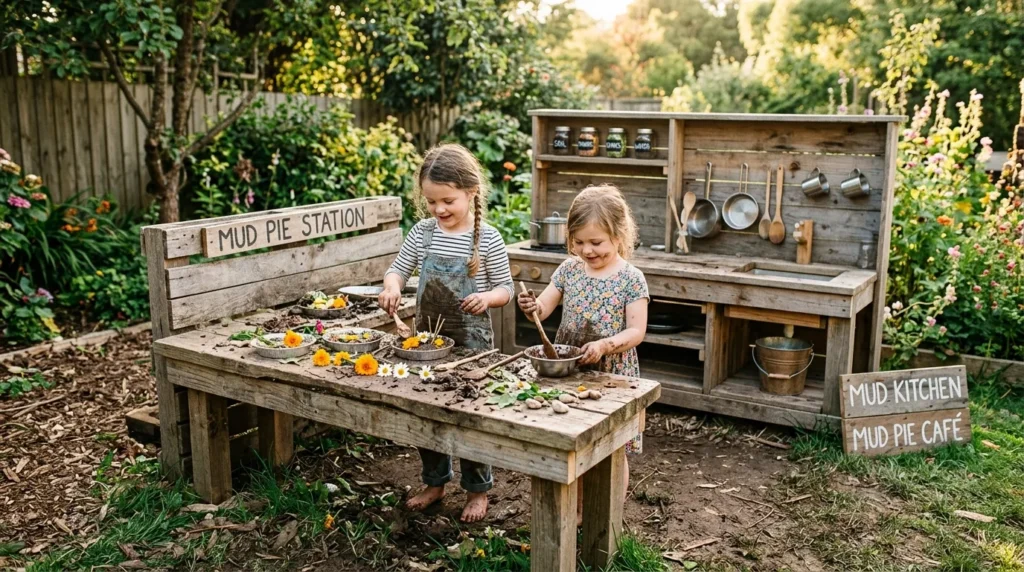
A dedicated mud pie counter creates a structured space where kids can fully engage in creative outdoor cooking activities. This simple surface allows children to mix mud, leaves, flowers, and water into imaginative “recipes,” helping them build storytelling and social skills naturally. I’ve noticed this type of setup becomes the most popular feature in any backyard play area because it gives kids a sense of purpose and ownership. Even a basic wooden plank or repurposed table can instantly become a magical cooking station when paired with natural outdoor materials.
Design flexibility makes this idea easy to customize for different backyard sizes. In my experience, adding labeled sections or small containers for ingredients increases engagement and organization. Many parents also include small stools or stepping areas so multiple children can play together comfortably. I’ve seen this work well in many homes where a simple counter became the center of outdoor playtime, encouraging collaboration, imagination, and hands-on learning in a very natural and enjoyable way.
4. Stone Countertop Look
Bullet Points
- Natural rustic outdoor aesthetic
- Durable and weather resistant style
- Enhances realistic kitchen feel
- Easy DIY material alternatives
- Blends with backyard environment
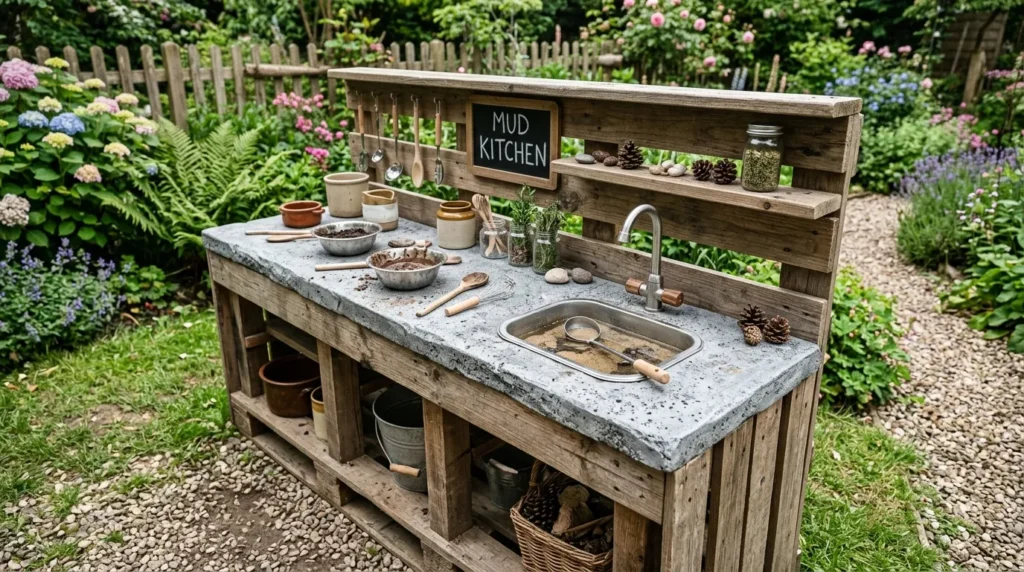
Creating a stone-style countertop adds a beautiful natural aesthetic to any outdoor play kitchen while improving durability and visual appeal. Instead of real stone, many DIY projects use painted wood, cement overlays, or textured finishes to achieve a similar rustic look. I’ve noticed this design works especially well in gardens or backyard spaces where natural materials blend seamlessly with the environment. The stone appearance also makes the play kitchen feel more realistic, encouraging children to engage in deeper imaginative cooking scenarios.
Durability is another major advantage of this design approach. In my experience, sealed surfaces protect the structure from rain, mud, and frequent use by kids. Many parents prefer using gray tones, pebble textures, or faux concrete finishes to maintain a natural outdoor vibe. I’ve seen this work well in many homes where a simple surface upgrade significantly improved the overall appearance of the play area. The result is a long-lasting, visually appealing setup that feels both creative and grounded in nature.
5. Painted Play Design
Bullet Points
- Bright and kid-friendly appearance
- Encourages creativity and fun
- Easy weekend transformation project
- Protects wooden surfaces outdoors
- Customizable color combinations
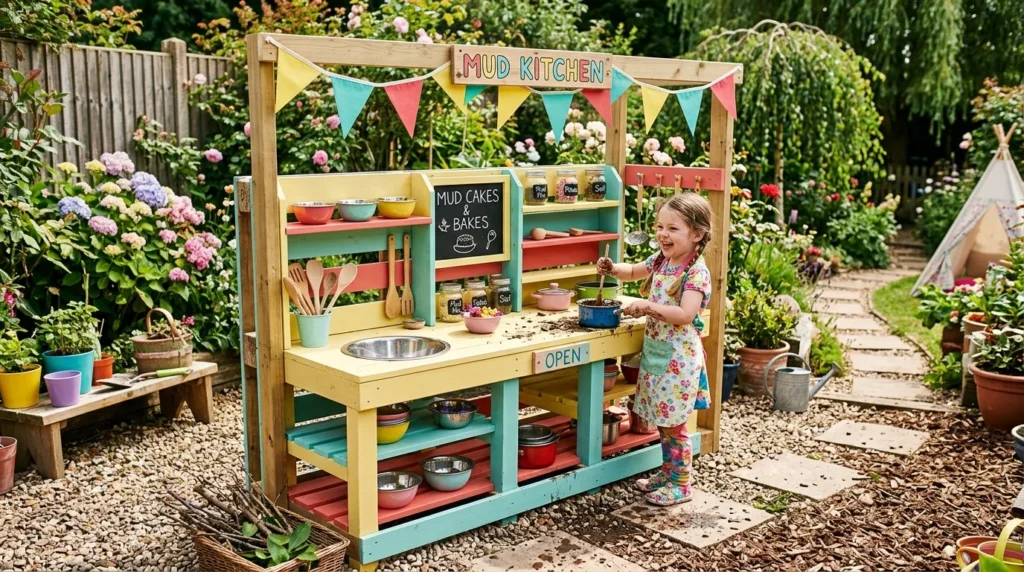
Painting a mud kitchen is one of the simplest ways to bring personality and excitement into the design. Bright colors like yellow, teal, red, and soft green can instantly transform a plain wooden structure into a vibrant play space that attracts children’s attention. I’ve noticed that kids engage more actively when their play environment feels colorful and inviting. This approach also allows parents to customize the design according to backyard themes or even match it with existing outdoor furniture for a more cohesive look.
Beyond aesthetics, paint also serves a protective function by sealing wooden surfaces against moisture and outdoor wear. In my experience, using non-toxic, weather-resistant paint is essential for safety and durability. Many families also involve children in the painting process, making it a fun bonding activity before play begins. I’ve seen this work well in many homes where a simple paint upgrade completely refreshed an old structure and turned it into a joyful, engaging outdoor play zone full of creativity and color.
6. Herb Garden Add-On
Bullet Points
- Introduces natural learning experience
- Encourages sensory exploration
- Adds real cooking elements
- Enhances outdoor aesthetics
- Teaches responsibility to kids
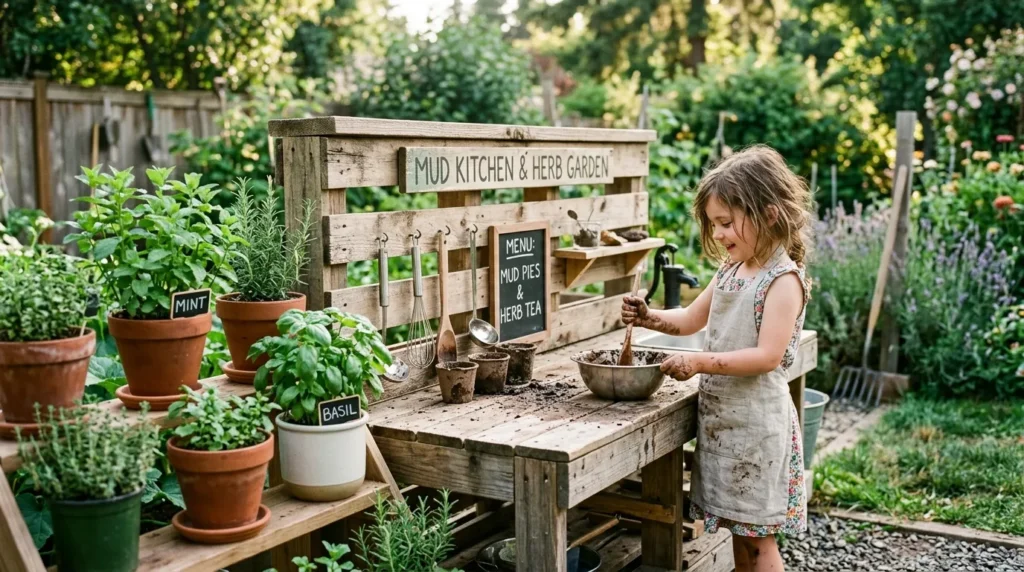
Adding a small herb garden to a DIY mud kitchen introduces children to nature in a meaningful and interactive way. Herbs like mint, basil, or rosemary can be planted in small pots or garden beds nearby, allowing kids to incorporate real plant ingredients into their pretend cooking activities. I’ve noticed this helps children connect more deeply with nature while also learning about textures, smells, and growth cycles. It turns a simple play kitchen into an educational environment that blends creativity with real-world learning experiences.
Maintenance is simple and can be adapted for different backyard sizes. In my experience, using labeled pots or small wooden planters makes it easier for kids to identify different herbs. Many parents also use this opportunity to teach basic responsibility through watering and caring for plants. I’ve seen this work well in many homes where a small herb section added depth and purpose to outdoor play, making the experience more interactive, educational, and naturally engaging for children of all ages.
7. Storage Bins
Bullet Points
- Keeps play area organized
- Easy cleanup after play
- Stores natural materials neatly
- Improves long-term usability
- Encourages responsibility in kids
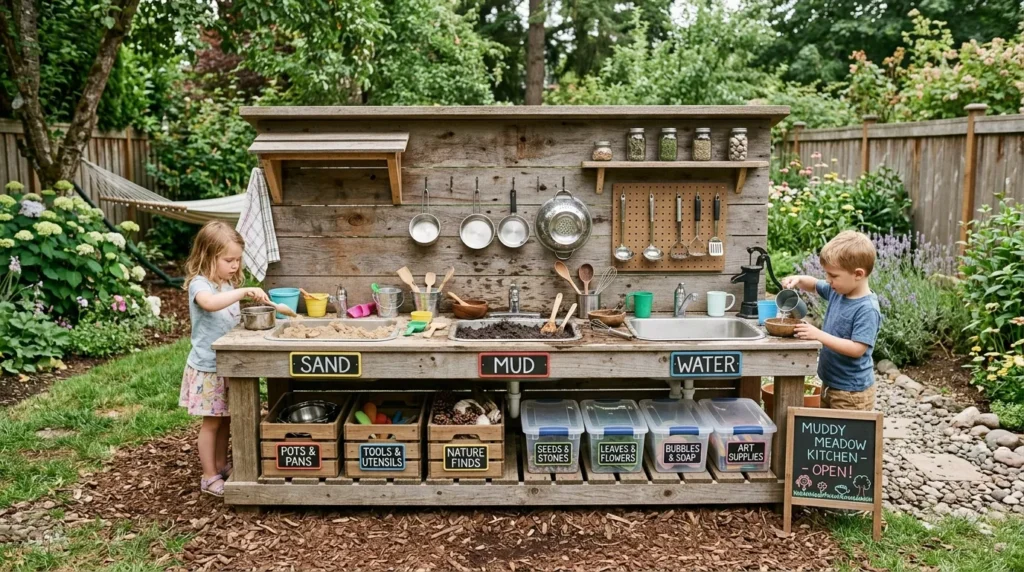
Storage bins are one of the most practical additions to any outdoor play kitchen because they help keep everything organized and easy to manage. Kids often use leaves, stones, water, and soil during play, and having dedicated bins for these materials makes cleanup simple and structured. I’ve noticed that when children know where things belong, they naturally develop better organization habits. Even simple plastic tubs or wooden crates can be used effectively to separate different play ingredients while keeping the entire setup tidy and functional.
Durability and placement are key when designing a storage system outdoors. In my experience, weather-resistant bins work best since they stay outside most of the time. Many parents also label containers or use color coding to make identification easier for children. I’ve seen this work well in many homes where organized storage transformed messy play areas into structured learning spaces. It not only improves the usability of the mud kitchen but also teaches kids responsibility, independence, and respect for their play environment.
8. Mini Stove Setup
Bullet Points
- Adds realistic cooking feel
- Encourages imaginative roleplay
- Simple DIY structure option
- Uses recycled materials easily
- Great for group play activities
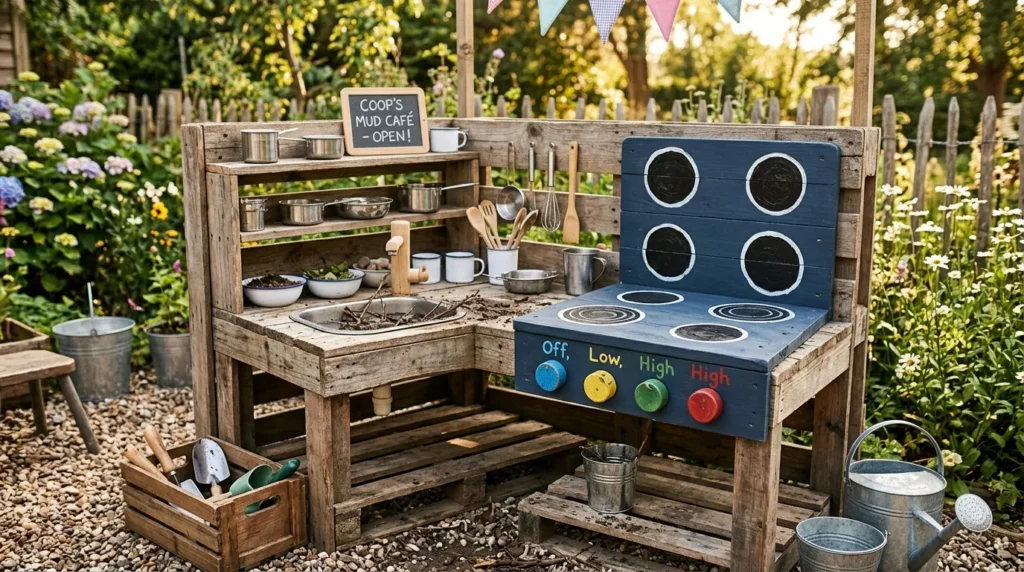
A mini stove setup is a creative way to make an outdoor play kitchen feel more realistic and engaging for children. Using old knobs, painted wooden circles, or repurposed containers, you can create a pretend cooking surface that sparks imagination. I’ve noticed that kids love mimicking real-life cooking behaviors, and a stove-like feature makes their playtime more immersive. Even a simple painted wooden board with drawn burners can instantly transform the experience and encourage storytelling, creativity, and social interaction.
Building this feature is easy and budget-friendly. In my experience, recycled materials such as old lids, bottle caps, or wooden discs work perfectly for stove burners. Many parents also add turning knobs made from small knobs or dowels to enhance realism. I’ve seen this work well in many homes where a basic structure became the highlight of outdoor playtime. It gives children a sense of independence while encouraging collaborative roleplay and imaginative cooking adventures.
9. Water Play Zone
Bullet Points
- Enhances sensory learning experience
- Encourages hands-on exploration
- Keeps kids engaged longer
- Simple bucket and tap setup
- Great for hot weather play
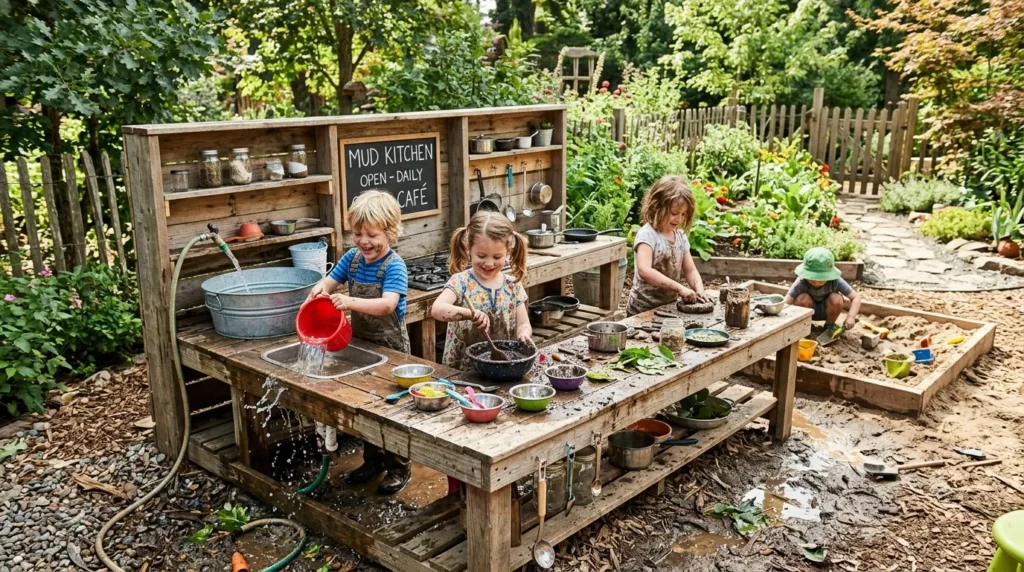
A dedicated water play zone is one of the most exciting features you can add to a DIY mud kitchen because it brings sensory play to a whole new level. Children naturally love water activities, and combining water with mud, sand, and natural materials creates endless possibilities for creative exploration. I’ve noticed that this type of setup keeps kids engaged for long periods because it allows them to experiment freely. Even a simple bucket system or hose connection can create a highly interactive and enjoyable outdoor experience.
Safety and simplicity should always come first when designing water play areas. In my experience, shallow containers or controlled water flow systems work best for young children. Many parents also use removable basins for easy cleaning and water management. I’ve seen this work well in many homes where a small water station became the most popular part of the backyard. It encourages sensory development, coordination skills, and imaginative play in a very natural and refreshing outdoor environment.
10. Nature Decor Style
Bullet Points
- Blends kitchen with outdoor environment
- Uses natural materials creatively
- Enhances aesthetic appeal
- Encourages eco-friendly play habits
- Simple and budget-friendly setup
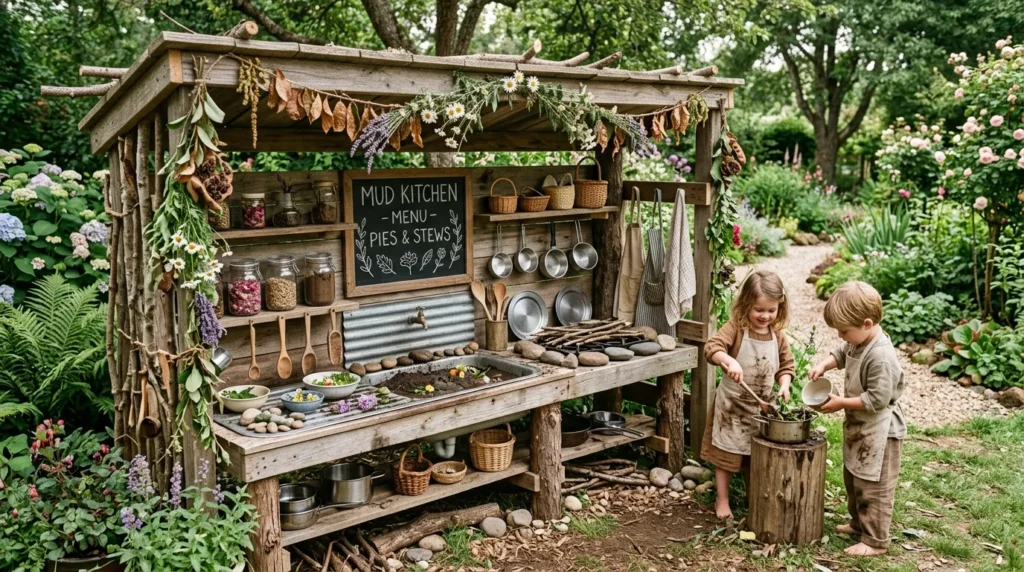
A nature-inspired decor style is the perfect finishing touch for a DIY mud kitchen because it blends the play area seamlessly into the outdoor environment. Using elements like stones, branches, leaves, and flowers helps create a natural and immersive setting that feels alive and engaging. I’ve noticed that children become more creative when they interact with natural materials instead of artificial toys. This approach also keeps the design simple, affordable, and highly adaptable to different backyard sizes and seasonal changes.
Designing with nature does not require expensive materials or complex construction. In my experience, even small decorative touches like hanging herbs, wooden textures, or garden stones can make a big difference. Many parents also rotate natural items depending on the season to keep the play area fresh and exciting. I’ve seen this work well in many homes where a simple nature theme turned a basic outdoor structure into a magical and imaginative learning environment for children.
Image Prompts
1. Wood Pallet Base — Image Prompt
DIY mud kitchen built with reclaimed wooden pallets, rustic outdoor backyard setup, natural unfinished wood texture, sturdy base structure, simple handcrafted design, kids play cooking area, earthy tones, soft natural sunlight, garden surroundings with grass and plants, eco-friendly construction style, realistic Pinterest photography, wide angle view showing full base structure, cozy and creative outdoor atmosphere.
2. Repurposed Sink Station — Image Prompt
Outdoor DIY mud kitchen featuring repurposed sink made from old metal basin fitted into wooden countertop, water play area for kids, rustic pallet structure, natural backyard garden, muddy textures, playful sensory setup, soft daylight, realistic water reflections, functional handmade design, earthy color palette, realistic Pinterest-style photography, close-up angle highlighting sink detail and water play interaction.
3. Mud Pie Counter — Image Prompt
DIY mud kitchen with dedicated mud pie counter made from wooden planks, natural rustic finish, children pretend cooking setup with mud, leaves, and flowers, outdoor backyard environment, soft warm sunlight, playful sensory learning space, simple handcrafted design, earthy tones, realistic Pinterest photography, wide composition showing kids play activity zone, creative and imaginative atmosphere.
4. Stone Countertop Look — Image Prompt
DIY mud kitchen with faux stone countertop made from painted cement or textured wood surface, gray stone effect finish, rustic outdoor setup, wooden pallet base, garden background, natural earthy tones, durable weather-resistant design, kids play cooking station, soft daylight, realistic Pinterest interior-exterior blend photography, angled wide shot showing countertop texture detail.
5. Painted Play Design — Image Prompt
Colorful DIY mud kitchen with bright painted wooden structure in pastel yellow, teal, and red tones, child-friendly outdoor play area, rustic garden setting, cheerful vibrant design, smooth painted finish on pallets, playful sensory environment, natural sunlight, eco-friendly paint aesthetic, realistic Pinterest photography, wide front view showing colorful transformation and joyful atmosphere.
6. Herb Garden Add-On — Image Prompt
DIY mud kitchen with small herb garden integration, potted plants like mint and basil placed beside wooden play kitchen, natural wooden pallets, garden soil and greenery background, eco-friendly learning setup for kids, soft sunlight, fresh green tones, educational outdoor play environment, realistic Pinterest photography, side angle showing herbs and kitchen interaction, calm natural aesthetic.
7. Storage Bins — Image Prompt
Outdoor DIY mud kitchen with organized storage bins made of plastic and wooden crates, labeled sections for sand, mud, and water, rustic wooden structure, natural backyard setting, kids play area, soft daylight, earthy tones, clean organized layout, realistic Pinterest-style photography, wide angle view, functional and tidy outdoor design.
8. Mini Stove Setup — Image Prompt
DIY mud kitchen with pretend mini stove made from painted wooden board, round burner designs, recycled knobs as stove controls, rustic pallet base, natural outdoor garden background, playful kids cooking setup, warm sunlight, creative imaginative play environment, realistic Pinterest photography, front angled composition, cozy and fun atmosphere.
9. Water Play Zone — Image Prompt
Outdoor mud kitchen with water play station using buckets, basins, and small hose setup, children sensory play area, muddy and sandy textures, wooden DIY structure, natural backyard garden, bright daylight, fun learning environment, realistic Pinterest-style photography, wide angle shot, energetic playful mood.
10. Nature Decor Style — Image Prompt
DIY mud kitchen decorated with natural elements like leaves, flowers, stones, and wooden accents, rustic outdoor setup, earthy color palette, garden surroundings, soft natural lighting, eco-friendly children play space, imaginative learning environment, realistic Pinterest photography, calm wide composition, organic and creative atmosphere.